Israel's strikes on Lebanon, following ceasefire announcement, were heavily criticised across the world.
Iranians have claimed that the strikes were a grave violation of the ceasefire agreement.
The recent strikes fall in a broader pattern of violations which Israel has carried since 1948.
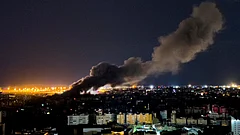
On April 8, just hours after the Trump administration agreed to a two-week ceasefire with Iran, Israel launched its heaviest coordinated strikes on Lebanon since the US-Israeli war with Iran began in February.
The large-scale aerial assault, carried out over a ten-minute period, killed at least 303 people and injured a further 1,150, according to Lebanon’s Health Ministry.
The attacks drew widespread international criticism, with Iran describing them as a serious breach of the ceasefire agreement. Iranian President Masoud Pezeshkian also stated that a halt to hostilities in Lebanon had been a key condition of Tehran’s agreement with Washington.
Israel’s strikes on Lebanon immediately after the ceasefire deal were seen by critics as part of a wider pattern of alleged violations carried out without consequence since the country’s establishment.

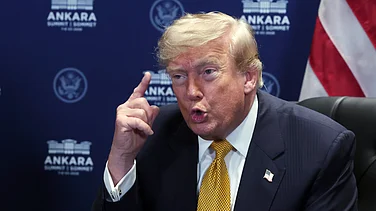
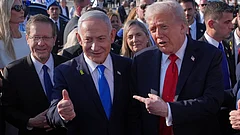
Israel’s attacks have taken place amid repeated calls for de-escalation, often coinciding with statements from the United States. In March, US President Donald Trump told Axios: “Any time I want it to end, it will end.” However, Israeli Defence Minister Israel Katz suggested there was no fixed timetable for ending the war, saying: “The operation will continue without any time limit, as long as required, until we accomplish all objectives and achieve victory in the campaign.”


While Trump had reportedly delayed strikes on bridges and power stations until the 7 April deadline for reopening the Strait of Hormuz, and with the prospect of a ceasefire growing, the Israeli Air Force continued its campaign. On April 6, it launched strikes on Iran’s largest petrochemical facility in Asaluyeh.
According to Katz, by that stage the Israel Defense Forces (IDF) had targeted sites linked to 85 per cent of Iran’s petrochemical exports.
During overnight strikes on April 6, the IDF also said it had killed Seyed Majid Khademi, the intelligence commander of Iran’s Islamic Revolutionary Guard Corps (IRGC), further heightening regional tensions and casting doubt over the chances of a truce.
Outlook looks at a few such prominent instances of ceasefire violations:
October 2025 Gaza Ceasefire Agreement
Following the declaration of the Gaza ceasefire agreement on October 10 last year, according to Al Jazeera’s analysis and the Palestine’s Ministry of Health, Israeli attacks have killed at least 738 people and injured more than 2,000 through attacks by air, artillery and direct shootings.
Israel has destroyed more than 1,500 buildings in areas of Gaza that have remained under its control since the ceasefire with Hamas started in October, BBC Verify has claimed.
Less than twenty days into the ceasefire agreement, Israel hit Gaza the heaviest. Israel accused Hamas of violating the ceasefire after two Israeli soldiers were killed in Rafah, killed 45 people in air raids across the Gaza Strip and on October 29, Israel killed over 100 people, including 52 children, after an exchange in Rafah that killed one Israeli soldier. US President Donald Trump had said these attacks were necessary ‘retribution’.
Responding to Israeli claims that the truce was broken by Hamas, in November, a senior Hamas bureau official (as quoted by Al Jazeera) had said, “Israel is fabricating pretexts to evade the agreement and return to a war of extermination. It is Israel that violates the agreement daily and systematically.”
Till date, Israel continues to restrict full and free flow of aid and medical supplies into Gaza, as was mandated in the ceasefire agreement.

2014 Ceasefire Violation
In 2014, after 25 days of confrontation, the US Secretary of State John Kerry had announced that Israel and Hamas had agreed to a joint UN-US ceasefire proposal, bringing an end to offensives which had left 1,464 Palestinians, most of them being civilians. However, just 72 hours after committing to the truce, Israel broke the ceasefire killing at least 40 people as they fired shells into eastern Rafah. Israel and Hamas accused each other of breaking the ceasefire.
2012 Ceasefire Violation
In November, only days after Palestinian factions in Gaza agreed to a truce with Israel, Israeli forces assassinated Ahmed Jabari, the head of Hamas’s military wing, raising fears of further escalation. Earlier, in March, Israel had breached another Egyptian-brokered ceasefire by killing the leader of the Gaza-based Popular Resistance Committees, sparking violence that left dozens of Palestinians dead, including children. Israel said, yet again, it had acted in self-defence.
Israel-Hamas Ceasefire 2008 Violation
Following the Egyptian-brokered agreement in June, under which Israel promised to halt air strikes and other attacks while Hamas agreed not to launch rockets into Israel from Gaza, Israeli forces breached the ceasefire by carrying out an operation that killed six Hamas members. Israel’s military assault on Gaza which began in December killed approximately 1,400 Palestinian, including more than 300 children, according to the Israeli Information Centre For Human Rights In Occupied Territories.