After 17 years in self-imposed exile, Tarique Rahman is set to return on Christmas
India wants to deal with a democratically elected government in Dhaka
The BNP is hoping for elections to be held as scheduled
After 17 years in self-imposed exile, Bangladesh Nationalist Party’s acting chairman Tarique Rahman is set to return home on Christmas morning, a homecoming that has electrified party cadres but also revived long-standing anxieties over political violence that has wracked the country in recent months.
The BNP is planning a huge welcome for Tarique, the heir apparent and leader-in- waiting. The party is expecting some 50 lakh people to line the streets as he is driven from the airport for a public meeting, after which he will go to the hospital to see his mother, former prime minister Begun Khaleda Zia who is seriously ill and in hospital. For the BNP it will also be a show of strength.

Rahman was arrested on corruption charges during the military-backed caretaker government that took power in January 2007. After being freed some 18 months later, on September 3, 2008, he left for London with his family and did not return all through Sheikh Hasina’s tenure, fearing arrest and imprisonment. After the former prime minister was overthrown and the new interim dispensation took office, all cases against him, his mother and leaders of the opposition were dismissed. Hopes that Rahman would return home soon afterwards were delayed on fears of security. After all, his father President Ziaur Rahman was brutally assassinated in a military coup and the political culture of volatility and bloodshed had long plagued the country.


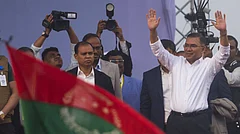
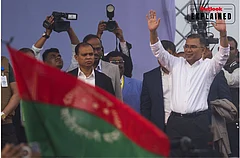
Following the killing of Sharif Osman Hadi, there was the fear that Rahman’s homecoming would be further deferred. But with elections slated for February, Rahman has decided to take the risk. Hadi’s death sparked a fresh round of protests and unrest in a country that is deeply divided.
“The return of Tarique Rahman after over 17 years is a milestone event. It will not only be a major boost for the BNP, but it will also be an important marker for democratic restoration,’’ says Shafqat Munir, Senior Fellow Bangladesh Institute of Peace and Security Studies (BIPSS).

“A recent poll conducted by the Daily Prothom Alo suggests that BNP is poised for a comfortable majority in the next election. Rahman is introducing a lot of new ideas which the party plans to implement if they are elected,’’ adds Munir.
As of now the BNP is best placed to win the February elections. This is why it is keen to ensure that in no circumstance are the polls postponed. With the Awami League banned from political activity the BNP’s fight will be mainly with the Jamaat-e-Islami and other Islamic outfits. Though the Jamaat was once in coalition with the BNP, its ambitions have since grown and would like to be in a position to form the government. But for that it needs a little more time, so the Jamaat wants to push back national elections for a few months. The BNP is best prepared and wants to make sure that the polls are held on time. There was enormous pressure from the BNP on the Muhammad Yunus led interim government to announce the elections.
Many believed that the recent spate of violence following the student protest leader’s death was an attempt by Jamaat to push back the poll dates.
"Tarique Zia’s return will mean a huge surge in popularity for the BNP. This will not go down well with those who are in power now, namely the Islamist parties led by Jamaat-e-Islami, with Mohd Yunus as their spokesperson. Today there is complete volatility and anarchy in Bangladesh, due to infighting,’" says Veena Sikri, a former Indian High Commissioner to Dhaka. "India has strongly supported inclusive elections, with the Awami League, the Jatiya party and others on the ballot. This is the only way that will bring stability and acceptability by all. Otherwise the present violence and instability will continue,’’ she adds.
However it is also a fact that Sheikh Hasina’s Awami League often went ahead with elections, despite the boycott from the opposition about holding polls without a caretaker government in place. The BNP had refused to participate in elections that did not give them a fair chance. The difference now is that the Awami League is not allowed to participate in the parliamentary process rather than a boycott by the party.

New Delhi is hoping for elections to be held per schedule and realises that despite its hopes that the Awami League can also participate, the party will have to sit this one out. For India the best bet at the moment is a BNP win.
Despite its tango with the Jamaat at one time, the BNP has experience of governance and is not a religious formation. New Delhi’s relations with Yunus have not been the best with relations taking a massive dip following Sheikh Hasina’s ouster. India wants to deal with a democratically elected government in Dhaka. However much will depend on how things pan out between now and election-day.