Operation Mongoose authorised by JFK to undermine the government of Fidel Castro created an imagery of the United States eliminating the ‘venomous’ communist threat
Within a year's time, the ‘mongoose’ had to tuck its tail as the CIA infiltration plans failed
In Vietnam, the prolonged bombing campaign Operation Rolling Thunder was meant to evoke sustained, overwhelming military pressure,
In a video that has now gone viral, an Iranian wartime commander from Khatm al-Anbiya Central Quarter, mocks the US and President Trump for naming the war operation “Epic Fury”. He claims that “Epic Fear” would have a far more appropriate name. The commander says, “The outcome of war cannot be determined by tweets. The results of war are determined in the field - the very place where you and your forces do not dare to approach.”
Operation Epic Fury is just one of the long list of wartime operation nomenclatures coined by the United States.
The Name Game
Military operations are not only fought with troops and weapons; they are also fought with language. Over time, the naming of U.S. military campaigns has evolved into a form of signalling, one that shapes how a conflict is perceived by the public, allies and adversaries alike.
What may appear to be a simple codename often carries an intended message about legitimacy, strength or humanitarian purpose. Charles McClain, who served as the U.S. Army public affairs chief, once said that the perception of an operation can be just as important to its success as its execution.



Take the 1989 U.S. invasion of Panama ordered by President George H. W. Bush. In the final stages of planning, senior officers realised the operation was still labelled with the placeholder codename “Blue Spoon.” The moniker was replaced by the alternative proposed by officers on the Joint Staff—Operation Just Cause, which was far from accidental. It framed the intervention as morally justified and marked the beginning of a broader trend in which U.S. military operations adopted names that emphasised humanitarian or democratic aims, such as Operation Provide Comfort and Operation Uphold Democracy. Though more often than not, the actual endeavour of these operations was not as virtuous as the name.
Professor Ray Eldon Hiebert, in his research titled “Public Relations as a Weapon of Modern War,” wrote, “The effective use of words and media today … is just as important as the effective use of bullets and bombs.” Quite contrary to the Iranian command belief that the “war will not be determined by tweets”, Hiebert, in his 1991 paper, argues, “In the end, it is no longer enough just to be strong. Now it is necessary to communicate. To win a war today, a government not only has to win on the battlefield, but it must also win the minds of its public.”
However, Operation Epic Fury does stray in terms of the subliminal messaging in US operation names.
According to an American state-funded media house, Radio Free Europe/Radio Liberty, the title for the ongoing American strikes on Iran, "is unusual for its edginess," Mark Cancian, a senior adviser with the Washington-based Center for Strategic and International studies said, as Operations more commonly have names that will appeal to a wide audience, like Iraqi Freedom," he added, referencing the official name for the 2003 invasion of Iraq.
Additional experts highlighted that the name for the war on Iran would have been selected from a list of options generated by military staffers "based on their sense of what Pete Hegseth wanted to convey."
While the precise message behind the title “Epic Fury” has not been clarified by the White House, the broader context of the escalating conflict in West Asia, involving joint military actions by the United States and Israel, may offer clues about the kind of brutality and resolve the name was meant to convey.
War of Words
The US tradition of naming military operations dates back to the Second World War, when planners began assigning neutral codenames to large campaigns to avoid revealing operational details. Operations such as Operation Overlord, which led the Allied landings in Nazi-occupied France, and Operation Torch were deliberately chosen from approved word lists that carried little immediate meaning. The aim in this era was secrecy rather than signalling.
However, by the time of the Cold War, U.S. operation names had begun to reflect the kind of force the campaign intended to project. Subliminal messaging was a key tool for propaganda. In Vietnam, the prolonged bombing campaign Operation Rolling Thunder was meant to evoke sustained, overwhelming military pressure, while later air offensives such as Operation Linebacker carried names drawn from sports terminology, a practice that was not uncommon in Pentagon planning. These titles often sought to project power and determination without directly describing the targets or tactics involved. Particularly here, the name served essentially as a warning that the violence would escalate until Ho Chi Minh "blinked," and secondly, it was intended to bolster the sagging morale of the South Vietnamese
Another example is the 1961 Operation Mongoose authorised by JFK, launched after the failed Bay of Pigs Invasion to undermine the government of Fidel Castro. The name, drawn from the animal known for killing snakes, created an imagery of the United States eliminating the ‘venomous’ communist threat near its borders. Within a year's time, the ‘mongoose’ had to tuck its tail as the CIA infiltration plans failed, however, the damage was done further escalating tensions during the Cold War.
In the post–Cold War period, the naming strategy became even more overtly political. Operations such as Operation Desert Shield and Operation Desert Storm were tied to the Gulf War. The first name framed the U.S. deployment as a defensive move to protect Saudi Arabia, while the second suggested a swift and overwhelming offensive to expel Iraqi forces from Kuwait. Yet the war’s aftermath proved far more complex than the triumphant language suggested: thousands of Iraqi soldiers and civilians were killed, critical infrastructure was devastated by bombing campaigns, and the conflict set the stage for a decade of sanctions that severely affected Iraq’s civilian population.
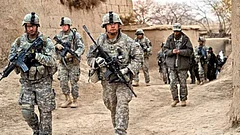
The style of flamboyant names was seen in the early 2000s with the wars launched after the September 11 attacks. The invasion of Afghanistan was titled Operation Enduring Freedom, part of the broader War on Terror. The name emphasised the defence of liberty and the dismantling of terrorist networks. On the ground, however, the conflict turned into a two-decade war marked by insurgency, civilian casualties, drone strikes, and widespread displacement, ultimately ending with the return of the tyrannical Taliban to power in 2021.
Similar patterns are seen in the 2003 invasion of Iraq, formally known as Operation Iraqi Freedom. While the name framed the war as a mission to liberate Iraq and establish democracy, the aftermath brought years of instability, sectarian violence and insurgency. Civilian casualties rose, infrastructure collapsed, and the power vacuum eventually aided the rise of Islamic State.
Now, with Operation Epic Fury resulting in the third week of the West Asia crisis, the world is yet to see just how disastrous this “epic” war will be.