Many Middle Eastern allies of the United States have urged the Trump administration to refrain from launching strikes against Iran in response to the government’s deadly crackdown on protesters, according to an Arab diplomat familiar with the discussions.
Senior officials from Egypt, Oman, Saudi Arabia and Qatar have, over the past 48 hours, expressed concern that a US military intervention would further destabilise an already volatile region and send shockwaves through the global economy, the diplomat said, speaking on condition of anonymity due to the sensitivity of the talks.
Oil prices fell on Thursday as markets appeared to interpret President Donald Trump’s shifting rhetoric as a sign that he may be pulling back from military action, following days of sharp threats aimed at Tehran over its brutal suppression of protests.
Despite this, White House press secretary Karoline Leavitt insisted on Thursday that “all options remain on the table.”

“The truth is only President Trump knows what he’s going to do, and a very, very small team of advisers are read into his thinking on that,” Leavitt said, adding that Trump “continues to closely monitor the situation on the ground in Iran.”
Two days ago, Trump urged protesters in Iran to take over institutions, while promising that ‘help is on its way‘.
“Iranian Patriots, KEEP PROTESTING! TAKE OVER THE INSTITUTION..” his post on Truth Social read.
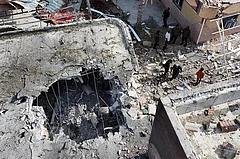

Nationwide protests challenging Iran’s theocratic leadership appeared increasingly subdued on Thursday, a week after authorities cut the country off from the outside world and intensified a violent crackdown that activists say has left at least 2,637 people dead.
The diplomatic outreach by Arab officials comes amid dramatic shifts in Trump’s public messaging. Within the span of a day, the president went from telling Iranian citizens that “help is on its way” and urging them to seize control of their country’s institutions, to declaring on Wednesday that he had received information from “very important sources on the other side” indicating that Iran had stopped killing protesters and halted executions.

According to the diplomat, Arab officials also pressed senior Iranian leaders to bring an immediate end to the violent repression. They warned that any Iranian retaliation against US or allied targets in the region would carry serious consequences for Tehran.
Asked during a White House briefing about reports that US allies were urging restraint, Leavitt declined to directly address the claims.
US Ambassador to the United Nations Mike Waltz, however, said military action remained a possibility.
“President Trump is a man of action, not endless talk like we see at the United Nations,” Waltz said during a UN Security Council meeting on the Iran protests. “He has made it clear all options are on the table to stop the slaughter.”
Trump himself later appeared to signal a potential step back from imminent military action. He shared a Fox News headline on social media reporting the suspension of a death sentence for 26-year-old Iranian shopkeeper Erfan Soltani.

Iranian state media denied that Soltani had been sentenced to death, saying instead that he was being held at a detention facility outside Tehran. Judicial authorities accused him, along with other protesters, of “propaganda activities against the regime.”
“This is good news. Hopefully, it will continue!” Trump wrote, referring to the reported pause in the execution. The White House later claimed Iran had halted 800 scheduled executions.
Trump has long cultivated ambiguity around his intentions as a strategic tool. Last June, as he weighed whether to join Israeli strikes on Iran, Leavitt read a statement she said came “directly from the president,” saying he would decide on military action “within the next two weeks.” Less than 48 hours later, Trump ordered B-2 bombers to strike key Iranian nuclear facilities.
Jeremy Shapiro, research director at the European Council on Foreign Relations, suggested Trump may be hesitating due to concerns about the current US military posture in the Middle East.
At present, there are no US aircraft carriers in the region—assets considered critical for large-scale military operations—after the USS Gerald R. Ford and its strike group were redeployed to US Southern Command as part of a major counter-narcotics mission focused on Venezuela.

“It might be that they’re delaying things and using the time to get that posture right,” Shapiro said.
Meanwhile, the Trump administration announced fresh sanctions against Iran on Thursday. Among those targeted is the secretary of Iran’s Supreme Council for National Security, whom the US Treasury Department accuses of being among the first officials to advocate violence against protesters.
The Treasury Department’s Office of Foreign Assets Control also sanctioned 18 individuals and entities accused of laundering money from Iranian oil sales through a shadow banking network linked to sanctioned financial institutions Bank Melli and Shahr Bank.
(With Inputs From PTI)