The author extrapolates on what one means when ones writes about imaginary places.
In the story, the author says "it became clear that places reside less in geography than in the mind.
Years ago, while I was waiting on Platform Number Three at Dadar for a local train that might be a little less crowded, an elderly man approached me and asked, “What place is this?”
“Dadar,” I said.
“I have to go to Mumbai,” he said.
“The CST train will come from that side,” I told him.
“That will go to CST,” he said. “I want to go to Mumbai.”
“That is Mumbai.”
“Then what is this?” he asked. “Is this not Mumbai?”
“This is also Mumbai.”
“But you just said this is Dadar.”
“All of this is Mumbai,” I said. “Dadar is inside Mumbai.”
Now irritated, he said, “Just tell me one place—only one—whose name is Mumbai. That is where I want to go. Someone tells me Bandra, someone Borivali. Someone says Mulund, someone CST. Where is Mumbai? No one tells me.”
Muttering to himself, he walked away.
Who was he? Perhaps he was an anti-philosopher character from Jorge Luis Borges—someone who, walking along an indifferent sentence in one of Borges’s unwritten novels, reached its very edge and fell out of the page. Perhaps he has been wandering ever since.




Whenever I recall this scene, I realise that in those moments I was there, and Dadar station was there too—but the elderly man was nowhere, just as Mumbai itself was nowhere. Mumbai was, in a manner of speaking, all around; yet in truth, it was nowhere at all. It was as if many places had been gathered under a single name, Mumbai, and in that very act of naming, it became clear that places reside less in geography than in the mind. One may stand in Mumbai and still go in search of Mumbai itself, and it is entirely possible that one may never find it—much like those who, while living within themselves, spend a lifetime searching for who they are.
All places that appear in literature are imaginary, even when they are written as real. The opposite is equally true: all places that appear in literature are real, even when they are written as imaginary. Their outward forms differ, but their inner substance is often the same. Even today, in astonishment, we ask ourselves: was the Kaurava court—where Yudhishthira played the game of dice with Shakuni and lost everything—ever a real place? Were Kafka’s The Castle or the court described in The Trial, imaginary? Are Godhra, Sambhal, Sandeshkhali merely inventions of a writer’s imagination, or do they exist somewhere on the map of the earth?
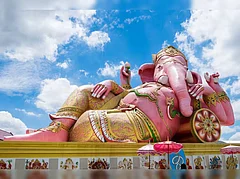
Nirmal Verma, in one of his essays and in a different context, refers to a story from the Matsya Purana: In the midst of a dark, infinite ocean, Lord Vishnu sleeps. Maharshi Markandeya moves inside Vishnu’s body, a realm of radiant beauty, luminous and heaven-like. Absorbed in this extraordinary bliss, he wanders and comes close to Vishnu’s mouth, which, in sleep, is slightly parted. Suddenly, his foot slips and he falls outside into the endless, pitch-black ocean, where not even one’s own hand can be seen. Terror seizes him. Only moments earlier, the world had seemed beautiful; now it is hideous and threatening, without a single speck of light. He wonders if he is dreaming, only to discover that this is reality. At the furthest edge of darkness’ terror, he feels a cold tremor of despair. Then, at that exact moment, Vishnu lifts him and returns him to his mouth. Markandeya finds himself once more in a realm as beautiful as heaven: bright, comfortable, and filled with light. He cannot tell what is true. Is the inner world the real one, or the outer? Was what he lost reality, or what he has regained? Again and again, he moves in and out, yet his confusion never ends.
Markandeya’s dilemma is the dilemma of countless writers and readers. Is the glittering, self-assured, playful Mumbai that appears in the light-hearted books of affluent, upper-middle-class writers the real city? Or is it the seething, rotting, dark Mumbai that emerges in the works of Bhau Padhye and Namdev Dhasal? Where, then, does reality lie? Colaba or Dharavi? Bandstand or Behrampada? The grand sweep of Nariman Point or the filthy, impoverished lanes of Sion Koliwada? From one gaze, the other becomes imagination; from the counter-gaze, the first. Or are both imagination, and both reality at once?
We are all essentially exiles. Exiled from geography, from history, from language, from culture, and from time—and, finally, from home itself. Even when no injustice has been done, when one leaves behind a village, a city, a home for education or work, the departure carries the quiet weight of exile: a severing from belonging, from one’s own identity.

Salman Rushdie suggests that exiled people must create their own “imaginary homeland” from whatever they carry with them. (If one looks closely at the ancient history of exile, it seems that all homelands are, in fact, imaginary.) This suggestion applies with particular force to writers, who feel that the world around them is inadequate, or oppressive, or slipping through their fingers like sand. At such moments, writing becomes “cartography”—an emotional and political mapping of the infinite darkness, or of the irrational, infinite light, that surrounds them. The writer’s act of imagination is, in essence, a rebellion against the violences of reality.
Once these imagined places enter the mind, they refuse to disappear. Their greatest danger lies in their seduction: come, live inside us. There is no labyrinth greater than the one we construct out of sentences. If we shift the context slightly, Ghalib seems to point to this very condition when he speaks of be-dar-o-deewar sa ik ghar—a house without doors or walls.
In Italo Calvino’s Invisible Cities, Marco Polo describes 55 imaginary cities to Kublai Khan. These cities are made of language, death, desire, time, and loss, suggesting that we do not understand a city through its architecture, but through the feeling it awakens in us. Calvino—like Roberto Bolaño, who invents imaginary writers in Nazi Literature in the Americas—does not flee from reality; rather, he fashions a subtle instrument for the pursuit of truth. Fictional cities, paradoxically, often expose the workings of real societies far better.
Malgudi, Macondo, Yoknapatawpha are dreams dreamt on the bed of imagination—dreams that strip reality bare. George Orwell’s “Airstrip One” exists nowhere on the map of the world, yet it remains an immortal weapon of state power. Margaret Atwood’s “Gilead” is a place where women’s bodies are controlled and freedom systematically erased. In Borges’s “Tlön, Uqbar, Orbis Tertius”, an invented planet slowly takes possession of the entire earth—a metaphor for how authoritarian ideology can quietly infiltrate daily life, seize control of the world, and rewrite history. All these places are imaginary, but the real question is this: are they imaginary at all—or are they, in some sense, more real than reality itself?
We can see a city as imagination only when lived reality has lost its grammar. Every imaginary place carries a real wound, still oozing—a footnote dangling from the epic narrative of humanity’s historical failures.
In Mohsin Hamid’s Exit West, there is a magical door through which refugees can bypass borders and reach anywhere. Across history, refugees have lived partly in dreams and partly in camps. In a sense, they exist in between. Paraphrasing Rushdie, “home” for them is not a piece of land marked on a map, but a memory. Be it displacement caused by the Partition of India or by wars in regions such as Syria and Sudan, the moment state power begins to define what our home is, our homes begin to turn into imaginary places. There is a common understanding among scholars today that when memories are exiled, they invent imaginary worlds. This is how human memory takes its revenge. And it is only through art and literature that this revenge finds expression.
In our age, a mask covers the face of truth, which gasps, searching for clean air. Let literature at least remain that final place where truth can breathe freely, without choking. Across the world, borders are hardening and speech is being tamed. A free truth, a living truth, like a refugee, will seek shelter in the places created by literature—both in the real places written as imagination and in the imaginary places written as reality.
But the question is, what is imagination, and what is reality? Is it the light within the symbolic Vishnu, or the darkness outside him? Maharshi Markandeya is still engaged in contemplation, but this time he is not alone. Countless writers are with him—for all of them have been condemned, like refugees, to live “in between.”
(Translated from Hindi by Anita Gopalan)
This article appeared as "The Geography Of Waiting” in Outlook’s 30th anniversary double issue “Party is Elsewhere” dated January 21, 2025, which explores the subject of imagined spaces as tools of resistance and politics.
Geet Chaturvedi is one of the most widely read contemporary Hindi writers. He has authored two collections of novellas, three books of poetry, two works of non-fiction, and a novel
Anita Gopalan is a literary translator from Hindi. Her translations include Geet Chaturvedi’s The Memory of Now, Simsim, The Funeral and The Master of Unfinished Things