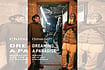
Buland Masjid traces brutal journeys of migration that end in a hard-won, precarious sense of belonging.
The settlement embodies both suffering and resilience, where faith, labour and community create dignity amid decay.
A new generation, born into the ghetto, carries confidence and dreams of escape, marking a shift from survival to aspiration.
A journey is a fragment of hell.
[T]he migration itself, like the pilgrimage, is the hard journey: a ‘leveler’ on which the ‘fit’ survive and stragglers fall by the wayside.
Then they all gathered one evening. They said: we have nothing, but we have our place of divinity, and we are thankful for that. This, what we have, what we are making. We shall dedicate it to the divine, and we shall call it Buland Masjid.
Buland Masjid is the story of migrations into hell, and they end in a struggle to create a paradise.
Perhaps this, here, is paradise.
This magnificent city of eight and half acres, full of the raw effluvia of man. Piss, shit, food, shame, fear, hunger, pride, exertion, the searing heat of hatred, anger, and the brief calming temper of love and sustenance. Behind every decrepit shanty, every soaring tenement, is an epic journey, the spirit of men who have struggled and survived.
I came upon this city by chance.

Humanity abounds here. Men, women and children scurry out of every nook and alley, the narrow passages barely able to contain the ongoing rush of human traffic. These are the ants in their anthills, fragile yet secure in a place of their own. There is the same driving rush of energy, of industry. What was a listless heap of bone, flesh and blood, is now transformed into an embodiment of a leap of faith.



What is this city here, in this little bowl of land hidden behind tall white buildings? This was land where the sacred river Yamuna once flowed. She has been moved away, forced to abandon the dark muddy slime of her womb, as a refuge for the destitute, the homeless. She now flows, in her new, constrained space, further down. She, the mighty Yamuna, daughter of the great sun god, loved and revered, venerated from the beginning of time. Once joyous, beautiful, unfettered, now yoked in, wearing signs of severe abuse and neglect. Today, the sacred river is a quiet, slow-moving sludge of raw shit and toxic froth, a large sewer cutting through this city of antiquity. On the other side lies the sacred, legendary city of the god-kings, the warrior Pandavas. Here, on the east side or Jamnapaar, is Maqsood’s city. One of the thousands of rumble-tumble accretions that, cobbled together, comprise what is called East Delhi.
To enter this world is to enter a theatre playing out the sublime tragedy of man. The quiet stolidity of the butcher, his shirt drenched in blood, his face marked by the darkness and light of human existence. The gentle calmness of his stare at odds with the deep scar running down his face, his nose hacked off from one side, somewhere, sometime in his journeys before . . . he sits there, serene and impervious, with his beautiful young wife beside him, a wooden cart before them, heaped with poultry carcasses. They have done their time; their wanderings are now over.
Elsewhere, amid pigs and goats and animal entrails, she sits, a young girl, in the first flush of her youthful beauty. Slim, tall, endowed with a natural elegance, her head covered with a wispy white veil embroidered with flowers, her face bent low, she concentrates, her delicate fingers moving a thin needle and skein of thread over a trim of delicate lace . . . She is of those who opened their eyes in Buland Masjid and have known no other world. Her parents named her Razida.
The children of Buland Masjid are the children of a new world. They are settlers’ children. You can tell them apart from those who are not born to Buland Masjid. There is a confidence that sets them apart. The cheeks are filled out, with the slight oily patina of health that oozes from the pores of their skin. Young boys and girls walk tall, assertive. They are already being pulled into the numbing stupefaction, the pleasing wellness of bourgeois life . . . Within the space of a generation, they have been separated from the memories, the wretchedness and travails that marked the lives of their parents
Young boys come and go, their motorcycles revving though the alleys, bursting pods of energy, enjoying the fruits of the labours of their fathers, and their fathers before.
A young boy grins shyly. I engage in a conversation with him. His father, Shamim, is busy slashing and cutting, engaged in the chores of a butcher’s work. Saqib wears an apron and stands away from the shop. He is reluctant to take part in the business, his features delicate and his hair styled in a manner that I almost mistake him for a young girl. I ask if he would like to be photographed and talk to me at length. He tells me to meet him the next day. We agree to meet in the newly opened Changezi Dhaba. I wait for him. He is late. Several phone calls and almost three quarters of an hour later, he arrives on a swank white motorcycle with another young boy riding pillion. He apologizes: ‘We got delayed at the salon. This is Sam.’
‘Yes, but,’ I ask, ‘what is his real name?’

They break into giggles, ‘Salman.’
I ask Shamim’s son if he would like to continue his father’s trade. ‘Not at all, I am going to be a film star. I am going to Bombay to join films. There is nothing else I want to do. Films are my passion. I want to emulate my hero, my inspiration—Salman Khan.’
In an alley, an old bearded man, Afsar Qureshi, his features bearing the ancestral contours of men from the high passes, still carrying a blunted handsomeness, his sloe eyes the colour of dull, grey, moisture-laden skies, sits in a tiny hovel and carves out chunks of meat on a curved knife held between his toes. He is preparing for the evening, when his little cubbyhole will suddenly be transformed into one of the most in-demand kebab stalls. This morning, however, he surveys me balefully, ‘Things are not going well for me, these are bad days.’
The evening brings swarms of little children and young men to his makeshift dhaba. His young daughter steps out. She is dressed in a black tight-fitting salwar kameez, her head covered with a black dupatta. She is strikingly attractive, the beauty of the mohalla. She positions herself behind her father, and engages in flirtatious banter with the admiring young men. I ask if I may take her photograph. She refuses. I move away, and photograph her father and the people who come and go. She quietly moves in front of my camera. I worry about her request and move towards a welding unit on the other side of the galli. She hops across and engages the workers in familiar chit-chat. I now deliberately take a photograph of her, ‘Aap ka photo le-liya hai main-ne.’ I have taken a photograph of you. She giggles. She suddenly has no objections. It was the fear of being photographed in front of her father that had made her refuse. She is now happily posing and smiling for me. There is a sense of bitter sweetness—her eagerness to be photographed, yet be a ‘good’ girl. Her natural exuberance, her pleasure in her beauty, her sense of that little glimpse of power that comes with that beauty. If she could, she would let her beauty speak for her. But she knows that is not possible. This world of stragglers, of admiring young men, is where it will bloom and slowly fade, and with it, the fires of unrealized dreams.

All around are images of poverty, aspiration and efforts to transcend. The new generation dares to dream longer and harder than their parents. They will leave this ghetto, they will escape this hell.
They take me to a little hall. Several boys and young men from the colony are lined up to greet me. They stand there, birds of paradise, their hair styled into vivid displays of imaginative fervour, gleaming, shimmering colours, tints of gold, red, yellow, blue, teased into stiff upright puffs or loose waves, golden orange locks falling down their foreheads, getting into their eyes. Some have shorn-off eyebrows, some pencil-shaped arches tweaked, primped, trussed, plucked, their cheeks buffed to a glistening sheen . . . earrings, studs, necklaces, chains, bracelets. Their clothes are a testament to originality and a tribute to their hero, Salman Khan. Metallic jackets, tight jeans, ripped, adorned with the faces of popular rap artists, heeled boots, each boy is a self-created artist, each a vivid painting willing you to view it seriously. Somebody puts on some music that makes the walls reverberate, suddenly everyone begins spinning, twisting, jumping and rolling about the floor. Whatever this exhibition is, you cannot help being swept away by the sheer force of all this energy, these overflowing reservoirs of adrenaline.
Here in this cramped space, watching this enthusiastic dancing, I am reminded of a description of another slum and another young boy nearly two centuries ago.
Dreaming a Paradise portrays the resilient migrant community of Buland Masjid in Delhi as they build lives and livelihoods amidst poverty, revealing the stark divide between India’s affluent promise and the harsh reality faced by those on its margins.
CHITVAN GILL, an Indian writer, independent filmmaker and documentary photographer, chronicles Delhi’s margins and urban migrations. Her recent book Dreaming a Paradise documents the human story of Buland Masjid through reportage and images.