






Cross-voting occurs when MLAs vote for rival candidates in indirect elections like Karnataka MLC polls.
The anti-defection law has limited effect on such secret ballot votes.
This episode highlights internal challenges for BJP ahead of the 2028 Assembly elections.
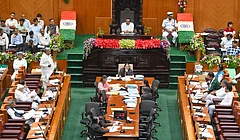
Cross-voting by some BJP and JD(S) MLAs in the recent Legislative Council elections has left the BJP embarrassed and triggered a high-level probe, with the party’s central leadership pulling up state leaders over the indiscipline.
The episode, in which Congress secured extra votes beyond its strength, has renewed attention on cross-voting as a tactic in indirect elections, even as parties issue strict whips. It comes ahead of further local polls and the 2028 Assembly elections in Karnataka.
What Is Cross Voting?
Cross-voting happens when elected representatives, such as MLAs, cast their ballots for candidates from other parties in indirect elections to bodies like the Legislative Council or Rajya Sabha, instead of following their own party’s choice. In the Karnataka polls for seven Council seats held in mid-June 2026, parties issued directives based on their numbers in the Assembly.
Congress won five seats, while the BJP took two. Reports indicated that the ruling party received around 11 extra votes through cross-voting from NDA partners. BJP candidates received fewer first-preference votes than expected — one got 29 instead of the required 30, and another 27 — and one won only in the elimination round. JD(S) candidate also fell short.



Why It Happens Despite Party Whips?
Although parties issue voting directions for such elections, these polls are generally treated as electoral processes rather than proceedings of the House, limiting the legal consequences of cross-voting under the anti-defection framework. In this case, the BJP has pointed to possible monetary inducements. Leader of Opposition R. Ashoka alleged that Congress leaders, including Chief Minister D.K. Shivakumar, used money power to lure legislators.
Internal factors such as factionalism within the BJP and strains in the alliance with JD(S) also appear to have played a role. JD(S) leader H.D. Kumaraswamy noted cross-voting by some of his party’s MLAs. Because parties often cannot immediately verify how every legislator voted in indirect elections, cross-voting can be difficult to detect until vote counts are examined.
Does The Anti-Defection Law Apply?
The anti-defection law, under the Tenth Schedule of the Constitution, disqualifies legislators who voluntarily give up party membership or vote against a party whip in the House, according to PRS India. It was introduced in 1985 to check frequent defections.
However, its application is limited in elections to the Rajya Sabha or Legislative Councils. These are conducted as electoral processes under the Election Commission and are not considered proceedings of the House. As a result, defying a whip in such polls does not automatically lead to disqualification under the law, though parties can take internal disciplinary measures. PRS India reports that this has allowed cross-voting to continue in indirect elections.
The Biggest Cross-Voting Episodes In Indian Politics
Cross-voting and related defections have shaped Indian politics for decades. The term “Aaya Ram Gaya Ram” came from Haryana in 1967, when an MLA switched parties several times in a day. PRS India has documented how such instability prompted the anti-defection law.
In more recent times, cross-voting has influenced Rajya Sabha and Council polls in states including Himachal Pradesh, Uttar Pradesh, and Karnataka. The Hindu has reported instances where MLAs from one party supported rivals, sometimes leading to disqualifications or government changes through organised defections in states like Goa, Karnataka, and Madhya Pradesh earlier.
Why This Could Shape Karnataka Politics Ahead Of 2028?
The current episode has heightened tensions within the BJP and its alliance with JD(S). The party high command has sought explanations from state leaders, including B.Y. Vijayendra and R. Ashoka, and a fact-finding committee is at work. Plans for a temple-based “truth test” to identify cross-voters were dropped after central intervention.
For the BJP, the episode points to internal challenges and may lead to tighter control from Delhi. It also tests the Congress under Shivakumar. How parties address such indiscipline could influence cohesion and strategies in the lead-up to the 2028 Assembly polls.
















