The Prevention of Insults to National Honour (Amendment) Bill, 2026 proposes to amend the 1971 Act to bring Vande Mataram under the same statutory framework that currently protects the National Anthem, National Flag, and the Constitution.
The Bill is introduced in the 150th anniversary year of Vande Mataram's composition by Bankim Chandra Chattopadhyay in 1876.
The key constitutional and legal questions the Bill raises are: whether the term 'insult' is defined precisely enough to withstand challenge under Articles 19 and 21.
The Prevention of Insults to National Honour (Amendment) Bill, 2026 proposes to extend to Vande Mataram the same statutory protection currently accorded to the National Anthem, Jana Gana Mana — making any intentional insult, obstruction, or disturbance to its singing a criminal offence carrying up to three years' imprisonment.
The government's push to accord the national song the same status as the national anthem comes amid the year-long celebrations of the 150th anniversary of Vande Mataram. The song was written by Bankim Chandra Chattopadhyay in 1876, published in his novel Anandamath in 1882, and adopted as India's National Song in 1950 — a distinction that carries enormous symbolic weight but, until now, has not carried the same statutory protection as the National Anthem.

What Does The New Bill Propose?
The Bill proposes to amend the Prevention of Insults to National Honour Act, 1971, which currently criminalises acts of disrespect towards the country's national symbols, including the National Flag, the Constitution, and the National Anthem. Under the existing law, anyone found guilty of intentionally preventing the singing of the National Anthem or causing a disturbance during its rendition can be punished with imprisonment of up to three years.

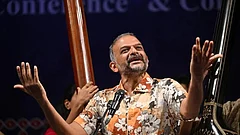


According to the proposed legislation, any person who intentionally prevents or disturbs the singing of Vande Mataram, or disrupts a gathering engaged in its rendition, will be liable for the same penalties that currently apply to offences involving the National Anthem.
The word 'intentionally' is significant: it is the same threshold the 1971 Act uses for National Anthem offences, and courts have historically interpreted it to require evidence of deliberate, conscious disrespect rather than mere accidental disruption.
How Will The Law Change?
Currently, the Prevention of Insults to National Honour Act, 1971, protects the National Flag under Section 2, the National Anthem under Section 3, and the Constitution under Section 1A. The 1971 Act is silent on the National Song. Vande Mataram's status as the National Song was acknowledged in the Constituent Assembly and reaffirmed by subsequent governments.
If the Amendment Bill passes, a new section will be inserted extending Section 3's provisions — or equivalent provisions — to Vande Mataram. The practical legal effect is that police will be able to register FIRs under the Act for Vande Mataram-related offences, prosecutors will be able to seek criminal penalties without relying on more general provisions like Section 505 of the Bharatiya Nyaya Sanhita (statements conducing to public mischief).

How Is Vande Mataram Different From The National Anthem?
The distinction between India's National Anthem and its National Song is one of the less understood aspects of Indian constitutional culture. Jana Gana Mana was adopted as the National Anthem on January 24, 1950 — the day before the Constitution came into force — by the Constituent Assembly, which simultaneously noted that Vande Mataram had 'played a historic part in the struggle for Indian freedom' and should be honoured equally.
But 'equal honour' has never meant 'equal legal status.' The National Anthem is mandated to be played at specific occasions. There is no equivalent statutory mandate for Vande Mataram at specific occasions, though the July 9 MHA directive that Vande Mataram be played before Jana Gana Mana at events where both are performed begins to create an administrative equivalent.
Historically, the song has also carried a contested dimension. During the independence movement, sections of the Muslim community objected to the song's later stanzas, which invoke Hindu goddess imagery, and the Congress under Gandhi and Nehru agreed to confine the use of the first two stanzas as the National Song.
Why Is The Amendment Being Introduced Now?
The amendment is introduced during the 150th anniversary year of the composition of Vande Mataram — a politically potent anniversary that the BJP has commemorated extensively since 2025, including through the Winter Session 2025 debate, a Parliament resolution, and multiple state-level events.
The timing is also linked to the political context that Vande Mataram has acquired in the aftermath of the West Bengal state Assembly election. The song's relationship to the TMC government and its presence or absence at government events in Bengal has been a recurring BJP political talking point.
What Constitutional And Legal Questions Could It Raise?
Three sets of questions will be raised in Parliament, in courts, and in public debate. The first is definitional: what constitutes 'insult' to a song? The 1971 Act's National Anthem provision has generated litigation over cases where individuals did not stand for the Anthem, where it was played incompletely, or where religious groups objected on conscientious grounds.
The Supreme Court, in Bijoe Emmanuel v. State of Kerala (1986), held that compelling school students to sing the National Anthem violated their fundamental right to religion when their faith prohibited participation. Whether the same reasoning would apply to Vande Mataram is an open question.
The second is the scope of Article 19 protection. The right to freedom of speech and expression includes the right not to speak. A law that criminalises 'insult' to a song without defining the term precisely risks creating a chilling effect on political speech: could a politician arguing that the song should not be played at a certain venue be prosecuted? Could an academic arguing that the song's mandatory use is divisive face criminal exposure? The imprecision in the Bill's framing will attract these challenges.