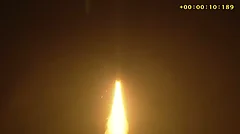
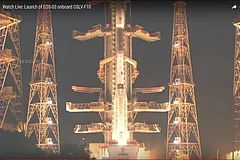
Skyroot Aerospace's Vikram-1 lifted off from the Satish Dhawan Space Centre, Sriharikota, at 12:05 PM IST on July 18, 2026.
Vikram-1 is India's first carbon-composite orbital launch vehicle, standing 22 metres tall and capable of carrying up to 350 kg to low Earth orbit.
The launch, dubbed Mission Aagaman, came after two consecutive ISRO PSLV failures, intensifying its symbolic weight.
At 12:05 PM IST on Saturday, July 18, 2026, a 22-metre rocket built in Hyderabad by a company that did not exist eight years ago lifted off from the same island spaceport that has served India's government space agency for decades. The Vikram-1 rocket lifted off from the Satish Dhawan Space Centre in Sriharikota, carrying several customer payloads and in-orbit experiments on its maiden orbital mission, dubbed Mission Aagaman. It successfully injected its payload into a 450 km orbit about 15 minutes later, making India the third country to achieve orbital launch capability through private enterprise.
The other two countries are the United States and China. No European nation, no Japanese company, no Middle Eastern or South Asian or Southeast Asian private entity has reached orbit before a private Indian rocket. On this particular scoreboard, Skyroot Aerospace has placed India ahead of everyone except SpaceX's home country and Beijing.
What Is Vikram-1?
Vikram-1 is India's first carbon-composite space launch vehicle. The rocket stands approximately 22 metres tall, weighs around 40 tonnes at liftoff, and is designed to carry payloads of up to 350 kg into low Earth orbit. Its most technically distinctive feature is the Orbital Adjustment Module — a liquid-engine upper stage that allows the rocket to precisely manoeuvre in the vacuum of space for last-mile delivery of satellites to specific orbital slots.


The rocket is named after Vikram Sarabhai, widely regarded as the father of India's space programme. Skyroot is based in the central Indian city of Hyderabad and was founded in 2018. Mission Aagaman — Sanskrit for 'the arrival' — was chosen for the maiden flight's name to signal that India's private space era had not merely been promised but had actually come.

Why Is This Launch Historic?
India opened its space sector to private companies in 2020, when the government reformed the sector's regulatory architecture, created IN-SPACe as a facilitating body, and allowed private entities to build and launch rockets.
Six years is a short time in rocket development by any historical measure. SpaceX took nearly five years from founding to its first successful Falcon 1 orbit in 2008. Skyroot, working in a country with a fraction of the private aerospace infrastructure available in the United States, completed its journey from founding to first orbit in eight years, with a suborbital test (Vikram-S, November 2022) en route.
Who Is Skyroot Aerospace?
Skyroot Aerospace was founded in 2018 by Pawan Kumar Chandana and Bharath Dhaka, both alumni of IITs and former scientists of ISRO turned entrepreneurs. The company made history for the first time four years after its founding with Vikram-S, its suborbital rocket, becoming the first private Indian outfit ever to reach space. Vikram-S launched on November 18, 2022, on a mission called Prarambh — 'the beginning' — reaching an apogee of 89.5 km.
Skyroot became the first space-sector company in India to hit a $1 billion valuation earlier in 2026. Former ISRO chairman S. Somanath joined the company as its honorary Chief Technical Advisor before the Vikram-1 launch, a move that carried both practical and symbolic weight. PM Modi unveiled the Vikram-1 rocket at Skyroot's Infinity Campus in Hyderabad in November 2025 — a two-lakh-square-foot facility with the capacity to build one orbital rocket per month.

How Is Vikram-1 Different From ISRO's Rockets?
Vikram-1 is India's first carbon-composite launch vehicle ISRO's PSLV and GSLV use aluminium alloy structures. Carbon composite is lighter and stronger, allowing a better mass ratio and thus a more capable vehicle for its size.
The PSLV is a larger, heavier workhorse designed for a range of missions, with a payload to LEO of approximately 3.8 tonnes. Vikram-1 targets the small satellite market, with a 350 kg LEO capacity, competing directly in the commercial rideshare segment where SpaceX, Rocket Lab, and a growing number of Asian startups are contending for business.
The Orbital Adjustment Module also differentiates Vikram-1 from both ISRO's vehicles and many of its private competitors: the ability to place payloads precisely means customers can book a Vikram-1 launch without needing to design their satellites around the rocket's inclination and altitude — the rocket can go to them, within limits.
What Payloads Did It Carry?
Vikram-1 also carried Skyroot's SCOPE satellite, which collected a variety of data to help the company assess the rocket's performance during flight. There were two symbolic payloads on board as well — a small, 18-karat gold rocket from artist Ajay Kumar Mattewada and 'Cosmic Bloom,' designed by Cosmos Diamonds, a company that makes jewellery using lab-grown gems.
The customer payloads carried alongside Skyroot's own SCOPE satellite and symbolic items have not been individually named in initial reports, consistent with standard practice for commercial launch operators who may not disclose customer satellites by name without permission.
What Does The Launch Mean For India's Private Space Sector?
India's private space industry has, since 2020, attracted billions in investment, generated dozens of startups, and produced a handful of genuine milestones — but until July 18, 2026, it had not produced an orbital launch. That single gap separated India's private sector from the commercial space industry's most basic economic activity: putting things in orbit for paying customers. Vikram-1 closes it.
The strategic implications extend beyond commerce. Independent access to space — the ability to launch satellites without relying on foreign launch vehicles — is a national security and strategic communications asset. India's government satellites rely on ISRO, and ISRO's recent PSLV failures have exposed the risk of concentration.
A domestic private launch capability is a form of strategic redundancy: if ISRO's rockets are unavailable, a private Indian vehicle can serve Indian satellite operators. For international customers, India now offers a third option for LEO launches in Asia, alongside Chinese and Japanese providers.