From Gandhi to Sonam Wangchuk, hunger strikes have remained a major form of political protest in India.
Fasts by Potti Sriramulu, Irom Sharmila and Anna Hazare show both the power and limits of moral pressure.
Wangchuk’s recent protest highlights why governments struggle when fasting becomes a public political issue.
Sonam Wangchuk’s hunger strike at Delhi’s Jantar Mantar, organised in support of the Cockroach Janta Party (CJP) protest over alleged NEET-UG examination irregularities and demands for accountability, has brought hunger strikes back into India’s political conversation. After Wangchuk was shifted to hospital following a prolonged fast, CJP founder Abhijeet Dipke announced that he would continue the protest through an indefinite hunger strike.
The Delhi High Court, while hearing a petition on Wangchuk’s health, directed the Centre to ensure daily monitoring of his condition by government doctors and to “intervene immediately” if required. “The life of any citizen is precious,” the court said.
The intervention came after concerns were raised over Wangchuk’s deteriorating health during the CJP protest. The movement, led by Abhijeet Dipke, has demanded accountability from the government over alleged examination irregularities, including the NEET-UG paper leak, and has sought the resignation of Union Education Minister Dharmendra Pradhan. Wangchuk began his fast on June 28 at Jantar Mantar, and as his health worsened, supporters and public figures urged him to end the protest.

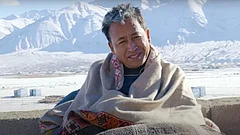


From Mahatma Gandhi’s fasts during the freedom movement to Potti Sriramulu’s demand for Andhra statehood, Irom Sharmila’s 16-year protest against AFSPA, Anna Hazare’s anti-corruption campaign and Wangchuk’s recent fasts over education accountability and Ladakh’s demands, hunger strikes have remained a form of political pressure in India. They do not always force governments to accept demands, but they create a difficult question for the state: how should it respond when a citizen is willing to risk personal health for a public cause?
Why does a hunger strike carry moral power?
A hunger strike turns personal suffering into a political argument. Unlike a conventional protest where numbers, slogans or demonstrations are central, the focus shifts to the individual and the decision to stop eating.
Mahatma Gandhi gave fasting an important place in the freedom movement. He described fasts as “a great weapon in the armoury of Satyagraha” and undertook this form of protest at least 20 times during the Independence struggle. His longest hunger strike came in 1943, when he fasted for 21 days while imprisoned during the Quit India movement.
For Gandhi, fasting was linked to non-violence and moral pressure. The protester does not use force against the opponent but creates pressure by making the opponent confront the consequences of ignoring the protest.
The same idea shaped several movements after Independence. In 1952, Potti Sriramulu began a fast demanding a separate state of Andhra Pradesh. After 58 days, his death triggered widespread protests, eventually leading to the creation of Andhra Pradesh in 1953.
Another example came in 1969, when Sikh leader Darshan Singh Pheruman fasted unto death demanding the inclusion of Punjabi-speaking regions, including Chandigarh, in Punjab. He died after fasting for 74 days.
These cases showed why governments find hunger strikes difficult to ignore. A protest that begins as an individual act can quickly become connected to a wider identity or political demand.
How have hunger strikes shaped modern Indian politics?
The success of a hunger strike depends on several factors: public support, political timing and whether the government sees a cost in refusing the demand.
Irom Sharmila’s protest against AFSPA is an example of both the strength and limits of fasting. In November 2000, after 10 civilians were allegedly killed by the 8th Assam Rifles in Manipur, the then 28-year-old activist began an indefinite hunger strike against the law.
She was arrested three days later for “attempting suicide” and remained in custody for 16 years while continuing her fast. During this period, she was force-fed through a tube. International groups including the United Nations and the International Red Cross described force-feeding as a “form of torture” and a violation of prisoners’ right to refuse food.
Sharmila ended her fast in 2016 without achieving the repeal of AFSPA. However, her protest kept attention on the law and the debate over security measures and civil liberties.
In 2011, Anna Hazare’s anti-corruption movement brought hunger strikes back to the centre of national politics. His indefinite fast demanding a stronger Lokpal law gained widespread public support. Within four days, the government agreed to set up a committee to draft the Lokpal Bill, which was eventually passed by Parliament in 2013.
The movement also changed electoral politics. The Aam Aadmi Party, whose origins lie in the anti-corruption movement, emerged from the political mobilisation around the Lokpal campaign, with Arvind Kejriwal among those involved in the protests.
Hunger strikes have also been used in statehood and regional movements. In 2009, Telangana Rashtra Samithi leader K Chandrasekhar Rao began a fast-unto-death demanding Telangana statehood. The Congress government agreed within 10 days to move towards creating the state, which was eventually formed in 2014.
In West Bengal, Mamata Banerjee used a 25-day hunger strike in 2006 against land acquisition for the Tata Nano factory in Singur. She ended the fast after appeals from then President A P J Abdul Kalam and Prime Minister Manmohan Singh. The issue became a turning point in Bengal politics and contributed to the Left Front’s defeat in 2011 after more than three decades in power.
Why do governments struggle to respond to hunger strikes?
A hunger strike creates a difficult situation for governments because the protest itself raises questions about state responsibility. If authorities ignore the fast, they risk criticism over inaction. If they intervene, they may appear to be accepting political pressure.
Wangchuk’s Ladakh protests, as well as his recent CJP-backed fast in Delhi, reflect this challenge. The demands are linked to concerns over administration, employment, land protection and ecological issues after Ladakh became a Union Territory following the repeal of Article 370 and the Jammu and Kashmir Reorganisation Act, 2019.
Many in Ladakh had initially supported Union Territory status, but concerns later emerged over the loss of powers of autonomous hill development councils, job opportunities and decision-making authority.
The Delhi protest is not Wangchuk’s first use of fasting as a political tool. Earlier, he had used hunger strikes to highlight Ladakh’s constitutional safeguards, environmental concerns and demands for greater autonomy. His earlier campaigns focused on Ladakh’s constitutional safeguards, environmental concerns and demands for greater autonomy.
Wangchuk and other activists have demanded statehood and the extension of the Sixth Schedule of the Constitution to Ladakh. The Sixth Schedule allows autonomous councils in tribal areas to make decisions on issues such as land, forests, water, agriculture and local administration.
Wangchuk has argued that greater decentralisation is needed because “lower levels of bureaucracy” may have been “influenced by industrial powers and business houses”, who wanted “mining to take place in every valley here”.
The protests have been led by groups including the Leh Apex Body and the Kargil Democratic Alliance. The latest Delhi protest has also brought renewed attention to how hunger strikes can move between different issues and constituencies — from regional autonomy in Ladakh to national concerns around education and governance. In March 2024, Wangchuk began a 21-day fast in Leh, surviving on water and salt while sleeping outdoors in below-freezing temperatures. A planned “Pashmina March” to the Line of Actual Control was later cancelled.
Other recent movements have also used fasting to build pressure. Former Andhra Pradesh Chief Minister N Chandrababu Naidu went on a hunger strike in 2018 demanding special status for the state. Activist Hardik Patel began a fast the same year demanding reservation for Patidar youths and farm loan waivers. During the farmers’ protests against the three farm laws in 2020, farmers also organised relay hunger strikes to press the government to repeal the legislation.
In Maharashtra, activist Manoj Jarange-Patil led a series of fasts demanding Maratha reservation. The state Assembly later passed a 10 per cent reservation for the community in jobs and educational institutions.
When does a hunger strike succeed, and has social media changed fasting politics?
A hunger strike succeeds when it connects with a wider public concern and creates enough political pressure for the government to respond. Sriramulu’s fast succeeded because it became part of the larger demand for linguistic states. Anna Hazare’s protest gained momentum because corruption was already a major public issue. Telangana’s movement succeeded after years of political mobilisation.
But fasting alone does not guarantee a change in policy. Irom Sharmila’s experience showed that a government can withstand prolonged moral pressure if it does not agree with the demand.
Social media has changed the way hunger strikes are organised and followed. The CJP protest shows how digital platforms can help newer movements build visibility quickly, mobilise supporters and turn a protest site into a wider political conversation. Protesters can now communicate directly with audiences without relying only on traditional media.
At the same time, digital platforms have also changed the nature of public attention. A hunger strike must compete with multiple political debates, and sustaining support requires continuous communication.
From Gandhi’s fasts during the freedom struggle to Wangchuk’s protests over Ladakh and the CJP movement, hunger strikes remain a form of political action that places the individual’s body at the centre of a public debate. Their impact depends not only on the act of fasting, but also on the issue being raised, the response of the government and the support it receives from society.