The CJP protests have reignited debate over why public demonstrations in India require police permission, despite the Constitution guaranteeing the rights to free speech and peaceful assembly.
While citizens have a fundamental right to protest under Article 19, authorities can regulate or restrict demonstrations under the BNSS and the Constitution.
Supreme Court judgments have consistently held that governments may regulate the time, place and manner of protests.
The CJP protests organised in Delhi has once again brought the issue of public demonstrations and police permissions into the spotlight.
Across India, political parties, civil society groups, trade unions and citizens frequently seek permission from local authorities before organising marches, rallies or sit-ins. While the Constitution guarantees the right to freedom of speech and peaceful assembly, these rights are not absolute. Governments can regulate protests in the interest of maintaining public order, preventing violence and ensuring that the rights of other citizens are not disrupted.
The CJP protest has therefore revived a broader constitutional question: why do peaceful demonstrations require police permission, and where does the law draw the line between public order and civil liberty?
Is the right to protest a Fundamental Right?
The Indian Constitution does not expressly mention a "right to protest", but peaceful demonstrations are protected through several Fundamental Rights.
Article 19(1)(a) guarantees the freedom of speech and expression, while Article 19(1)(b) gives citizens the right to assemble peacefully and without arms. Together, these provisions form the constitutional basis for public protests, marches and demonstrations.
However, these rights are not absolute. Articles 19(2) and 19(3) allow the State to impose reasonable restrictions in the interests of India's sovereignty and integrity, public order, decency, morality and other specified grounds. This means citizens are free to organise peaceful protests, but governments may regulate the time, place and manner in which they are held if doing so is necessary to protect public safety or prevent disorder.



Why do police permissions matter?
Police permission is generally required because most demonstrations take place in public spaces where authorities are responsible for maintaining law and order.
Large gatherings can affect traffic movement, emergency services, commercial activity and public safety. Police therefore assess proposed protests to determine whether adequate security arrangements, crowd management measures and traffic diversions are needed.
When organisers apply for permission, authorities typically consider factors such as the expected number of participants, the proposed route, proximity to sensitive locations, competing events and the availability of police personnel.
What powers do district authorities have?
District magistrates, police commissioners and local police authorities possess broad statutory powers to regulate public assemblies.
Under the Bharatiya Nagarik Suraksha Sanhita (BNSS), 2023, which replaced the Code of Criminal Procedure (CrPC), Executive Magistrates may issue preventive orders where they consider there is sufficient ground to prevent obstruction, danger to human life, public disturbance or riots. The successor provision to the former Section 144 of the CrPC continues to empower authorities to prohibit assemblies or impose temporary restrictions where urgent situations require immediate action.
Authorities may impose reasonable conditions relating to timing, route, sound levels, crowd size, security arrangements and compliance with traffic regulations.

Can police legally deny permission?
Yes, but not arbitrarily. Police authorities may refuse permission if they reasonably believe that a proposed demonstration presents a genuine threat to public order, public safety or national security, or if logistical constraints make adequate policing impossible.
However, courts have consistently held that restrictions must satisfy the constitutional test of reasonableness. A blanket refusal simply because authorities disagree with the views of protesters would be constitutionally vulnerable.
Similarly, restrictions should be proportionate to the risks involved. If a peaceful protest can safely proceed with reasonable conditions—such as limiting the route, duration or sound levels—authorities are generally expected to consider such alternatives rather than imposing an outright ban.

What has the Supreme Court said?
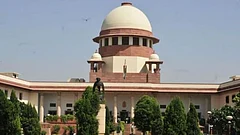
The Supreme Court has developed a substantial body of jurisprudence recognising both the importance of peaceful protest and the State's obligation to maintain public order.
In Himat Lal K. Shah v. Commissioner of Police, Ahmedabad (1973), the Court held that while the government may regulate the use of public streets through reasonable rules, it cannot impose a complete prohibition on public meetings.
More recently, in Mazdoor Kisan Shakti Sangathan v. Union of India (2018), the Court observed that the right to protest peacefully is a fundamental democratic right, but authorities must balance this with the rights of residents and commuters.
In the Amit Sahni v. Commissioner of Police (Shaheen Bagh) (2020) judgment, delivered after prolonged anti-CAA protests, the Supreme Court ruled that while citizens have the right to protest, public ways and highways cannot be occupied indefinitely.
These judgments illustrate the Court's consistent approach: neither unrestricted protest nor unrestricted governmental control is compatible with constitutional democracy. Instead, both rights and restrictions must be balanced.

Where is the line between public order and civil liberty?
This remains one of the most difficult questions in constitutional law.
On one hand, governments have a legitimate duty to prevent riots, violence and threats to public safety. Intelligence inputs, communal tensions, competing demonstrations or security concerns may justify restrictions in particular situations.
On the other hand, excessive regulation can undermine democratic participation if permission systems become tools for suppressing dissent rather than facilitating peaceful assembly.
Legal scholars often distinguish between regulating the manner of protest and restricting the content of protest. Governments may legitimately regulate where, when and how demonstrations occur to ensure public safety. They cannot ordinarily restrict protests simply because they disagree with the opinions being expressed.
Ultimately, India's constitutional model does not view civil liberties and security as opposing goals. Instead, it seeks to ensure that peaceful dissent remains possible while allowing the State to take proportionate measures to safeguard public safety. The challenge for authorities—and for the courts—is to ensure that regulation facilitates democratic participation rather than becoming an obstacle to it.