Parliament’s Monsoon Session begins tomorrow with NEET paper leak, Ram Temple donations row and political defections likely to dominate debates.
The government will focus on passing key bills, including women’s reservation, delimitation and taxation-related legislation.
Opposition parties are preparing to challenge the Centre over governance issues, accountability and recent political developments.
The Monsoon Session of Parliament begins on Monday with the government seeking support for key legislation, including women’s reservation, taxation and education reforms, while the opposition prepares to raise the NEET paper leak, allegations over Ram Temple donations and political defections.
The session, which will continue till August 13, begins amid changing political equations in Parliament after groups of MPs from the Trinamool Congress and Shiv Sena (UBT) sought recognition as separate blocs from their parent parties. The government is seeking support for several bills, while opposition parties are preparing to challenge it on issues they have identified as central to their political campaign.
At an all-party meeting held on Sunday ahead of the session, opposition parties staged a symbolic walkout over the invitation extended to rebel TMC MPs and decisions regarding their seating arrangements. The government urged parties to ensure smooth functioning of Parliament and resolve differences through debate.
Union Minister Kiren Rijiju said, "People of the country want Parliament to function smoothly. We also want this. By protesting, no one is going to benefit politically. That is why I request members of all political parties to take part in the proceedings wholeheartedly."
NEET paper leak to be first major opposition challenge
The alleged NEET paper leak is expected to be among the first issues raised by opposition parties during the session. The Congress and other INDIA bloc parties have accused the government of failing to maintain transparency in competitive examinations and are demanding accountability over the controversy.


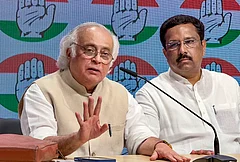
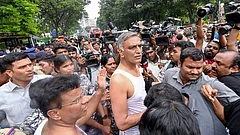
Opposition parties are likely to seek a discussion on the issue and question the government on the action taken against those accused. Congress leaders have also targeted Education Minister Dharmendra Pradhan over the matter.
The government is expected to respond by pointing to investigations against those accused and steps taken to address concerns raised by candidates, including measures for affected students.
Congress president Mallikarjun Kharge has said the party will raise issues including institutional functioning, corruption, price rise, foreign policy and the NEET controversy during the session.
The protests have intensified ahead of the session, with demonstrators also demanding action against those accused in the examination irregularities.
Ram Temple donations row likely to become another flashpoint
The opposition is also expected to raise allegations of irregularities in donations collected for the Ram Temple in Ayodhya.
Congress leaders included the issue among the subjects they want discussed during the session, along with the NEET paper leak and ethanol blending in petrol.
Congress leader Pramod Tiwari said, "We demanded a discussion on all these issues."
The government is expected to argue that the matter falls outside its jurisdiction and concerns state-level authorities.
The matter has become part of the opposition’s broader attack on the government, with leaders seeking discussions on transparency and accountability.
Rebel MPs, NCPI dispute reshape Parliament numbers
The Monsoon Session will begin amid disputes over the status of lawmakers who have broken away from opposition parties.
Lok Sabha Speaker Om Birla has approved separate seating arrangements for 20 rebel TMC MPs who claim to have joined the National Citizens Party of India (NCPI). However, no final decision has been taken on recognising them as a separate bloc.
The TMC has opposed the move and sought disqualification of the rebel MPs, arguing that the merger has not been approved and that petitions against the lawmakers remain pending.
The decision to invite the rebel MPs to the all-party meeting led to an opposition walkout on Sunday. TMC MP Mahua Moitra said the opposition parties had protested against the invitation extended to the group.
A similar dispute has emerged after six Shiv Sena (UBT) MPs joined the Eknath Shinde-led Shiv Sena. The Speaker has approved their merger, a decision challenged by Shiv Sena (UBT).
The Aam Aadmi Party has also raised objections over claims that seven of its Rajya Sabha MPs joined the BJP. AAP leader ND Gupta alleged that the MPs had been "hijacked" and said the party’s petition challenging the move was pending.
The developments have altered the numbers in the Lok Sabha as the government seeks wider support for legislation requiring a special majority.
Women’s reservation, delimitation and bills remain government priority
The government is expected to make another attempt to pass legislation providing 33 per cent reservation for women in the Lok Sabha and state assemblies through a constitutional amendment linked to delimitation.
The earlier bill failed to clear the Lok Sabha after the government could not secure the required two-thirds majority. Passing a Constitution Amendment Bill requires the support of two-thirds of members present and voting.
Government sources have indicated that support from some opposition parties or abstentions could become important during voting.
The delimitation proposal has also faced concerns from southern states, which fear that a population-based exercise could reduce their representation in Parliament.
The meeting focused on the government’s legislative plans and efforts to secure support for its agenda.
The Centre is also expected to introduce bills replacing ordinances, including the Income-tax (Amendment) Bill, 2026, which provides tax exemptions for foreign investors earning interest and capital gains from investments in government securities.
Other proposed legislation includes the FCRA Amendment Bill, the Vikshit Bharat Shiksha Adhishthan Bill and a bill seeking statutory protection for the national song Vande Mataram.
UCC proposal and J&K statehood demands add to political agenda
While the bills before Parliament will dominate proceedings, political developments in states are also expected to shape debates during the session.
The Madhya Pradesh cabinet has approved the draft Uniform Civil Code bill, which is expected to be introduced during the state assembly’s Monsoon Session. The proposed legislation covers marriage, live-in relationships, adoption and inheritance, while excluding Scheduled Tribes from its provisions.
Chief Minister Mohan Yadav said the bill aims to promote women’s empowerment and provides equal legal status to children born through marriage, live-in relationships, adoption, surrogacy and assisted reproductive technology.
The draft was prepared by a committee headed by retired Supreme Court judge Ranjana Prakash Desai, which received more than 9.58 lakh suggestions during its consultation process.
The session will also see demands for restoration of Jammu and Kashmir’s statehood. National Conference leader Rattan Lal Gupta has urged the Centre to introduce and pass a Statehood Restoration Bill during the session.
Gupta said, "Any further delay will only deepen public disappointment and raise serious concerns about the Centre's commitment to democratic values and the federal structure of the country."
With the government seeking passage of key bills and opposition parties preparing to raise several political and public issues, the session is likely to be dominated by debates over legislation, accountability and parliamentary numbers.
(With inputs from PTI)