The alliance could consolidate nearly 38 per cent of the Marathi vote.
BMC elections are scheduled for January 15, 2026.
The Marathi-versus-Hindi conflict has flared up again in Maharashtra.
Shiv Sena (UBT) and the Maharashtra Navnirman Sena (MNS) are expected to formally announce their alliance on December 24, at a joint press conference. After years of political distance, the slow, dramatic path toward a reunion now appears close. In Mumbai, the coming together could consolidate nearly 38 per cent of the Marathi vote. Beyond the city, however, the alliance will have to navigate a very different and more complex political terrain across the Mumbai Metropolitan Region.
Politics over Marathi language, their electoral campaign and emotional appeal to Marathi people for voting two brothers has definitely got some momentum in their favour as far as the BMC elections are concerned. The BMC will be polling on January 15, 2026 followed by the results on January 16.
Marathi vs Hindi Row
In 2025, Marathi Abhyas Kendra, Marathi Ekikaran Samiti and several groups and citizens demonstrated against the imposition of Hindi as a third compulsory language in primary schools. These agitations intensified the discussions about Marathi language, Closure of BMC run Marathi schools etc. Since then, the language politics took centre stage.


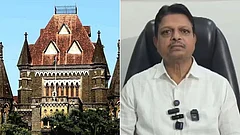
Dr. Deepak Pawar president of Marathi Abhyas Kendra delivered various public speeches across the states, collectivised people and various forums. He and Marathi Abhyas Kendra’s Anand Bhandare, Sadhana Gore and many other activists played crucial roles, putting sustained efforts from burning Hindi imposing Government resolutions as protest to organising state level conference for saving Marathi schools. This brought lingual politics to the centre stage. Both Thackeray brothers marked their presence at Burning Hindi GR protest, but later failed to be consistent except political rhetoric.

In November, after the Arnav Khaire death, the Marathi-versus-Hindi conflict flared up again in Maharashtra. The death of the 19-year-old, who died by suicide after allegedly being confronted for speaking Hindi on a local train, in November, had intensified political tensions. BJP targeted both Uddhav and Raj Thackeray for their ‘Marathi vs Hindi’ politics and held them responsible for Khaire’s death.
Khaire was allegedly assaulted on a local train by a group of 3–4 men who demanded that he speak Marathi. His family told the media that the incident left him deeply shaken, especially since he himself was a Marathi-speaking youngster whose repeated pleas to be allowed to leave were ignored. He reportedly died by suicide later that evening after returning home from college.

BJP leaders held many agitations in Mumbai, demanding justice for Arnav Khaire while attacking Shiv Sena (UBT) and MNS.
Opposition parties have accused the BJP and RSS of deliberately fostering linguistic discrimination and division for political gain. Shiv Sena (UBT), has also alleged that the BJP is using linguistic strife as part of a larger electoral strategy.
Brand Thackeray
Over the past six months, Uddhav Thackeray and Raj Thackeray have repeatedly shared public platforms, signalling a rare alignment in their political priorities. From leading protests against the now-withdrawn government resolution mandating Hindi in primary schools, to demonstrations over alleged ‘vote-chori,’ and even jointly paying tribute to Shiv Sena founder Balasaheb Thackeray on his death anniversary at Shivaji Park — the two cousins have appeared together at multiple high-visibility events.
Since November, top leaders from both parties have had multiple rounds of discussions on seat sharing. The initiation of seat sharing talk energised the party cadre on both sides, who saw an opportunity to revive a broader Marathi regional front that once dominated Mumbai’s municipal politics.

“As a Shiv Sena activist, I am extremely happy that both Thackeray brothers have come together for the betterment of Maharashtra. It’s a moment of pride for us and we see that Hinduhridaysamarat Balasaheb’s dream coming true. There is lawlessness in terms of women’s safety under the present government, it's not addressing the issues of farmers, youth, students and safety of women. We believe that Thackerays will change this picture, our party (Shiv Sena - UBT) gained more popularity even outside Maharashtra.” Ayodhya Poul Patil, a ShivSena activist and state co-ordinator of Party’s Social Media told Outlook.
Seat-sharing discussions have begun between Shiv Sena (UBT) and the Maharashtra Navnirman Sena (MNS). Shiv Sena (UBT) shows positive signs to offer 75 seats to MNS out of 227 seats of BMC, according to sources, Though the final seat sharing formula is yet to be announced and a couple of more rounds of negotiations may take place. This alliance will be crucial to consolidate Marathi votes.
However, the Congress has made it clear that the MNS will not be part of the INDIA alliance. The party’s central leadership remains firm in its reluctance to accommodate the MNS. NCP(SP)’s Sharad Pawar also initiated a dialogue about MNS’s inclusion in MVA or India Bloc.
Shiv Sena Then and Now: Shiv Sena( UBT) and its Relevance
Shiv Sena, founded in 1966 by Balasaheb Thackeray, emerged as a powerful regional party rooted in Marathi identity and Hindutva politics. Thackeray, a fiery orator and charismatic leader, built the party by championing the rights of Bhumiputra (sons of the soil) and shaping Mumbai’s political landscape for decades. His leadership transformed Shiv Sena into a formidable force influencing Maharashtra’s governance, culture, and street politics. For years, since the 1990s, the Shiv Sena became extremist with Hindutva ideology, it joined the NDA in the past for power.
In 2019, Shiv Sena broke away its alliance with NDA and Uddhav Thackeray joined INDIA Bloc which is known as Mahavikas Aaghadi in Maharashtra. However, political analysts say that the Shiv Sena paved the way for the BJP’s growth in Maharashtra from Balasaheb Thackeray’s era.
Even after his death in 2012, Balasaheb Thackeray’s legacy continued to define the party’s ideology and Maharashtra’s political narrative. Though Maharashtra has seen extreme political turmoil with the party splits of Shiv Sena and NCP, Uddhav Thackeray has been a consistently popular leader of INDIA bloc in Maharashtra. The INDIA bloc managed to win 30 seats out of 48 for the Lok Sabha election in Maharashtra under Uddhav’s leadership, but was defeated in Maharashtra assembly elections. NDA formed a government in Maharashtra with the landslide victory in 2024.

“Recently, the Thackeray brothers sensed that the Marathi linguistic narrative was gaining momentum, especially after they joined the protest against Hindi imposition organised by the Marathi Abhyas Kendra. But their consistent commitment to language issues is not guaranteed, even if they come together and win the BMC elections. The fight will still have to continue — Marathi schools are being shut down by the BMC, and lower-income Marathi communities continue to face cultural marginalisation by non-Marathi groups,” said Dr. Deepak Pawar, president of the Marathi Abhyas Kendra.