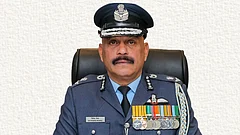
In an exclusive interview with Neeraj Thakur and Saurabh Sharma, former Chief of Defence Staff (CDS) General Anil Chauhan, who recently retired, speaks in rare detail about the unfinished project of military integration, lessons from Operation Sindoor, the future of India’s warfighting strategy and the growing importance of sovereign defence technology. Integrated indigenous systems can often generate greater combat effectiveness than even superior foreign platforms operating in isolation. He says future wars will not be won merely by possessing the best standalone weapons, but by the ability to securely integrate sensors, shooters, communications and command networks into a unified operational architecture. Edited excerpts:
Although the report on theatre commands has been submitted to the Ministry of Defence, when can we expect the announcement of the first integrated theatre command?
Theatre command is actually an end state. By itself, it has no meaning unless it is backed by integrated structures and a spirit of jointness among the services. The process is essentially three-stage—jointness leading to integration and integration leading to theatre commands.
The difficult part is not creating a theatre command on paper. The difficult part is making it function. Today, the Army, Navy and Air Force have different communication systems, HR structures, legal mechanisms, operational procedures and even different standards for promotions and command.
For example, officers from different services cannot always seamlessly communicate through their existing communication networks. Aviation assets may be common, but their operating standards differ. Accident reports are not shared uniformly. Even disciplinary systems differ across services. Unless these structures are integrated, theatre commands will not be able to function effectively.


What are the major challenges to achieve integration between the three services?
There are many. Communication is one of the biggest challenges. The services have different cyber security and encryption protocols and different communication architectures. The Air Force believes its cyber security system is highly secure because it has a limited number of bases, while the Army operates across hundreds of formations and locations. Unless there is a common cyber security policy and interoperable communication architecture, integration cannot happen. Similarly, HR systems are entirely different. Promotion systems differ. Punishment mechanisms differ. Confidential reports are written differently. Even the interpretation of disciplinary action varies across services. We have identified nearly 197 areas requiring integration—from logistics and legal structures to communications, operational intelligence, training, HR and administration.
Can you explain how theatre commands will actually function?
Theatre commands are about separating force generation from force application. At present, service chiefs are responsible for both generating and applying force. That means the Navy chief, for example, recruits personnel, trains them, maintains platforms, handles procurement and also plans for operations. Future warfare is becoming too complex for this arrangement.
Under theatre commands, one structure will focus on force generation—recruitment, training, maintenance and sustenance. Another structure, the theatre commander, will focus purely on fighting wars and operational preparedness.
The theatre commander will have components from the Army, Navy and the Air Force under him and will be dedicated entirely to operational planning and warfighting.
Why is this restructuring necessary now?
Modern warfare is becoming multi-domain and network-centric. Future conflicts will involve cyber, space, air, maritime and land domains simultaneously. Today, service chiefs are burdened with administrative work—court cases, promotions, procurements, personnel matters and other administrative tasks. They do not always get enough time to focus exclusively on operational planning. The theatre commander’s sole responsibility will be warfighting. He will constantly conduct war-gaming, contingency planning and operational preparation.
Is there resistance within the services regarding theatre commands?
Every country that has attempted such reforms has faced resistance. The US also faced major opposition when it introduced unified combat commands. There were serious institutional disagreements before reforms were finally implemented. However, warfare itself has changed today. Officers understand that wars are no longer fought separately by individual services. Operations are now integrated by nature. Fortunately, our service chiefs are mature and understand the changing character of warfare.
“Although technological advancements are significant assets, We do not want warfare to escalate beyond human control.“
Will theatre commanders come from all three services?
Eventually yes, but it will take time. Initially, certain operational realities will remain. For example, a naval officer may not immediately command a theatre with primarily mountainous regions. However, over time, as officers gain cross-service exposure through tri-service postings and integrated commands, officers from all three services will become capable of commanding joint theatres. Future officers will grow up with far greater tri-service exposure than previous generations.
Some argue that jointness could dilute military specialisation. How do you respond to that concern?
Specialisation at the tactical level will remain unchanged. Infantry battalions, tank regiments, naval fleets and air squadrons will continue to function with domain expertise. Theatre commands operate at a higher operational level where coordination between services becomes essential. It is not to make everyone an all-rounder. The idea is to ensure that commanders understand the capabilities and limitations of other services and can employ them effectively in integrated operations.
How will assets be distributed among different theatre commands?
Assets will continue to remain with their existing structures at the operational level. Even today, forces are dynamically moved according to operational requirements. Some army formations earmarked for one front can be redeployed elsewhere during contingencies. The same applies to naval and air assets. Under the theatre command model, forces from one theatre command can be placed temporarily under operational command of another for specific missions and then revert back after the operation. Flexibility is already part of military planning.
India still remains one of the world’s largest arms importers despite growing domestic production. How can dependence on imports be reduced?
Several measures have already been taken. Around 75 per cent of capital acquisition budget is now earmarked for domestic procurement. Whenever the Defence Acquisition Council clears projects, minimum indigenous content requirements are specified. The indigenous content requirement is now at least 50 per cent and in many cases even more. There are also focused efforts to indigenise ammunition, spare parts and sustenance systems. Even if equipment is imported, dependence on foreign original equipment manufacturers [OEMs] for maintenance and spare parts creates long-term vulnerabilities.
Despite being in a state of war, Ukraine is producing lakhs of drones every year. Do we have that kind of a production scale?
Ukraine is producing drones in massive numbers because it is using drones in massive numbers during an active war.
Drone technology evolves very rapidly. A drone produced today may become obsolete within six months due to advancements in counter-drone systems. Therefore, instead of simply stockpiling huge numbers, the focus should be on building flexible production capacity, technological adaptability and surge manufacturing capability during wartime.
How important is sovereign technology for future warfare?
Sovereign technology is absolutely essential for future warfare. Earlier, platforms could function independently. Today, everything must be integrated—sensors, shooters, radars, communication systems and command networks. If your platforms are foreign, integration becomes difficult. You may not have access to source codes, upgrade rights or the ability to modify systems according to your operational needs. Security also becomes a concern because operational data can flow back to foreign OEMs as they may require this data for maintenance.
So are indigenous systems more important than acquiring the best foreign equipment available?
Modern warfare is network-centric. Integration itself enhances combat power. Indigenous systems are easier to integrate, upgrade and secure. Foreign systems may individually be excellent platforms, but integrating them into a common operational architecture is always more difficult. That does not mean India will stop imports altogether. Certain critical capabilities may still need to be imported depending on operational urgency. But the long-term direction must be towards technological sovereignty and indigenous integration.
Did Operation Sindoor demonstrate the value of integration?
One of the achievements during Operation Sindoor was the integration of air defence systems like Akash and other networks. The Indian Army and the Air Force were increasingly able to integrate their air defence architecture and operational networks. That process is still evolving, but it clearly demonstrated the advantages of integrated systems in modern warfare.
Do you think India’s defence spending, as a share of GDP, is enough for what the country wants to achieve over the next two decades?
There are actually two separate questions in this. One is whether the money allocation is enough because technology is constantly changing and new weapon systems are required. The second aspect is operational preparedness. Should we accept equipment that may not be the best in the world? If we say no, then we will always remain dependent on imports, and that can never work 100 per cent. At some point, we have to take calculated risks and develop our own capabilities.
This cannot be a generic approach. It depends on the equipment and the operational circumstances. For example, today we are looking at buying additional aircraft because indigenous development may still take time. So, it is not a rigid approach that says we will only manufacture everything ourselves. But by and large, the long-term logic should be that India must increasingly build and integrate its own systems.
Has there been a shift in thinking within the armed forces regarding indigenous systems?
Yes. Fortunately, that understanding has developed significantly over the past 10 years. A decade ago, if you asked someone in the Army, Navy or the Air Force to fight with something considered ‘inferior’, they would have rejected the idea outright. The attitude was: why should we compromise if the country can afford imports? Today, the thinking is different because imported systems create problems of integration, secrecy, upgrades and modifications.
Are you suggesting that integration gives more operational power than having superior but unintegrated equipment?
Exactly. Earlier warfare was platform-centric. Today, warfare is increasingly moving towards net-centric warfare, where sensors and shooters are integrated together. That’s what we achieved to some extent during Operation Sindoor as well.
Why is a common operational picture so important in modern warfare?
Because without integration, even friendly forces can become vulnerable. If the Army radar detects an incoming aircraft but does not have the Air Force’s operational picture, the aircraft may be classified as ‘unknown’. In a split second, air defence units may decide to fire.
Air defence today is among the most complex domains because threats include drones, missiles, ballistic weapons and hypersonic systems. Operators get only a fraction of a second to make decisions. That is why integration is essential.
How is India preparing for the next round of conflict, especially given the possibility of a two-front challenge?
Operation Sindoor itself was unique. We have never fought a conflict like that before—non-contact, multi-platform, fast-paced and deep-strike oriented. But assuming the next conflict will look exactly like Sindoor would be a mistake. Every conflict requires a different strategy and technologies. The element of surprise remains essential. Without surprise, operations rarely succeed. Earlier, we had surgical strikes. Then Balakot was different. This time, the emphasis was largely on stand-off munitions and precision strikes. The strategy keeps evolving.

MORE FROM THIS ISSUE




Are we preparing for threats such as drone swarms, ballistic missiles and attacks on critical infrastructure?
Absolutely. The prime minister has already spoken about building a ‘Sudarshan Chakra’. This is not just about conventional air defence. It is about creating a layered system capable of countering drones, fighters, ballistic missiles and eventually hypersonic threats. It is a combination of sensors, command-and-control systems and counter-measures working together to neutralise aerial threats.