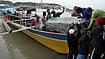
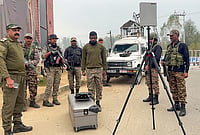
Iran closed the strategic Strait of Hormuz and fired warning shots at the Cyprus-flagged container ship M/V GFS Galaxy.
US Central Command launched retaliatory airstrikes targeting the Iranian coastal towns of Bandar Abbas and Sirik.
US President Donald Trump officially declared the interim ceasefire over but noted diplomatic negotiations would continue.
The fragile interim ceasefire reached last month has collapsed after Iran declared the Strait of Hormuz closed once again. Tehran fired warning shots at a commercial vessel on what it termed an "unauthorised route", sparking severe retaliation.
In response, the US Central Command struck Iranian targets for a third time, the publication reported. This rapid escalation severely undermines recent diplomatic efforts to pause hostilities. US officials said on Friday that the American strikes resumed after a rogue faction of Iranian hardliners tried to sabotage the ceasefire, though Tehran maintains its leadership remains united.
US Defence Secretary Pete Hegseth starkly warned on X: "Iran made a poor choice. Now they pay."
The exchange of fire shatters the brief pause in the conflict. Washington had demanded secure navigation through the strategic waterway as a precondition for further peace talks. Instead, the confrontation has only deepened. The United States has advised commercial vessels to use a southern route through Oman’s territorial waters.
Strait Maritime Clash
The targeted ship is the M/V GFS Galaxy. The Cyprus-flagged container vessel sustained an onboard fire and severe engine room damage. One civilian crew member remains missing after the attack.
The American retaliation was swift. US military strikes commenced at 7:15 pm ET. The Commander in Chief ordered the operation directly to degrade Iran's ability to attack civilian mariners.


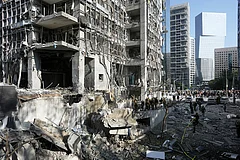
Iranian state television reported large explosions in response. The blasts hit the coastal towns of Bandar Abbas and Sirik. Tehran also warned it could target "additional enemy bases in the region" if subjected to further attacks.
The US Central Command justified the heavy bombardment. The military stated that it "is imposing a heavy cost by continuing to degrade Iran’s ability to attack civilian mariners and commercial ships freely transiting the strait". The armed forces added that Iran was given "yet another opportunity" to demonstrate compliance with a Memorandum of Understanding but "has again failed".
Trump and Khamenei Threats
Political rhetoric is intensifying rapidly. Iran’s new Supreme Leader Mojtaba Khamenei addressed the public for the first time since assuming power.
He vowed to avenge the death of his father, Ayatollah Ali Khamenei. The former leader was killed during the opening American strikes on February 28. Khamenei said on state television that such revenge "is the will of our nation and must certainly be carried out".
During the funeral proceedings, mourners prominently displayed banners. These posters explicitly called for the assassinations of US President Donald Trump and Israeli Prime Minister Benjamin Netanyahu.
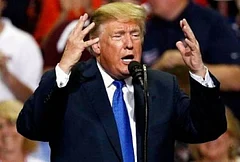
Trump responded aggressively on social media. The US President warned that 1,000 American missiles remain "locked and loaded" to counter any threats against his life. He added that thousands more are ready to launch if Tehran attempts an assassination.
Trump officially declared the current ceasefire "over". However, he noted that diplomatic negotiations would continue despite the renewed hostilities.
Geopolitical and Economic Fallout
The strategic chokepoint is vital for global energy markets. The Strait of Hormuz typically carries one-fifth of all globally traded oil and natural gas. Previous Iranian blockades triggered a severe global energy crisis, pushing crude prices to a peak of $120 a barrel.
Diplomatic channels remain active despite the violence. Iranian Foreign Minister Abbas Araghchi met with Oman's foreign minister to negotiate safe maritime passage mechanisms. Oman later confirmed that both nations agreed to continue discussions at the technical and political levels.
Araghchi accused Washington of violating the interim pact by revoking waivers that allowed Iran to sell crude oil internationally in US dollars. Araghchi wrote on X: "Reality check: There can only be mutual compliance."
Casualties are mounting across the region. American strikes over the past two days killed at least 17 people and injured 115, Iranian Health Ministry spokesperson Hossein Kermanpour said.
Mystery surrounds additional recent bombardments. Unclaimed strikes hit Iranian territory on Thursday. This has raised suspicions of Gulf Arab state involvement, following earlier Iranian attacks on Bahrain, Jordan, Kuwait and Qatar.