Iran said it will not meet senior U.S. envoys in Doha, insisting outstanding issues over the recent ceasefire must be resolved before broader talks, including on its nuclear programme, can proceed.
Reports said Trump has considered renewed military strikes but is giving diplomacy more time.
Disagreements over Iran, the Strait of Hormuz and the Israel-Hezbollah conflict continue to threaten the fragile regional truce.
Iran said on Tuesday it would not hold direct talks with senior U.S. envoys who travelled to the Gulf following the recent escalation in hostilities, raising fresh doubts over efforts to secure a lasting peace between the two countries.
The announcement came as Washington's Middle East envoy Steve Witkoff and President Donald Trump's son-in-law Jared Kushner arrived in Doha for what the White House described as "high level" discussions. However, Iranian officials said any engagement would take place only through mediators.
"No meeting at any level with the American side has been scheduled for the coming days," Iranian Foreign Ministry spokesperson Esmaeil Baghaei said.
Iranian officials said both sides must first resolve outstanding issues related to the ceasefire signed two weeks ago before moving on to more contentious matters, including potential limits on Tehran's nuclear programme.
The latest developments underscore continuing disagreements over the interim framework agreement, which calls for Iran to ease restrictions on shipping through the Strait of Hormuz in return for financial incentives and provides a 60-day window to negotiate a permanent settlement.
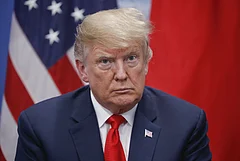


Qatar confirmed that Prime Minister Sheikh Mohammed bin Abdulrahman Al Thani met Witkoff and Kushner, while foreign ministry spokesperson Majed Al Ansari said lower-level technical talks between the two sides were expected to begin.

Meanwhile, the Wall Street Journal reported that Trump had discussed possible new military strikes on Iran with Defence Secretary Pete Hegseth and Chairman of the Joint Chiefs of Staff General Dan Caine as a way to break the diplomatic deadlock. According to the newspaper, Trump has for now opted to allow more time for diplomacy despite previously threatening further attacks.
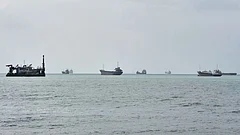
The dispute also extends to the Strait of Hormuz, through which shipping has partially resumed after the conflict disrupted one-fifth of global oil and liquefied natural gas trade.
Iran's parliamentary speaker and chief negotiator, Mohammad Baqer Qalibaf, said Tehran retained the right to regulate traffic through the strategic waterway alongside Oman and planned to impose tolls after the 60-day negotiation period ends.
"The sovereignty of the Strait of Hormuz lies with Iran and Oman, and traffic in the Strait is subject to arrangements determined by Iran," Qalibaf said on state television.
U.S. Vice President JD Vance rejected that suggestion, saying Iran would not be allowed to charge vessels using the international waterway.
"This is not going to end in a place where the Iranians are collecting tolls on ships going through the Strait of Hormuz," Vance said in an interview with The Michael Knowles Show. He also said oil flows through the strait had returned to pre-war levels and, on some days, had exceeded them.
Despite the uncertainty, oil prices have eased since the weekend, when the United States bombed Iranian military facilities following drone attacks on commercial vessels and Iran retaliated by targeting U.S. military sites in Kuwait and Bahrain.
The United Nations Conference on Trade and Development warned, however, that vulnerable economies could continue to face higher food and fuel prices even as global energy markets stabilise.
The interim U.S.-Iran agreement also envisages an end to hostilities between Israel and the Iran-backed Hezbollah in Lebanon. But Lebanon's parliament speaker Nabih Berri, an ally of Hezbollah, cast doubt on a separate U.S.-brokered framework agreement between Israel and Lebanon, while analysts warned that linking Israel's withdrawal from southern Lebanon to Hezbollah's disarmament could prolong the stalemate.
(Reuters reported)