

Summary of this article
Rs 14.50 crore for a UNESCO-grade documentary on ancient petroglyphs in Ratnagiri.
Activists and opposition leaders slammed the budget as excessive and wasteful, noting Rs 2 crore for the director and Rs 3 crore for four key crew members, especially amid a state financial crunch.
The government defended the project, citing the need for comprehensive, world-class audio-visual documentation of the 10,000–20,000-year-old heritage site.
The Maharashtra government has sanctioned Rs 14.50 crore for the production of an international-standard documentary on the ancient petroglyphs (rock carvings) in the Ratnagiri region of Konkan, but the decision has drawn sharp criticism from activists and opposition leaders who have labelled the budget, particularly the allocation for the crew, as excessive.
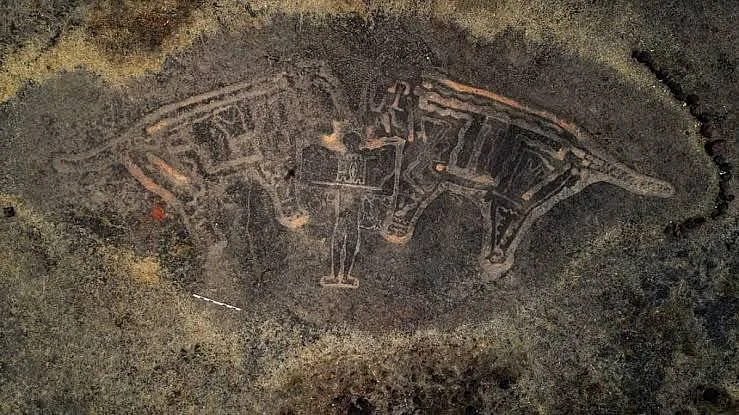
The Government Resolution (GR), issued by the Cultural Affairs Department, grants administrative approval for the ambitious project aimed at documenting over 2,000 rock carvings spread across approximately 300 sq. km, with the goal of creating a world-class audio-visual dossier suitable for UNESCO standards.
However, the detailed budget breakdown has sparked controversy, revealing that Rs 2 crore has been allocated solely for the director. And another Rs 3 crore has been allocated towards four key crew members, Outlook India has learnt.
Additional expenses include Rs 2.50 crore for equipment rental, Rs 2.50 crore for studio fees (editing, VFX, DI), Rs 1.50 crore for accommodation, and Rs 1.20 crore for transport. Critics argue that while the 10,000-to-20,000-year-old petroglyphs, depicting extinct fauna like one-horned rhinos, are an invaluable heritage, the lavish spending on a single film is a wasteful use of public funds amid a reported state financial crunch.



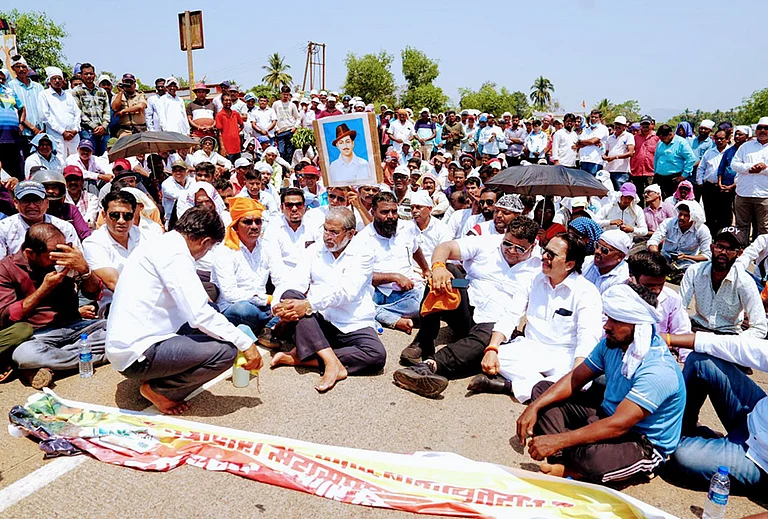
"At a time when the state government is facing a financial crunch... spending this much money on one documentary is nothing but wasteful," said Sunil Mane, spokesperson for the NCP-SP. Activist Vijay Kumbhar said: “On one hand, dues owed to contractors exceed ₹1 lakh crore; on the other, ₹35,000 crore is being spent on the Kumbh Mela without a Detailed Project Report (DPR). Is the treasury truly empty, or is this merely a tactic to stall creditors?”
The ancient petroglyphs in Ratnagiri, Konkan are estimated to be 10,000–20,000 years old, and depict extinct fauna like one-horned rhinos, elephants, and reptiles. They offer rare insights into prehistoric human societies, their cultures, and the region's rich ecological past, forming an invaluable heritage site. Estimated to be 10,000–20,000 years old, these geoglyphs depict extinct fauna like one-horned rhinos, elephants, and reptiles. They offer rare insights into prehistoric human societies, their cultures, and the region's rich ecological past, forming an invaluable heritage site.
Email queries sent to Maharashtra Tourism Department were unanswered till the time of publishing this.