US negotiators will travel to Pakistan for fresh talks with Iran as a ceasefire nears expiry.
Iran insists ships cannot pass the Strait of Hormuz while the US blockade remains in place.
Trump accused Iran of violating the truce and warned of strikes on infrastructure if a deal is rejected.
President Donald Trump said that U.S. negotiators will head to Pakistan on Monday for talks with Iran, lifting hopes of extending a ceasefire set to expire this week, even as Washington and Tehran remain locked in a standoff over the Strait of Hormuz.
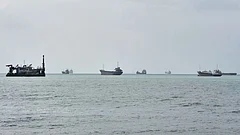
Iran did not immediately acknowledge the possibility of discussions, but ships are still unable to pass through the vital canal due to Iranian threats and a U.S. blockade on ships travelling to and from Iranian ports.
Iranian officials stated earlier on Sunday that they were still willing to negotiate, but they were adamant that ships would not cross the strait as long as the U.S. blockade was in place.
“It is impossible for others to pass through the Strait of Hormuz while we cannot,” Iranian parliamentary Speaker Mohammed Bagher Qalibaf said in an interview aired on state television late Saturday.
Trump accused Iran of breaking the ceasefire by firing at ships passing the strait in his post announcing official travel for another round of negotiations. He also threatened to destroy Iranian civilian infrastructure if Iran rejects the U.S. offer.


“If they don’t, the United States is going to knock out every single Power Plant, and every single Bridge, in Iran,” Trump wrote.
He did not specify which American officials will travel to Islamabad for a second round of face-to-face negotiations with Iran.
Regarding unsolved issues that caused the previous round of negotiations to fail, such as Iran's nuclear enrichment program, its regional proxies, and control over the Strait of Hormuz, it is still unclear if either party had changed their positions.
With inputs from AP