JP Nadda emerges as Centre’s key interlocutor amid escalating NEET paper leak protests and student demands.
Nadda meets protesters, visits injured students, and urges Social activist Sonam Wangchuk to end his indefinite hunger strike.
BJP leaders view Nadda’s outreach role as a balanced approach combining dialogue and government response.
As the protests over the NEET paper leak continue, Union Health Minister JP Nadda has emerged as the Centre's principal interlocutor with the Cockroach Janata Party (CJP) and student protesters.
On Thursday, Nadda reiterated the government's willingness to hold talks with the protesters.
"Yes, we are ready. Come to our residence or to our official office," he told reporters.
As reported by ANI, citing government sources that the Centre was reaching out to Opposition floor leaders to discuss the NEET paper leak issue in Parliament. According to the sources, the government wants the discussion to take place without any preconditions, including the resignation of Union Education Minister Dharmendra Pradhan. A meeting of floor leaders is also likely to be convened, as reported by ANI.

Nadda's Mediation
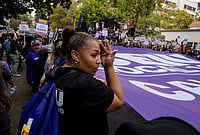
Nadda has taken a leading role since the protests intensified on July 20, when thousands of students attempted to march towards Parliament demanding Pradhan's resignation. Police used tear gas and batons to stop the march, after which Nadda met representatives of the CJP and appealed to them to end their protest.


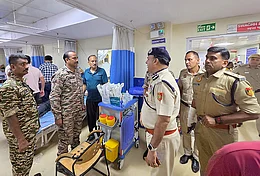
The following day, he visited injured protesters and police personnel at RML and Lady Hardinge hospitals. Later that evening, Nadda and Union Minister of State in the Prime Minister's Office Jitendra Singh travelled to Medanta Hospital in Gurgaon to meet education activist Sonam Wangchuk, who had been shifted there after his indefinite fast.
Speaking to reporters on Wednesday, Nadda said the visit was to enquire about Wangchuk's health and request him to end his fast.
"We went to inquire about his well-being. He had been shifted from Safdarjung Hospital to Medanta. Since he was in the ICU, the environment there was very restricted. We requested him to break his fast, join the mainstream and guide the children in the right direction," he said.
Nadda added that the government remained open to discussions on the issues raised by Wangchuk.
"Our government is open to discussions on all issues and is always willing to address them. Today, he (Wangchuk) wrote me an open letter. We will respond to that letter, and after responding, we will ensure that the talks move forward," he said.

Nadda As Centre’s Choice For Outreach
Earlier, on July 20, Nadda posted on X that the protesters had approached the government with a proposal for talks. He said discussions began at 11.50 am and were held in a cordial atmosphere. According to Nadda, the protesters later submitted a written memorandum, following which he appealed to them to withdraw their agitation and help restore normalcy.
Considered an able and “soft” communicator, JP Nadda’s position as Union Health Minister made him a suitable choice to lead the government’s outreach efforts, a senior BJP leader told The Indian Express.
The leader said Nadda’s visit to injured protesters and police personnel was an appropriate response in his capacity as Health Minister. “Visiting the injured students in hospital, in his capacity as health minister, was not only the proper response to underline that the government views the situation with seriousness, but also good optics,” he said.
The BJP leader also pointed to Nadda’s experience in student politics and his negotiation skills. “Given his long-standing experience with student politics as well as his communication and negotiation skills — he had put these on display recently to ensure peace among party factions in Uttarakhand — he fits the bill perfectly,” he added.
With his experience as one of the BJP’s longest-serving presidents, Nadda was seen as having the required political weight for the role. The leader said sending senior Cabinet figures such as Defence Minister Rajnath Singh or Home Minister Amit Shah could have appeared disproportionate to the situation.
Another BJP insider said appointing a much senior leader could have suggested that the government was giving excessive importance to the protest. Nadda, he said, offered a balance by showing the Centre’s willingness to engage without making the issue appear like a larger political confrontation.
“Deploying senior faces such as the Union Home Minister, to whom the Delhi Police reports, could have been counterproductive; on the other hand, the Raksha Mantri as the face of negotiation could have added a sense of exaggerated urgency,” a BJP leader said.
The party also avoided involving its current president Nitin Nabin, as leaders felt that could have given the outreach a “political dimension instead of a governmental one”.
Meanwhile, the Cockroach Janata Party (CJP) on Thursday rejected Prime Minister Narendra Modi's announcement on setting up fast-track courts for paper leak cases. The student-led outfit reiterated its demand that Education Minister Dharmendra Pradhan resign over the NEET paper leak controversy and the government's handling of the crisis.
Soon after the Prime Minister posted on X, the CJP issued a terse response on the social media platform: "Dharmendra Pradhan Must Resign." The response signals that the outfit remains unconvinced by the Centre's latest announcement and continues to hold Pradhan politically accountable.