Security forces demolish houses of two terrorists' families in south Kashmir following the killing of a policeman in Anantnag.
One of the houses, belonging to LeT terrorist Adil Ahmad Thokar, was demolished for the second time.
Action part of a major crackdown with nearly 2,000 suspected Over Ground Workers (OGWs) detained across Kashmir
Security forces carried out overnight operations in Kashmir and demolished two residential houses belonging to the families of active terrorists on July 23, 2026. The action came a day after a policeman was killed in a terrorist attack in a busy marketplace in south Kashmir’s Anantnag district.
A house belonging to the family of LeT terrorist Adil Ahmad Thokar was destroyed using explosives during the operation in south Kashmir. The blast also caused damage to nearby houses, a religious structure, and a parked vehicle, according to officials and locals. This is the second time the Thokar family’s house has been demolished, the first instance occurred after the Pahalgam terror attack in April last year. The family had constructed a new house and shifted there only a few months ago. Locals said the family was asked to vacate the premises before the demolition.
In a separate operation, the house of another LeT terrorist, Haroon Rashid, was also demolished. Officials noted that both Adil and Haroon have been active terrorists since 2018.
The demolitions are part of an intensified security crackdown following the Anantnag attack in which Head Constable Ashique Ahmad Qureshi was killed. Jammu and Kashmir Police, along with other security agencies, launched widespread raids and detained nearly 2,000 suspected Over Ground Workers (OGWs) for questioning. Srinagar district alone saw around 700 detentions, while other districts like Baramulla, Budgam, and Ganderbal also reported significant numbers.
Police described the operation as a coordinated effort based on credible intelligence to dismantle the ecosystem supporting terrorism and maintain public order. Local recruitment into terrorist ranks has reportedly dropped sharply, with no recorded cases of local youth joining in the first seven months of 2026, though a small number of surviving local terrorists continue to pose a challenge with support from infiltrators.


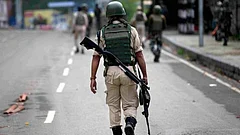

The aggressive anti-terror measures reflect the security establishment’s strategy of targeting not just active militants but also their support networks. The demolitions have drawn mixed reactions, with security officials hailing them as a strong deterrent, while some locals and rights groups often criticise such actions as collective punishment.
The Anantnag attack and the subsequent response underscore the persistent security challenges in the Kashmir Valley despite an overall decline in violence in recent years. Investigations into the attack and the larger terror network are ongoing.