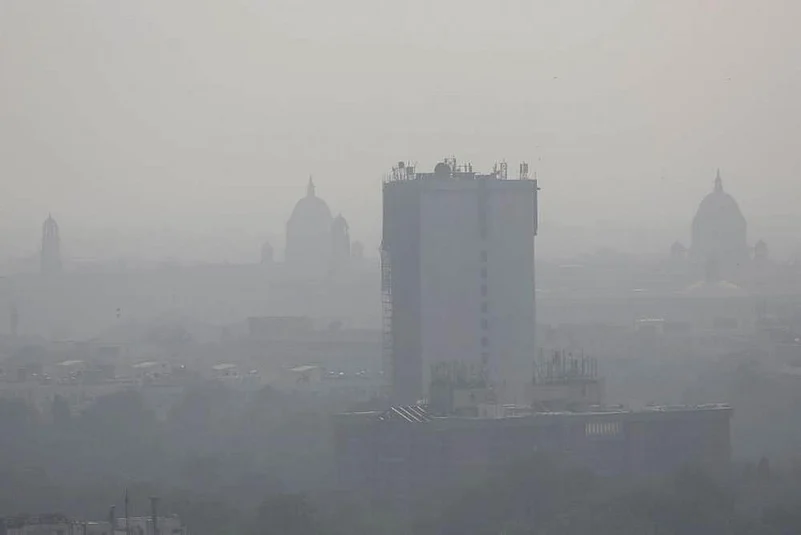
Hungover Delhi skies welcomed Delhiites post a cracker of a Diwali.
The pollution rating touched 'severe' this morning in most parts of Delhi, blinding motorists and choking the lungs of citizens.
The Centre's System of Air Quality and Weather Forecasting and Research (SAFAR) recorded the level of respirable pollutants, PM 2.5 and PM 10, at 283 and 517 micrograms per cubic metre respectively around 8 PM, violating the safe limits by multiple times.
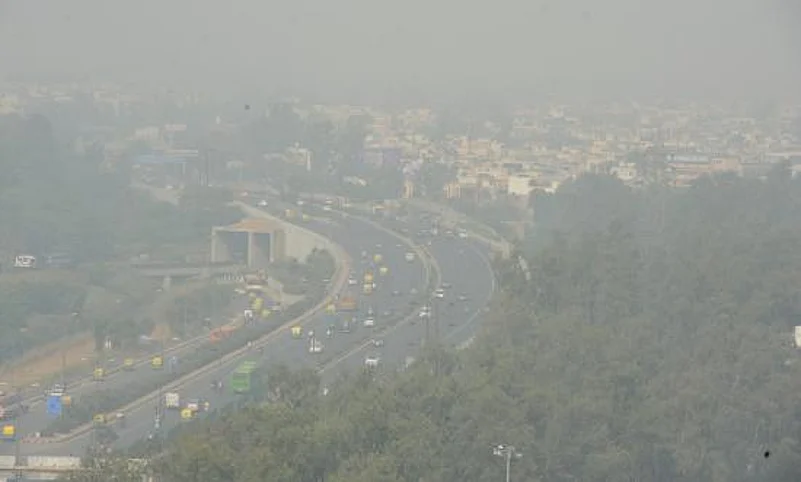

The prescribed standards of PM 2.5 and PM 10 are 60 and 100 respectively, and anything beyond that can harm the respiratory system as the ultra fine particulates can embed deep into the lungs and also enter the bloodstream.
Visibility was down to 10 metres on Monday morning in most parts of Delhi where people celebrated Diwali by bursting crackers furiously in the evening and past midnight, spewing a cocktail of chemicals into the already polluted Delhi air that was described as a gas chamber by the Delhi High Court recently.
Experts had warned that pollution during this year's Diwali was expected to be worse than the last two years because of a combination of adverse factors like slow wind speed and moisture in the air, a major hindrance in the dispersion of suspended pollutants.
After breathing the fumes from the crackers, some of which strong enough to shake doors and rattle windows, and stubble burning by farmers in the neighbouring Haryana and Punjab, many had to rush to the hospital. The overdose of particulate matter in the air has set off severe flu-like symptoms -- sore throat nasal congestion and breathing trouble.


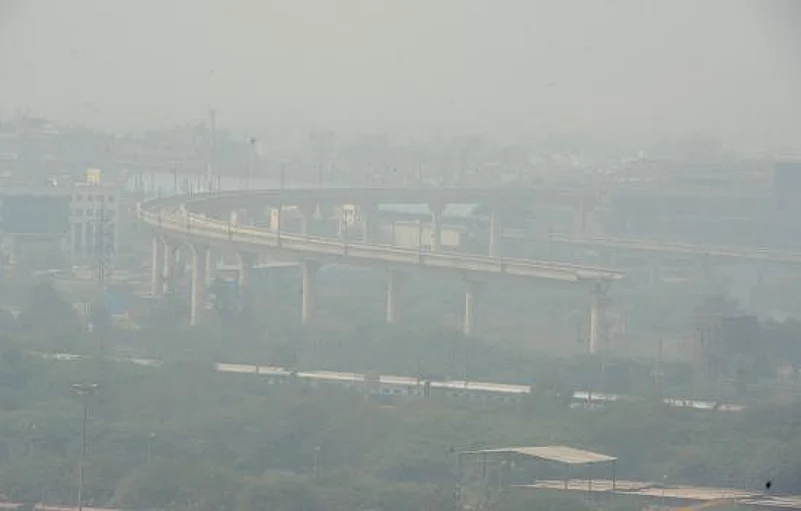
Pollution peaks in the national capital during Diwali as a hazardous mix of noxious gases and respirable pollutants hang very close to the surface due to low temperature and near-stagnant wind movement.
On Sunday, a NASA photo at about 8 pm showed the top half of India hazy with smoke.
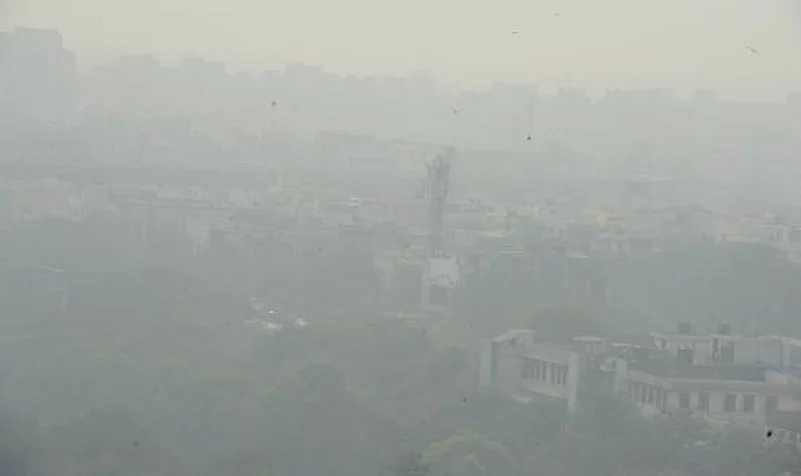
People have been advised not to go outdoors when air quality turns 'severe' as it has adverse effect especially on children, elders and those having heart or lung diseases.
Photographs by Tribhuvan Tiwari