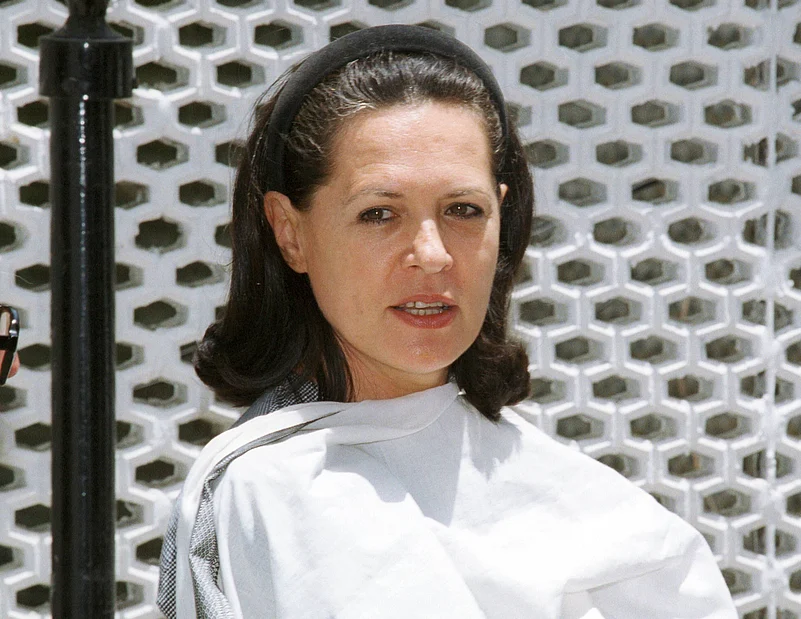
Sonia Gandhi continues to face renewed controversy over her citizenship and voter registration, despite being an Indian citizen since 1983.
As Sonia Gandhi celebrates her 79th birthday, she will be seen as someone who rebuilt a collapsing Congress, led it to two national victories with coalition & contributed to key welfare laws.
Gandhi remains a central ideological and organisational force within the party, navigating sexism & scrutiny by opposition, and political turbulence with resilience.
“Bharat ki Stree ke hriday me Mahasagar jaisa Dheeraj hai,
Usne khud ke saath hui beimani ki shikayat nahi ki.”
(Indian woman carries an ocean-like patience in her heart, She never complains about the injustices done to her.)
Sonia Gandhi spoke these words during a parliamentary speech in 2023, delivered in support of the women’s reservation bill. What she may not have imagined then, is that she herself embodies the very Indian woman she described, constantly battling with both political and non-political attacks, surviving and blooming as a political leader after Indira Gandhi and Rajiv Gandhi’s assassination, while remaining defiant in the face of everyday sexism and misogyny both inside and outside Parliament
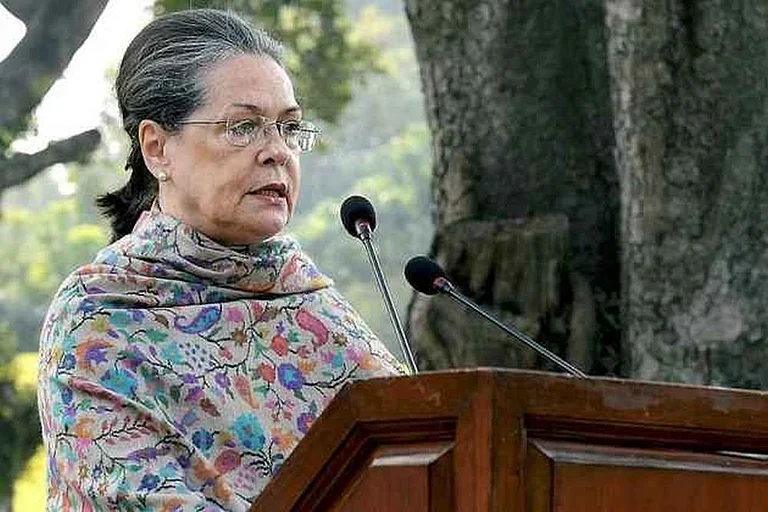
Gandhi's political decisions and contributions to policies were rarely the focus when opponents, mostly BJP, attacked her inside and outside political spheres. Instead, her identity as a woman, more so as a foreign woman, took centre stage.


Sexist and derogatory terms such as ‘Bargirl’, ‘Waitress’ and even ‘Congress ki vidhawa’ (Widow of the congress) were echoed by BJP leaders of various hierarchies.
As she turns 79 today, leaders from across the political parties have extended their wishes to Sonia Gandhi. Congress president Mallikarjun Kharge met with Gandhi and wished her today. But the leader continues to brave through unending political storms.
Her citizenship, which remained a point of objection for many, came to limelight once again this year. A criminal revision petition was filed in Delhi’s Rouse Avenue court, after the magistrate refused to allow filing of an FIR against Gandhi for her citizenship and alleged fraudulent voter registration issue in September of this year. The citizenship row about Gandhi is not new; it has been challenged in the court and discussed in the public domain by BJP leaders.
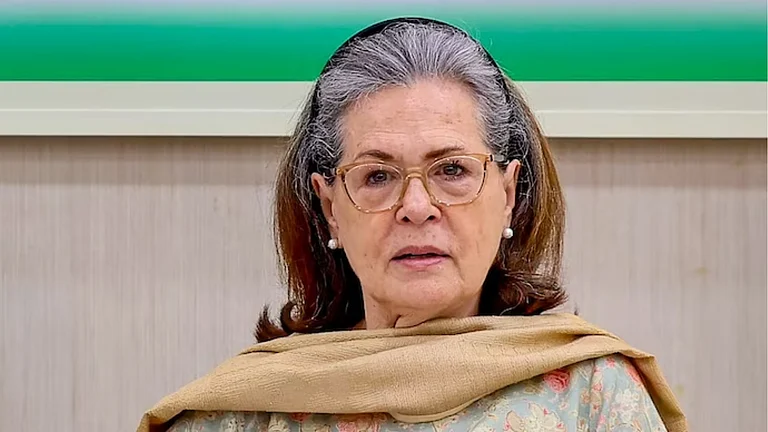
The controversy resurfaced after opposition leaders alleged procedural irregularities in her voter registration, attempting to cast doubt on her eligibility ahead of key parliamentary sessions. The Congress has dismissed the claims as manufactured and politically motivated, noting that Sonia Gandhi has voted in multiple elections and held constitutional positions without objection for decades.
Subsequently, a Delhi court on December 9 sought response from Sonia Gandhi and Delhi Police. In a matter of Revision plea which was filed in 2025 after September 11, 2025’s magistrate’s decision.
She has also faced criminal complaints in an alleged fraud and land grabbing case, after BJP associated Subramanian Swamy filed a complaint in 2012 alleging irregularities in the Associated Journals Limited acquisition.
Delhi Police have filed an FIR against Sonia and Rahul Gandhi in National Herald case.
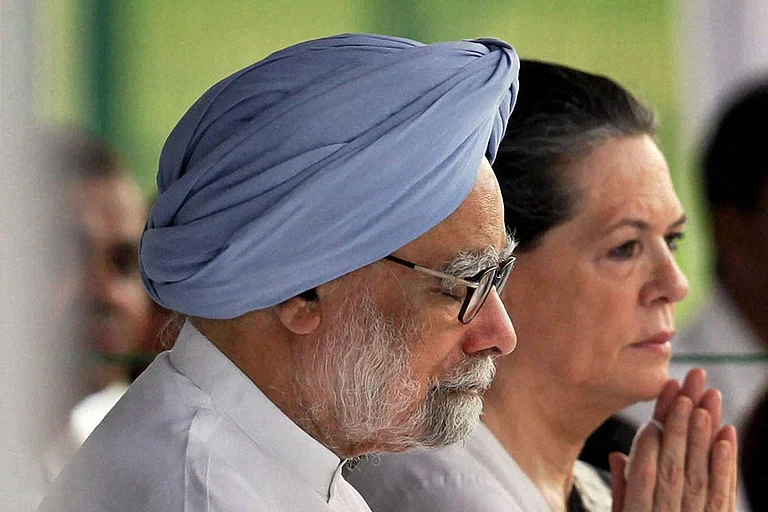
Sonia Gandhi's Political Journey
Sonia Gandhi’s political journey quite unusual in the Indian context; a reluctant entrant, a foreigner at that, who went on to become the longest-serving president of the Indian National Congress and one of the most influential figures in coalition-era politics. Currently, she is the chairperson of Congress’s parliamentary committee.
Born in 1946 in Orbassano, Italy, she entered Indian public life after her marriage to Rajiv Gandhi, spending decades away from the political arena.
It was only after the assassinations of Indira Gandhi and later Rajiv Gandhi that she was gradually drawn into the Congress fold, finally agreeing to lead the party in 1998 at a moment of deep crisis. From her first conversation with Indira Gandhi in French in 1965, she gradually learnt English and Hindi, embracing Indian culture. She never stopped wearing saree - a culturally significant attire in India. In recent days, her hair bands gained praise on the internet.
Under her leadership, the Congress saw a dramatic revival. Gandhi successfully rebuilt the party organisation, forged alliances with regional forces, and crafted an ideological counterweight to the BJP-led NDA.
She played a pivotal role in orchestrating the Congress-led United Progressive Alliance (UPA), which came to power in 2004 and again in 2009 - a rare back-to-back victory in the coalition era. Though she declined the post of prime minister, her influence remained central to governance through calibrated negotiation, consensus-building, and tight control over party and government strategy.
Sonia Gandhi's Contribution To India
Gandhi's political achievements are deeply tied to important legislation that reshaped India’s welfare architecture. Through the National Advisory Council, she shepherded landmark laws such as the Right to Information Act (2005), Mahatma Gandhi National Rural Employment Guarantee Act (2005), Forest Rights Act (2006), Right to Education Act (2009), and the National Food Security Act (2013). These Acts expanded entitlements, strengthened democratic accountability, and defined the UPA’s rights-based governance model.
A formidable parliamentarian, Gandhi represented Amethi and later Rae Bareli for nearly 25 years, rarely losing electoral ground. In 2024, she transitioned to the Rajya Sabha from Rajasthan. Despite health challenges and sustained political attacks, she remains a key voice in shaping the Congress’s ideological direction and mentoring the next generation of leadership.
In a political landscape marked by churn, Sonia Gandhi’s legacy stands out for her disciplined organisational rebuilding, her ability to weave diverse parties into functional coalitions, and her imprint on India’s welfare and transparency frameworks. Often silent but always strategic, she remains one of the longest-enduring and most consequential political figures of post-liberalisation India.