Temple committee says Kedarnath and Badrinath are religious centres governed by faith and tradition.
Uttarakhand government signals consultation, opposition accuses BJP of politicising the issue.
Committee insists there is no bar on devotees who have faith in the Sanatan tradition.
A fresh debate has emerged over the entry of non-Hindus into temples governed by the Shri Badrinath Kedarnath Temple Committee after its chairman asserted that the shrines are places of worship, not tourist destinations, and that entry cannot be treated as a matter of civil rights.
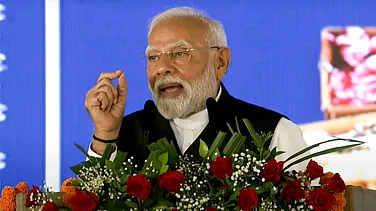
According to PTI, Badrinath Kedarnath Temple Committee Chairman Hemant Dwivedi said that Kedarnath and Badrinath Dham are rooted in a specific religious tradition and governed by constitutional protections. “Kedarnath and Badrinath Dham are not tourist destinations. These are centres of the Vedic tradition established by Adi Shankaracharya. Article 26 of the Indian Constitution gives every religious denomination the right to manage its own religious affairs,” he told PTI.
Dwivedi maintained that the committee’s position was not aimed at excluding anyone. “This decision is not against anyone, but is to protect centuries-old faith, discipline, and purity,” he said, PTI reported.
Drawing parallels with other religions, he added that religious spaces across faiths function with defined norms. “He said that just as there are rules related to religious conduct in mosques and churches, there are also traditional rules in Hindu religious places,” according to PTI. Dwivedi also stressed that belief, rather than religious identity, was the central criterion. “Anyone who has faith in Sanatan Dharma is welcome at Kedarnath and Badrinath Dham,” he said.


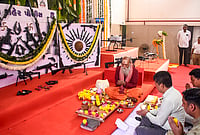
When asked about Sikh and Jain devotees who have historically visited the shrines, including Uttarakhand Governor and retired Lieutenant General Gurmit Singh, a Sikh, who was present at both temples during the opening of their doors, Dwivedi reiterated that the issue was not religion-specific. “The issue is not about any particular religion, but about faith and religious discipline,” he said. “There is no restriction for anyone who has faith in the Sanatan tradition.”
Chief Minister Pushkar Singh Dhami had earlier said that the state government would proceed cautiously and take into account the views of all stakeholders. Responding to this, Dwivedi said that decisions would involve consultations with religious bodies and local stakeholders. “These are all our ancient places of worship. The views of the religious organisations, priests, saints, and local institutions associated with their management and operation will be considered. Some laws related to these sites were made in the past, and they are also being reviewed. Further action will be taken on that basis,” PTI reported.
The opposition, however, accused the ruling BJP of politicising the issue. Former Uttarakhand chief minister and Congress leader Harish Rawat said that rules and traditions already exist at many pilgrimage sites, but were now being selectively highlighted. “If a ban is to be imposed, then it should be imposed everywhere simultaneously. At many pilgrimage sites like Har Ki Pauri, it is already stipulated in the municipal laws who can stay where. But this is hypocrisy on the part of the BJP,” Rawat said.
He also argued that religious spaces should acknowledge historical contributions across communities. “Other religions in the world are inviting others to share their religious values, and here restrictions are being imposed,” Rawat said, adding that non-Hindu communities had contributed to the construction of several temples in India, a fact that should not be overlooked.
(With inputs from PTI)