US-Iran deal outlines a proposed $300 billion reconstruction investment fund
Private investors have reportedly committed over half the planned financing
Fund access depends on a final agreement and Iran’s future compliance commitments
The memorandum of understanding signed between the United States and Iran on Wednesday includes a framework for a $300 billion reconstruction and economic development programme for Iran, with more than half that amount already privately committed, according to a source with direct knowledge of the deal who spoke to Reuters.
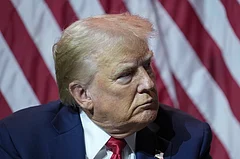
President Donald Trump formally signed the agreement while attending the G7 summit in Evian-les-Bains, France, marking the formal end of a war between the US and Iran that began on February 28. The document states that Washington "undertakes with regional partners to develop a definitive mutually agreed plan with at least $300 billion for the reconstruction and economic development of the Islamic Republic of Iran," with the implementation mechanism to be finalised within a 60-day window as part of a final deal. The text also commits the US to granting all licences, waivers and permissions required for related financial transactions.
Crucially, the fund is structured as a private investment vehicle rather than a government reconstruction or reparations programme, the report said, and will contain no US government money or grants. Companies based in the US, Gulf Arab states, Asia, South America and Africa have reportedly agreed to commit financing across energy, logistics, manufacturing and transport, with firms from South Korea, Japan, Singapore and Malaysia among those named.
"We're not investing, we're not putting up 10 cents," he said, adding that he was not asking Gulf countries to invest either and that any participation would depend on Iran's future behaviour.


.jpg?auto=format%2Ccompress&fit=max&format=webp&w=240&dpr=1.0)
Behaviour-Linked Investment Fund
The fund's origins trace back to Iranian demands for compensation. A senior Iranian source told Reuters that Tehran had initially sought $400 billion from Washington for war damages, a request the US rejected outright. The Reconstruction and Development Fund, as it is to be named, emerged from that impasse instead, with regional countries expected to contribute through loans, credit lines or direct financing for rebuilding war-damaged sites including the Mobarakeh Steel complex, refineries, airports and broader infrastructure.
Vice President JD Vance had previously indicated in a CBS interview that Iran's access to the fund would be conditional on Tehran dismantling its nuclear programme, eliminating its stockpile of enriched uranium and accepting a stringent inspection regime. The source stressed that the investment fund is entirely separate from the parallel negotiating track covering sanctions relief and the release of Iran's frozen sovereign assets abroad, describing them as distinct mechanisms with different timelines and purposes.
The fund itself will not become operational until a final, satisfactory deal is concluded. "It'll only be created once the final deal is signed," the source said, adding that during the 60-day window fund administrators would work with Iranian officials and investors to plan and scope individual projects.