Nepal’s major parties have projected prime ministerial candidates ahead of the March 5 elections, pitching veteran KP Sharma Oli against younger leaders.
Nepali Congress has named 49-year-old Gagan Thapa, while Rastriya Swotantra Party has fielded ex-Kathmandu mayor Balendra “Balen” Shah, 35.
The Oli–Balen contest from Jhapa-5 has become symbolic of a wider generational and political shift driven by Gen Z voters.
Election campaign is heating up in Nepal despite the winter chill in the Himalayan nation, with three political parties projecting their prime ministerial candidates for the March 5 general elections.
While Nepal's oldest party, the Nepali Congress, and the recently established Rastriya Swotantra Party have projected their respective prime ministerial candidates under the age of fifty, the largest communist party, the Communist Party of Nepal (Unified Marxist–Leninist), has formally announced the recently ousted prime minister, K P Sharma Oli, 74, as its prime ministerial candidate.
Last week, 49-year-old Gagan Thapa was chosen to lead the Nepali Congress (NC). The party's vice president, Bishwo Prakash Sharma, declared that Thapa will run for prime minister shortly after he is elected.
"The election of a dynamic leader of Nepali Congress, Gagan Thapa, who represents the spirit of the Gen Z youths, to the post of president has completely changed the present election scenario," said senior human rights activist Charan Prasai.
However, another faction of the Nepali Congress, led by former prime minister Sher Bahadur Deuba, has challenged the Election Commission's decision to officially recognise the faction led by Thapa as the real NC.

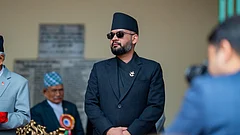


Structural engineer and rapper-turned-politician, Balendra Shah, 35, was elected Mayor of Kathmandu Metropolitan City with an overwhelming majority of votes in 2022.
Shah, also known as Balen, is very popular among youths not only in Kathmandu but across the country, with his sweeping reform programmes and beautification of Kathmandu metropolis.
Balen, who won the mayoral election as an independent candidate, has now joined the Rastriya Swotantra Party along with his team to contest the general election.
He tendered his resignation from the post on Sunday to field nomination for the parliamentary election on January 20, the date fixed by the Election Commission for filing nomination papers.
Balen, who is half his age, will oppose CPN-UML head Oli in the parliamentary election from the Jhapa-5 constituency, which is now the talk of the town in Koshi province's eastern Nepal region.

Except for the first Constituent Assembly election in 2008, Oli has been elected to six terms in Parliament from the Jhapa district over the previous thirty years.
Oli defeated his closest opponent from the Nepali Congress by a staggering margin of more than 28,000 votes in the most recent general election in 2022.
The Gen Z youths have blamed then-prime minister Oli and the then-home minister Ramesh Lekhak from Nepali Congress for the excessive use of force to suppress their movement in September last year, in which 77 people lost their lives.
Oli, who has already taken oath as the prime minister four times, fled on an army helicopter in his last tenure on the second day of the Gen Z protests, as hundreds of angry protesters vandalised the prime minister's quarter at Baluwatar, Kathmandu.
"For Oli, who tactfully sidelined his opponents within the party and emerged as its unchallenged leader, the parliamentary election this time will not only be a tough challenge but can also threaten his over five-decade-long political career, given the growing popularity of his rival ex-Mayor Balen," said Saraswoti Karmacharya, senior journalist at Nepal Samacharpatra.
Other contenders in the scenario include Harka Sampanga, mayor of Dharan Sub-metropolitan City, and Kulman Ghising, chairman of the Ujyalo Nepal Party, who, as head of the Nepal Electricity Authority, put a stop to 16 hours of loadshedding in Nepal.
The ethnic communities of Nepal, represented by Ghising and Sampang, have also gained popularity among Gen Z groups.