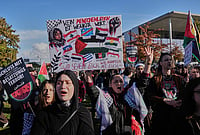
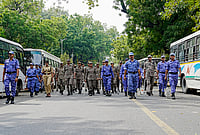
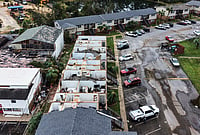
Nepal’s interim government estimates that the September Gen Z-led protests caused economic losses of about $586 million, including large-scale damage to public and private infrastructure.
Key government buildings such as Singha Durbar, the Supreme Court and Parliament House were damaged or destroyed; at least 77 people were killed and over 2,000 injured during the unrest.
Reconstruction costs may exceed $252 million, but the government has raised less than $1 million so far, even as it prepares for parliamentary elections scheduled for March 5, 2026.
Nepal’s interim government has reported that widespread protests led by young activists in September caused severe economic damage, with losses estimated at around $586 million. The assessment covers direct destruction of infrastructure and the broader impact on the country’s $42 billion economy.
The protests began as anti-corruption demonstrations and quickly spread across the country. Authorities say the unrest forced then-Prime Minister K.P. Sharma Oli to resign and resulted in at least 77 deaths and more than 2,000 injuries.
Public buildings such as the sprawling Singha Durbar complex, the prime minister’s office, the Supreme Court and the Parliament House were among those damaged or destroyed. Private properties, including residences and commercial buildings linked to political figures, were also affected.
An official committee tasked with assessing the toll estimated that reconstruction costs alone could exceed $252 million. The government has established a fund for rebuilding but has received less than $1 million in contributions so far, and it has not yet clarified how the remaining financing gap will be filled.


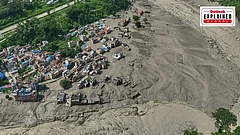

Reconstruction of key structures has begun, with repairs completed on some partially damaged buildings. Officials say work on fully destroyed sites will start once detailed assessments and designs are ready.
New parliamentary elections are scheduled for March 5, 2026, as the interim government seeks to restore stability ahead of the polls.
The economic impact of the protests has raised concerns about investment confidence and longer-term growth prospects for Nepal’s fragile economy.