Pope warns threats of total destruction risk innocent lives and violate moral principles.
Cardinal argues conflict fails just war doctrine, no clear cause, intent, or proportionality.
Both urge dialogue, ceasefire, and a rejection of power-driven escalation.
High above the ancient stones of Jerusalem’s Church of the Holy Sepulchre, a simple wooden ladder leans against a window ledge. It has not moved for more than two centuries. No one dares shift it without the unanimous consent of the six Christian denominations that share custody of Christianity’s holiest site. One careless move could shatter the fragile status quo that keeps peace among rivals who all claim the same sacred ground. That motionless ladder stands as a quiet, stubborn witness: division can freeze even the smallest acts of change, yet the building itself endures because something greater than rivalry holds it together.
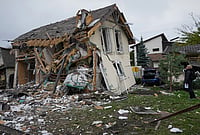
Today, that same spirit of uneasy coexistence faces a far larger test across the Middle East. As bombs fall and threats of total destruction echo from world leaders, two prominent voices in the Catholic Church are raising an urgent alarm. They insist the current Israel-Iran-US conflict is **not just another war**. It is something deeper and more dangerous: a moral crisis that risks swallowing civilians, eroding international norms, and dragging humanity into cycles of hatred that no military victory can end.


Pope Leo XIV, the first American-born pontiff elected in May 2025, has spoken with growing directness. In early April 2026, after President Donald Trump warned that Iran’s leaders must open the Strait of Hormuz or “a whole civilisation will die tonight,” the Pope responded from Castel Gandolfo. He called the threat “truly unacceptable.”



He pointed not only to questions of international law but, more importantly, to the moral stakes for entire populations: “so many children, so many elderly… who would also become victims.” He urged every person of goodwill to reflect on the innocent lives at risk and to reject escalation.
His words have grown sharper with each passing week. In Palm Sunday homilies he declared that Jesus, the King of Peace, “does not listen to the prayers of those who wage war.” In an April prayer vigil he denounced the “delusion of omnipotence” driving the conflict and cried out, “Enough of the idolatry of self and money! Enough of the display of power! Enough of war!”
He has repeatedly reminded the world that God “does not bless any conflict” and does not stand with those who drop bombs. Disciples of Christ, he insists, must never align with violence disguised as divine will. Instead, leaders should lay down weapons, abandon dreams of domination, and sit at the table of genuine dialogue.
These statements come from a Pope who knows the region firsthand. In late 2025, shortly after his election, Leo XIV made Lebanon part of his first overseas apostolic journey. He walked among communities still scarred by earlier violence and displacement. At the Shrine of Our Lady of Lebanon in Harissa, he told bishops, priests, religious, and pastoral workers that faith must mean service and responsibility amid “the sound of weapons,” scarcity, and daily hardship. He praised Lebanese Christians and Muslims for keeping schools open as refuges, welcoming refugees from across borders, and sharing charity even when resources ran low. He met the country’s political leaders and joined ecumenical gatherings in Beirut, calling Lebanon a living message of coexistence and a beacon of fraternity in a fractured region. The visit carried a clear undertone: retaliation solves nothing; only forgiveness, unity, and patient hope can rebuild what conflict destroys.
Cardinal Robert W. McElroy, Archbishop of Washington, D.C., has added a precise moral analysis rooted in centuries of Catholic teaching. In a March 2026 interview and subsequent statements, he examined the U.S. decision to join the war against Iran through the lens of just war theory. He concluded that the conflict fails to meet the necessary moral thresholds and is therefore “not morally legitimate.”
McElroy noted that a just cause was missing: the United States was not responding to an existing or imminent, objectively verifiable armed attack by Iran. Catholic tradition, he recalled, does not endorse preventative war, as that would remove all limits on starting conflicts. Right intention was also unclear, with shifting goals ranging from dismantling weapons to regime change or unconditional surrender. Finally, proportionality raised grave doubts, whether any possible benefits could outweigh the foreseeable harm of massive casualties, regional spillover (including fresh dangers for Lebanon), economic chaos, and the risk of endless further wars. He described the campaign as a “war of choice” and warned that any intention to “end an entire civilization” reveals a lost moral compass. At a vigil Mass for peace, he joined other U.S. bishops in calling for an immediate halt to hostilities and urged American Catholics to contact their representatives and demand a turn toward peace.


Together, the Pope and the cardinal present a unified conviction: this conflict stretches far beyond strategy or power balances. It tests whether humanity still believes innocent life matters more than displays of strength, whether international law still restrains the powerful, and whether religious faith can be twisted into justification for bloodshed. The Pope frames it in spiritual terms—rejecting hubris and calling for conversion of heart. The cardinal applies rigorous ethical reasoning to show why the war cannot claim moral legitimacy.
Their messages have created visible tension with the Trump administration. The President has publicly criticized the Pope as weak on foreign policy. Yet both church leaders continue their appeal. As fragile ceasefire talks hover in mid-April 2026, they urge prayer, active advocacy, and a return to mediation. They point back to places like Lebanon, where fragile coexistence has survived worse storms, and to Jerusalem’s immovable ladder, where division is managed not by force but by shared reverence for something higher.
The Church’s voice remains clear. This is not merely war. It is a moment that demands moral courage, a rejection of endless violence, and a commitment to the patient, difficult work of building peace that the ladder in Jerusalem has silently witnessed for generations.