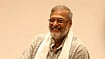
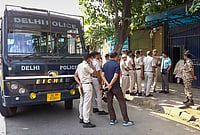
Jafar Panahi condemns the escalating violence and state repression in Iran.
The filmmaker calls on Hollywood and the global film community to speak out.
It Was Just an Accident (2025) draws directly from Panahi’s lived experience of persecution.
Jafar Panahi has once again drawn global attention to the ongoing human rights crisis in Iran, using his international platform to call for urgent action. The Iranian filmmaker, whose work has long challenged state repression, warned that the violence against protestors has reached a point where silence from the global community is no longer an option.
Jafar Panahi on violence and repression in Iran
Speaking at the National Board of Review Awards Gala on January 13, Panahi accepted the Best International Film honour for It Was Just an Accident (2025), a film he shot secretly in Iran. During his acceptance speech, Panahi described the situation in his home country as a sustained massacre rather than political unrest.
"The Islamic Republic has caused a bloodbath to delay its collapse," Panahi said at the ceremony, as reported by TheWrap. "Bodies are piling up on bodies, and those who have survived are searching for signs of their loved ones through mountains of corpses."
Rejecting the idea that cinema could adequately capture the scale of the crisis, he added, "This is no longer a metaphor. This is not a story. This is not a film. This is a reality ridden with bullets, day after day."


Call for Hollywood and international support
Panahi directly appealed to artists, filmmakers, and institutions to speak out. “In accepting this award, I consider it my duty to call on artists and members of the global film community to speak out and not remain silent,” he said, urging governments to confront what he described as a human catastrophe rather than look away.
According to TheWrap, Panahi stressed that cinema still has moral power, adding, “Today, cinema has the power to stand by defenceless people. Let us stand by them.”
‘Every minute of delay means more innocents are killed’
In a separate interview with TheWrap, Panahi voiced deep concern over the Iranian government's recent shutdown of internet and phone services. "When they cut the internet entirely, we knew what was coming, because that means a slaughter is on the way," he said. "Every minute of delay in relief efforts means more innocent people are killed."
Panahi also noted that the current protests differ from previous movements, with participation cutting across generations and social classes. He warned that losing momentum now would make future resistance far more difficult.

Cinema shaped by resistance and personal risk
Panahi’s filmmaking has consistently reflected his lived experience under state control. His body of work includes The White Balloon (1995), The Circle (2000), Offside (2006), Taxi (2015), and No Bears (2022), each confronting social restrictions, especially those affecting women.
Despite being sentenced in absentia in December 2025 to one year in prison and a two-year travel ban on charges of "propaganda against the state", Panahi has reiterated his intention to return to Iran after the Oscars. "When you see people being killed, wounded, and arrested in the streets, you no longer think about such things," he told TheWrap.