Israel, Lebanon and the US signed a trilateral framework agreement in Washington aimed at ending the Israel-Hezbollah conflict.
Lebanese leaders welcomed the deal as a step toward restoring sovereignty and rebuilding southern Lebanon.
Israeli Prime Minister Benjamin Netanyahu hailed the agreement but said Israeli troops would remain in southern Lebanon until Hezbollah is disarmed and no longer poses a security threat.
Israel, Lebanon and the United States on Friday signed a trilateral framework agreement after several days of negotiations aimed at ending the long-running conflict between Israel and the Iran-backed Hezbollah militant group.
The agreement was signed at the US State Department in Washington by Lebanese Ambassador Nada Moawad, Israeli Ambassador Yechiel Leiter and US officials, Reuters reported.
Rubio Calls Agreement the 'First Step'
Ahead of the signing, US Secretary of State Marco Rubio described the framework as an important beginning to a longer peace process.
"Today we've taken the first step in what will be a difficult journey, without a doubt, but an important and an essential and a necessary one," Rubio said.
Calling it "the beginning of the beginning," Rubio said the agreement would be implemented through a trilateral Military Coordination Group for Lebanon.
According to a US State Department statement cited by Reuters, Washington will provide an immediate $100 million in humanitarian assistance in coordination with the United Nations. The US also reaffirmed its commitment to strengthening the Lebanese Armed Forces, announcing more than $30 million in additional assistance to help the military establish sovereignty across Lebanese territory.


Israel Hails New Chapter in Bilateral Relations
Israeli Ambassador to the United States Yechiel Leiter said the agreement marked a new chapter in Israel-Lebanon relations.
"Under the deal, Iran is out, Hezbollah is out, and the road to peace between Israel and Lebanon is in," Leiter said.
He added that the agreement aimed to ensure lasting peace in which the sovereignty and security of both countries would be respected and protected.

Lebanese Leaders Welcome Framework
Lebanese President Joseph Aoun welcomed the agreement, describing it as the first step toward fully restoring Lebanon's sovereignty.
According to a statement released by his office and cited by AFP, Aoun said the framework would allow displaced Lebanese citizens to return to their homes under the authority of the Lebanese state.
"We swear to continue to work until this is fully achieved. There will be no more occupation, prisoners, subordination or tutelage," he said.
Lebanese Prime Minister Nawaf Salam also welcomed the agreement, saying he looked forward to Israeli troops beginning their withdrawal from southern Lebanon so that displaced residents could return safely and reconstruction efforts could begin.
Hezbollah Rejects the Agreement
Hezbollah, however, strongly opposed the framework.
According to AFP, Hezbollah lawmaker Hassan Fadlallah warned that Lebanese authorities would be unable to implement the agreement without triggering a civil war if they attempted to do so with American backing.
Fadlallah also claimed the Washington agreement sought to undermine the earlier US-Iran understanding on halting the wider Middle East conflict, adding that "without the resistance (Hezbollah) nothing will pass."
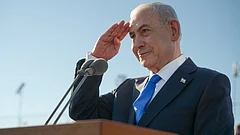
Israeli Prime Minister Benjamin Netanyahu welcomed the agreement, calling it "a great achievement" and "a major blow to Iran."
However, he said Israeli troops would remain in the security zone in southern Lebanon until Hezbollah is disarmed and no longer poses a threat.
(With Inputs From News Agencies)