Israel condemned Asif’s remarks as “outrageous”, with Gideon Sa'ar calling them antisemitic and unacceptable.
The dispute comes amid confusion over whether the US–Iran ceasefire, backed by Donald Trump, applies to Lebanon.
Rising tensions threaten diplomatic talks in Islamabad, with Iran warning it may suspend negotiations if Israeli strikes continue.
In an unprecedented move, Pakistan's Defence Minister Khawaja Asif called Israel “evil” and “a curse on mankind” for its bombing in Lebanon while the US and Iran were on ceasefire, according to the Israeli prime minister Benjamin Netanyahu.
As part of his rant on the social media site X, which he subsequently removed, Asif said that while there was peace negotiation in Islamabad, there was genocide taking place in Lebanon. He maintained that the Israelis had been killing innocent civilians and that the violence had not ceased since Gaza until Iran and Lebanon. His comment about the establishment of Israel added more fuel to the fire.
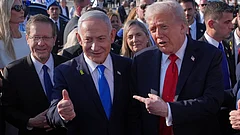
Netanyahu condemned the comments as “outrageous”, stating that such language was unacceptable from any government, particularly one presenting itself as a neutral party in peace efforts. His office reiterated this position publicly on X, questioning Pakistan’s credibility as a mediator.
Israel’s Foreign Minister, Gideon Sa’ar, called the leadership of Pakistan in an uncharacteristically harsh language, which was unusual considering the fact that the two states do not have official diplomatic relations. In his words, Asif’s remarks were nothing else but “blatant antisemitic blood libels”, and he further noted that referring to Israel as “cancerous” was tantamount to calling for its demise. Sa’ar further noted that Israel would stand its ground when it comes to the issue of its self-defense.


The Israeli reaction followed a sequence of events beginning with Pakistan’s Foreign Ministry condemning Israeli military operations in Lebanon, after which Asif issued his controversial social media statement. The post was removed following strong backlash from Israel.
However, Netanyahu’s choice to reply to the statement openly marks a significant change of direction since Israel usually refrains from engaging with Pakistan due to lack of diplomatic relations. Israeli distrust of Pakistan’s mediation abilities is nothing new; previously, Israel’s ambassador to India, Reuven Azar, commented that Israel did not consider Pakistan reliable in mediating peace talks.
The controversy emerges in the wake of reports regarding the involvement of Islamabad in US–Iran talks aimed at bringing about a ceasefire. Asif’s comments relate to this situation, arguing that although talks were underway, Israel was becoming increasingly aggressive in Lebanon.
Israel–Lebanon Conflict
Lebanon got entangled in the overall conflict of the Middle East on March 2 as Hezbollah attacked Israel using rockets, following the murder of the Supreme Leader of Iran, Ayatollah Ali Khamenei on the very first day of the war.
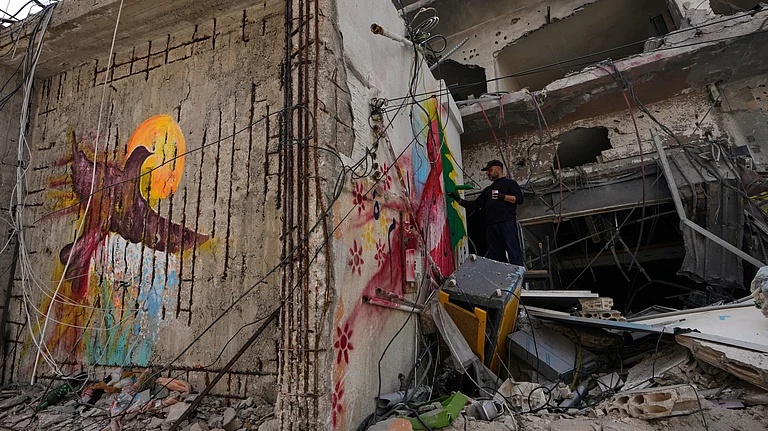
Israel attacked Lebanon with its maximum power since Hezbollah entered into this war, leaving more than hundreds killed and thus causing a fragile truce between America and Iran just after two days of its commencement.
Netanyahu announced that his country was in favour of US President Donald Trump’s two-week halt on attacking Iran, but he made it clear that this truce does not hold for Lebanon. Thus, he challenged the statement of Pakistan’s Prime Minister Shehbaz, who had asserted that the agreement applied “everywhere”, including Lebanon.

While Iran supported Sharif’s interpretation, both Trump and US Vice President JD Vance, who is leading the Iran peace negotiations, maintained that Lebanon was not covered by the ceasefire.
Meanwhile, Netanyahu has instructed his ministers to pursue direct discussions with Lebanon aimed at disarming Hezbollah. Talks between Israel and Lebanon are expected to take place in Washington next week, according to a US State Department official.
Iran May Suspend US Talks In Pakistan
Further complicating the situation, Iranian media reports suggest that Tehran may withdraw from scheduled talks with the United States in Islamabad unless Israel halts its military operations in Lebanon. This raises concerns that diplomatic efforts to ease tensions could collapse.
On Tuesday, just days before the deadline imposed by President Trump, the United States and Iran reached an agreement on a two-week-long ceasefire. The talks that preceded the agreement included Sharif and the Army Chief of Pakistan, General Asim Munir, who called on all sides to be restrained.
According to Sharif, representatives of both nations will gather in Islamabad to discuss the final agreement, which is due to be signed on April 10.
Tehran confirmed its willingness to engage in dialogue with Washington in Pakistan as part of efforts to resolve the conflict, which began on February 28 following joint US–Israeli strikes on Iran.