

Summary of this article
Under the flag of British India, 7 Sherpas won gold medals in Chamonix Winter Games in 1924
They were deceased during an avalanche in the Mount Everest
It took India 40 years since then to debut in the Winter Olympics as an independent nation
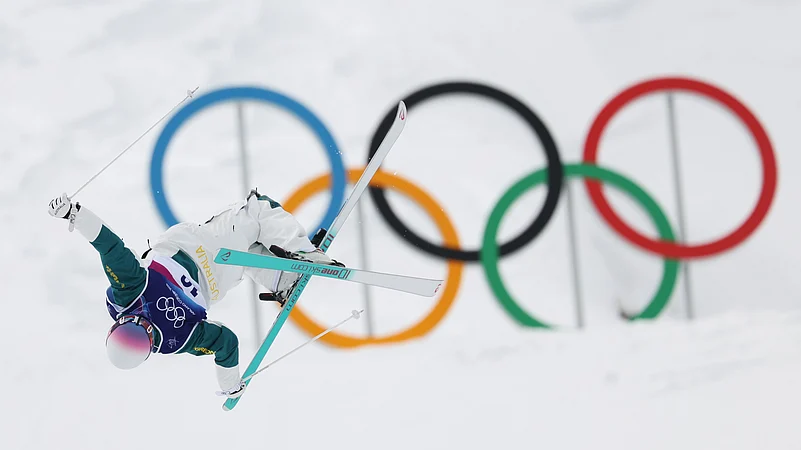
The Milano Cortina 2026 Winter Olympics, officially the XXV Olympic Winter Games, is currently being hosted across Northern Italy. The Winter Olympics has commenced from February 06, 2026, and is being celebrated by the world. Norway, Italy, USA and Germany have done extremely well so far and as the tournament progresses, they are engaging in a tougher competition. India, meanwhile, are yet to secure a medal at the Milano Cortina 2026.
Arif Khan (Alpine Skiing) and Stanzin Lundup (Cross-Country Skiing) are the only two representatives from India at the Winter Olympics 2026. Arif and Lundup are yet to compete in their respective events. This is Arif's second consecutive Winter Olympics. He is focusing solely on the Slalom this year, aiming to beat his historic 45th-place finish from Beijing 2022. Amid this, the scanty representation from India makes one wonder about the history of Indian winter sports and their participation in the Winter Olympics.
India's Forgotten Feat: Chamonix 1924
While India’s official debut at the Winter Olympics is widely cited as 1964, a hidden chapter of sporting history links the nation to the very first Winter Games, Chamonix 1924. They participated in a now-forgotten category in the Winter Games in Chamonix, "Alpinism." "Alpinism" is a category that today feels more like an adventure epic than a modern Olympic event.
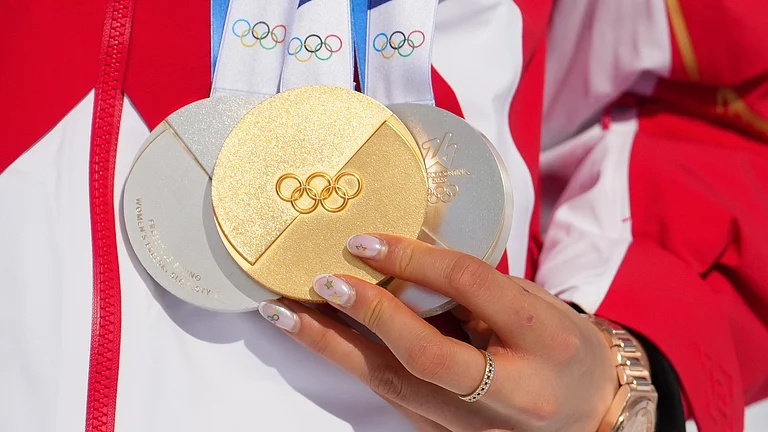
At the 1924 Chamonix Games, the International Olympic Committee (IOC) awarded a collective Gold Medal for Alpinism to the members of the 1922 British Mount Everest expedition. This was the first attempt to climb the world’s highest peak using supplemental oxygen, reaching a record-breaking height of 8,320 meters.
While the expedition was led by the British, the team was fundamentally diverse. Among the recipients of the gold medals were seven Indian Sherpas who had tragically perished in an avalanche during the third summit attempt.
While the expedition was British-led, the IOC official database lists the medal under a "Mixed Team" (MIX) code because the 21 recipients included:
12 Britons (including George Mallory)
7 Indians (The Sherpas)
1 Australian (George Finch)
1 Nepalese (Tejbir Bura)
Indian Sherpas To Receive Medal At Chamonix 1924
Narbu Sherpa
Lhakpa Sherpa
Pasang Sherpa
Pembra Sherpa
Antarge Sherpa
Temba Sherpa
Sange Sherpa
On February 5, 1924, during the closing ceremony, Baron Pierre de Coubertin, the founder of the modern Olympics, presented the gold medals. Because Mallory and his team were already back in the Himalayas for their ill-fated 1924 attempt, the medals were accepted by Deputy Leader Edward Strutt. He famously pledged to take one of the medals to the summit of Everest, a promise that, tragically, would not be fulfilled for decades.
In a poetic closure nearly 90 years later, mountaineer Leo Houlding finally took a replica of the 1924 gold medal to the summit in 2012 to fulfill that century-old Olympic pledge.
What Was The Alpinism Event?
Alpinism was one of the most unique events in Olympic history because it didn't involve a race or a live match during the Games. Instead, it was a merit-based prize awarded for the most heroic mountaineering feat accomplished in the four years leading up to the Olympics.
The "field of play" was the entire world's mountain ranges. National Olympic Committees submitted reports of significant expeditions undertaken by their citizens in four years to the build-up of the Olympics. The IOC jury looked for climbs that demonstrated extreme difficulty, pioneering spirit, and successful conquest of unclimbed peaks and decided the winner accordingly.
The IOC eventually discontinued the Alpinism category after 1946, as it was deemed too difficult to judge as a competitive sport rather than a feat of endurance. The story of the Indians winning the historic medals were also buried under the snow as the expedition was organized under the British flag despite the Sherpas being from India and essential to the feat.
After 1924, the Alpinism prize was awarded only two more times:
1932 (Lake Placid): To the Schmid brothers for the first ascent of the North Face of the Matterhorn.
1936 (Garmisch-Partenkirchen): To Hettie Dyhrenfurth for her explorations in the Karakoram.
India's 40-Year-Long Drought In Winter Olympics
After the Winter Olympics 1924, India entered a "drought" that spanned four decades from the inaugural 1924 Chamonix Games until 1964. During this era, while Alpinism was being celebrated as an Olympic feat, India remained focused on field hockey dominance and summer sports. It wasn't until Jeremy Bujakowski, a Polish-born skier representing India, qualified for the 1964 Innsbruck Games that the nation finally broke its isolation from the Winter Olympics. Even then, for the next sixty years, India’s participation remained sporadic and limited to solitary pioneers like Shiva Keshavan, who often competed without official funding or infrastructure.
Fast forward to 2026, and the narrative has shifted from mere participation to structured pursuit. Today’s Indian winter athletes are no longer "accidental" Olympians. With increased government support through the TOPS (Target Olympic Podium Scheme) and improved training facilities in Gulmarg and Manali, the modern era of Indian winter sports is more professional than it ever was.
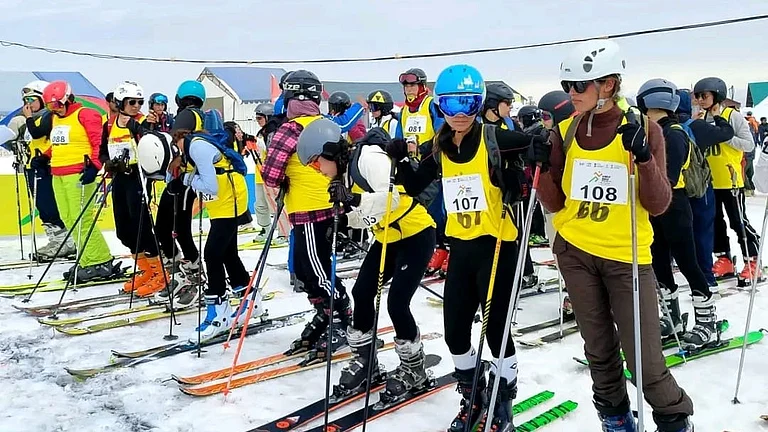
While the medal tally remains a steep climb, this transformation is driven largely by the Khelo India Winter Games, which have become the heartbeat of the nation’s winter sports ecosystem. Unlike the isolated pioneers of the past who had to seek snow and coaching abroad, current competitors have benefited from the structured talent pipeline and world-class upgrades to venues in Gulmarg and Leh provided by the Khelo India initiative.