India were put in to bat first by New Zealand
Sanju Samson and Abhishek Sharma gave India an explosive start
Sanju Samson scored his third consecutive half-century
India is clashing with New Zealand in the ICC T20 World Cup 2026 final at the Narendra Modi Stadium in Ahmedabad on Sunday (March 08). While India eye for their third title and the second consecutive one, New Zealand aim to clinch their maiden trophy.
New Zealand have won the toss and have opted to bowl first. Considering it will be a good surface to bat for both sides, specially the way India batted in the previous match, Suryakumar Yadav was happy to bat first and set a total on the board.
Both the openers Abhishek Sharma and Sanju Samson backed up his confidence and started attacking the New Zealand bowlers from the get-go. They smashed the bowlers to all parts of the ground and got off to an explosive powerplay of 92 runs.
Samson started his innings slow against Matt Henry, playing him out with the movement on offer. He handed over the responsibility of attacking the bowlers upto Abhishek Sharma in the powerplay. While he himself picked up occasional boundaries to keep the scoreboard ticking. Eventually he picked up and started hitting multiple boundaries to gain momentum.
While Abhishek Sharma departed, Samson didn't slow down and kept hitting alongside Ishan Kishan. Even his mistimed shots started to travel for sixes. Samson played three beautiful shots in the 14th over against Rachin Ravindra to scalp three consecutive sixes.


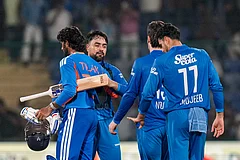

Samson brought up his half-century in just 33 balls and with it he completed the feat of scoring three consecutive half-centuries in the T20 World Cup.
Sanju Samson - Stats
Most consecutive 50-plus scores in T20 WCs
3 - Mahela Jayawardene (2010)
3 - Virat Kohli (2016-2021)
3 - Babar Azam (2021)
3 - KL Rahul (2021)
3 - Kusal Mendis (2026)
3 - Sahibzada Farhan (2026)
3 - Sanju Samson (2026)
50s in the semis as well as the final of a T20 WC edition
Shahid Afridi in 2009
Virat Kohli in 2014
Sanju Samson in 2026