DMK leader Udhayanidhi Stalin said that he had meant to abolish that system which divides people into upper and lower castes.
Abolishing the caste system did not mean that people cannot go to the temple. It meant that everyone should have equal rights, not only in the temple but also in society.
In his maiden speech as the LoP in the Tamil Nadu Assembly, Udhayanidhi called for the "abolition" of Sanatana Dharma, claiming it divides people, repeating the controversial remarks he made earlier.
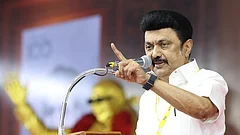
In the high-decibel arena of Tamil Nadu politics, where rhetoric often hits the ceiling, DMK leader Udhayanidhi Stalin has stepped back into the spotlight to offer a nuanced post-script to a controversy that has dogged him for over a year. Speaking on the floor of the Tamil Nadu Legislative Assembly this Thursday, the Leader of the Opposition sought to bridge the gap between his provocative "abolition" call and the personal faith of millions, framing his stance not as a war on God, but as a crusade against the caste system.
For Stalin, the clarification appeared to be an attempt to humanize a political firebrand. He explained in a post on 'X' that his original intent was to target the structural inequalities that categorize people into "upper" and "lower" castes. "Abolishing the caste system did not mean that no one should go to the temple," he noted, sounding less like a revolutionary and more like a reformer. He emphasized that his vision is one of equal rights—a desire for a society where the sanctum sanctorum and the social square are equally accessible to all, regardless of birth.



A Legacy of Opposition
Stalin’s address was steeped in the historical DNA of the Dravidian movement. By invoking the names of Periyar, Ambedkar, Anna, and Kalaignar, he anchored his controversial remarks in a century-long tradition of rationalism and social justice. He spoke with the grit of a man who claims he is "not afraid" of criticism, yet his words carried an undercurrent of empathetic navigation. He was careful to state that the movement is not "against anyone’s belief in God," but remains fundamentally opposed to inequality and oppression.
The Political Stakes
The timing of this explanation is as significant as the content. Having repeated his "abolition" call during his maiden speech as the Leader of the Opposition, Stalin is aware that his words resonate far beyond the borders of Tamil Nadu. By reframing the "Sanatan Dharma" remark as a specific critique of the caste-based "system that divides," he is attempting to peel away the layers of religious friction to reveal a core message of human dignity. It remains to be seen if this pivot toward social equality will quiet his detractors or simply provide a new battleground for the ongoing ideological war.