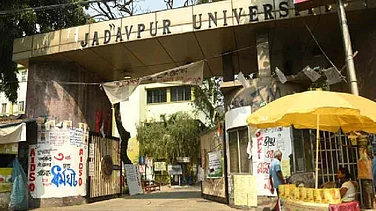
Beneath Kolkata’s flyovers live thousands of paperless Bangladeshi migrants who physically transform into animals at night to stay invisible.
Their ancient survival technique, born during 13th-century invasions and refined across centuries of borders, lets them escape detection and deportation.
A hospital doctor discovers the truth and quietly plants trees and leaves food to protect the “overbridge people” who sweep the city by day and change by night.
I. The Night Walk
The emergency had taken most of the night. By the time I stepped out of SSKM Hospital, it was a little past two in the morning—Kolkata's hour of suspension, when the noise dies but the city doesn't quite sleep. The air smelled of wet dust, diesel, and the faint antiseptic I had carried out on my clothes. My cousin was stable, sedated, breathing evenly under the bluish hospital lights. There was nothing more I could do.
The auto stand was empty. A lone taxi passed, too fast to flag down. So I began walking, letting the night wrap itself around me like a damp shawl. Forty minutes if I cut across the Rabindra Sadan/Maa overbridge—a route I had walked countless times. But that night the shadows felt thicker, the silence more alert.
As I approached the overbridge, I noticed movement near its pillars. At first, I thought it was the usual—people sleeping rough, wrapped in thin blankets. But these shapes were not sleeping. They were emerging from somewhere beneath the concrete itself, crawling from narrow openings I had never noticed in years of passing.
Their limbs moved wrong. Too low to the ground. Bent at angles that made my throat tighten.



I should have crossed the road. Should have looked away.
Instead, I stepped closer.
One figure straightened, slow and deliberate, brushing soil off his shirt. The streetlight caught his face.
"Bappada?"
He froze. In the dim orange glow, I could see it was indeed him—the sweeper from our hospital, the quiet man who greeted me every morning with folded hands and a soft "Good morning, sir."
Only now his face was covered with coarse dark hair, almost like an animal's pelt. His eyes glinted amber, reflecting the streetlight the way cats' eyes do in headlights.
"Sir," he said hoarsely, his voice tight with fear. "You should not be here."
Behind him, more shapes gathered in the sodium light. A woman crouched on all fours, her spine curved in a way human backs don't curve, moving with fluid animal grace. Two children stood half-hidden—one with something like feathers poking through a torn shirt, the other hopping on legs that had fused into a single powerful limb. An elderly man's face had begun elongating into a blunt snout.
Their eyes—all of them—watched me with a wary, feral intelligence.
My mouth had gone dry. "Bappada, what is this? What are you?"
He raised a trembling hand. "Please, sir. Sit with me. Not near the openings—those lead down. But sit. I will tell you."

II. The Adaptation
We sat on the concrete barrier, half in shadow, far enough from the streetlight to remain invisible to passing traffic. The others continued their strange movements behind us—stretching, twisting, reshaping themselves as though their bodies were remembering something deeply buried.
The smell of earth rose from the openings. Rich, old earth, mixed with something else I couldn't name.
"We are refugees, sir," Bappada began, his voice tired and ancient. "From Bangladesh. And from before Bangladesh. From before the borders meant what they mean now."
"You don't have papers."
"No papers. No ration cards, no Aadhaar, no voter cards. Nothing that says we exist." He held up his arm, and in the streetlight I saw a faint raised line beneath the skin of his inner wrist—too neat to be a scar, too deliberate to be natural. "Only this. A tracking device. So they know we come to work, that we do our duty."
My stomach turned. "They? Who are 'they'?"
"The real sweepers, sir. The ones whose names are on the hospital rolls. They sit at home. They have other jobs, businesses—some are very rich people now. They never come to sweep. People like us, we do the work. They pay us ten percent of what the government pays them."
"And if you complain?"
He touched his wrist again, his elongated fingers tracing the invisible device. "They track us. They know where we live, where we go. And besides, sir, where would we complain? We don't exist. We have no papers. If we go to police, they send us back. Back to where? The border has been closed for decades. They put us in detention camps where people disappear. Better to sweep floors and live underground."
"How many of you are there?"
"Here? In Kolkata? Thousands, sir. Under overpasses, near railway lines, beneath the city. We live where nobody looks."
I watched his wife—she had stopped moving and now sat on her haunches, her face more human in stillness but her posture completely animal. The children had gone quiet too, waiting with an attention that felt almost ceremonial.
"And this?" I gestured to them, to their transforming bodies. "What is this?"
Bappada was quiet for a long moment. When he spoke, his voice had changed, becoming almost reverent.
"This is very old, sir. Older than Partition. Older than the British. My family, we learned this during the first invasions. When Bakhtiyar Khilji came to Bengal in 1204, when the armies burned everything, killed everyone who resisted. My ancestors lived in the villages near the Sundarbans."
He looked at his hands, at the way his fingers had lengthened, the nails turned to something harder and darker.
"The survivors—they learned something from the land itself, from the animals in the mangroves. If you cannot live as human, you become what humans will not kill. You become cow, dog, monkey. You become the sacred and the ignored. You become invisible."
"That's not possible," I said, but even as I spoke, I was watching his wife's body, the way her shoulder blades moved beneath her sari blouse like wings trying to remember flight.
"Not possible, sir? But you are seeing it." His amber eyes held mine. "This is adaptation. This is survival. Every few generations, we must hide again. During the Mughal times, during the British, during Partition—thousands learned this ritual. When you have no home, no name, no papers, you learn to become what cannot be caught, cannot be deported, cannot be erased."
"But you're still human. In the daytime—"
"In the daytime, we are almost normal. We pass. We sweep your floors, collect your garbage, clean your toilets. We exist just enough to serve. But at night, sir, we practice. We remember. We become what we truly are now—creatures that live in the cracks of your world."
His daughter—the one with the bird-like qualities—made a sound, half-human cry, half-something else. Bappada looked at her with such tenderness that my chest ached.
"She is seven years old, sir. She was born here, under this bridge. She has never known a real home. The transformation takes the young ones differently. They are becoming something new. Something that has never existed before."
"Your son—the one who—"
"Who moves like a kangaroo, yes. He saw a picture in a torn book we found in the trash. He said that is what he wants to be—something that can jump far away from here. So his legs are changing. The children, they are more fluid. They adapt faster. They dream their shapes."
"How long do you live like this?"
"Eight years. Ten if we are lucky. The body, it wears out. Too much transformation, too much hiding. When we die, sir, we don't become corpses. We complete the change. We become the animal fully."
He paused, and I saw tears in those amber eyes.
"That cow you see near the hospital entrance, the one that watches the gate? That was Rohit-da. He swept the pathology wing for fifteen years. Died three years ago. Now he stays close, watching over us."
I thought of that cow. The way it sometimes seemed to recognize people. The intelligence in its eyes that I had always dismissed as projection.
"And once you complete the change, you can't turn back?"
"No, sir. Once you die, you are animal forever. But at least, you know, animals are free in some ways. They are not asked for papers. They are not put in camps. They just exist."
The wind moved through the space beneath the overbridge, carrying that smell of earth again.
"But couldn't you get papers? Fake documents? There are people who make them, sell them—I've heard about it."
Bappada smiled, and it was the saddest smile I had ever seen.
"Yes, sir. We were offered. Many times. Fake Aadhaar cards, fake voter IDs, fake birth certificates. People who make good money selling citizenship to people like us."
"Then why didn't you—"
"Because, sir, look at us." He gestured to his transforming body, to his family. "We change our appearance every night. Today I look like this. Tomorrow my face will be different, my body different. How can we keep ID cards with photos when our faces don't stay the same? The tracking device, it reads something in our blood, our DNA maybe. But cameras? Photographs? They capture who we were yesterday, not who we are today."
He leaned forward, and his voice became softer, more philosophical.
"But there is something else, sir. Something more true. We refused the fake papers because we realized something."
He paused, and in that pause, the city seemed to hold its breath.
"All humans—they also change, no? Not on the outside like us, but inside. The person who is kind today becomes cruel tomorrow. The honest man becomes corrupt. The loving husband becomes violent. Every human changes shape inside, transforms into something else over time. But they pretend to stay the same. They show the same face on their ID cards, speak the same name, but inside? Inside they are becoming different animals."
I opened my mouth to protest, but he continued, his voice gaining strength.
"We accepted this transformation, sir, as a kind of honesty. Our bodies show what everyone hides. When a man becomes a dog in his heart—greedy, servile, barking at his masters—we just become dogs on the outside too. When a woman becomes burdened like a beast, working until her back bends—we become that beast. We don't lie about what we are becoming. We just... become it."
He touched his face, feeling the hair that had grown there, the changes in bone structure beneath the skin.
"You asked me how long a human remains truly human in body and mind at the same time? I think, sir, most people—they stop being human in their minds long before their bodies give out. They just keep wearing human faces while they become something else inside. Monsters. Machines. Animals."
He placed his palm flat against his chest.
"We are just more honest. Our outsides match our insides. That is why we refused the fake papers. Because papers lie. Documents lie. They say you are one thing when you have become another. And we are tired, sir, of lying."
The silence that followed felt sacred. A truck rumbled past on the main road, its horn echoing between buildings, but here beneath the overbridge, time had stopped.

III. The Choice
"Why are you telling me this?" I finally asked.
"Because you saw us, sir. Because you didn't run. Because..." He paused, and for a moment his face looked completely human again, vulnerable in a way that had nothing to do with transformation. "Because you always say good morning to me. At the hospital. You see me. Most people, they look through us. We are invisible even when we are human. But you see us."
Something in my chest cracked open.
"I won't tell anyone," I heard myself say.
"Thank you, sir."
"But I want to help. How can I help?"
He shook his head slowly. "There is no help, sir. This is what we are now. This is how we survive."
"Let me think about it," I said. "Just... let me think."
I stood up, and he stood too. In the streetlight, I could see he was crying—very human tears running down his increasingly animal face.
"Sir, one thing. Please. When you see the strays, the dogs and cows and monkeys around the hospital—treat them with kindness. They were all people once. They are people still, in some way."
I nodded, not trusting my voice.
As I walked away, I heard them returning to their underground spaces, heard the soft sounds of their transformation continuing, the whisper of skin becoming fur, bone reshaping itself to ancestral memory.
I didn't look back.
IV. The Trees
I couldn't sleep that night. Or the next. I kept seeing Bappada's face, his children, the way they moved between human and animal like shadows between light, like truth between lies.
On the third day, I started researching. Not the transformations—I didn't know where to begin with that, and perhaps some mysteries should remain mysterious. But trees. Fast-growing trees. Trees that could provide cover, create a screen between the overbridge and the road.
Bamboo grew fastest, but I wanted something more permanent, something sacred. Banyan trees could grow quickly if properly cared for, and their spreading canopy created perfect cover. Neem trees were hardy, medicinal, and people respected them—worshipped them, even.
I bought saplings from a nursery in Tollygunge. The owner asked what I was planting for, and I said I was beautifying my neighborhood. He helped me pick the healthiest ones, showed me how to care for them, gave me advice about soil and water and sunlight.
That night, I went back to the overbridge at 1 AM, carrying four saplings, a spade, and two bags of soil. I felt ridiculous and terrified and necessary in equal measure.
Bappada emerged before I even called out. He was more human-shaped at this hour, though his hands were still too long, his eyes still reflective in the darkness.
"Sir, what are you doing?"
"Planting trees. To hide you better. The overbridge is too exposed. If I plant these along the barrier, in a few months they'll create a screen."
He stared at me, then at the saplings lying in their plastic bags. "Sir..."
"And I'll bring food. Every day. I'll leave it near the southern pillar, wrapped in newspaper. Nothing fancy—rice, dal, some vegetables. Whatever I can manage."
"Sir, you don't have to—it is dangerous. CCTV is everywhere now. Every movement is recorded—"
"People already ask me questions," I interrupted. "I just tell them I have some night pets here around. They laugh. They think I'm eccentric. Nobody looks deeper than that."
"But—"
"I can't fix this." I stabbed the spade into the hard earth, feeling it resist, then give. "I can't change the system or give you papers or make you safe. But I can plant trees and bring food and keep my mouth shut. So that's what I'm going to do."
For a moment, we just looked at each other—doctor and sweeper, citizen and ghost, human and something becoming other.
Then he picked up one of the saplings.
"Then I will help you."
We worked together in silence, digging holes in the hard-packed earth beneath the overbridge. My hands and his hands in the same soil—mine soft from hospital soap, his transforming into something between human and animal, both of us covered in the same dirt by the time we finished.
We planted eight young trees along the overbridge barrier. Banyan, neem, bamboo. I showed him how to water them, where to press the soil firm around the roots, how to protect the tender bark.
By 3 AM, we had created the skeleton of a forest. In the orange sodium light, the saplings looked fragile, impossible. But I knew how trees grew. How they thickened and spread and became shelter.
"They'll take time to grow," I said, wiping mud from my hands on my already-filthy shirt.
"We have time, sir. Thank you."
"Don't thank me. Just... stay safe."
As I turned to leave, he called out softly, "Sir? That tracking device—it only monitors location. It doesn't have audio or camera. They'll never know you helped us."
I nodded and walked home as the first hints of dawn touched the sky, turning it the color of bruises healing.

V. What We Become
Six months later, the trees had grown taller than I'd hoped. The bamboo I'd added in subsequent visits had filled in the gaps, creating a dense green barrier between the overbridge and the street. You could walk past now and never suspect there were openings beneath, never imagine the community living in those underground spaces, practicing their transformations in the dark.
I continued my routine. Every morning before work, I'd stop at the overbridge with a bundle wrapped in newspaper—rice, rotis, bananas, sometimes dal or vegetables I'd cooked the night before. I'd leave it near the southern pillar and walk away without waiting, without watching.
At the hospital, Bappada still swept the floors. We never spoke about that night. We never acknowledged what I knew or what he was. But sometimes our eyes would meet across a corridor, and there would be an understanding—a brief nod, nothing more.
A colleague once caught me leaving food at the overbridge. "Dada, what are you doing? Everything is on CCTV—this is an A-class metro city!"
I smiled easily. "I have some night pets here around. They get hungry."
He laughed and shook his head at my eccentricity, and that was the end of it.
I started noticing things I'd never paid attention to before. The stray dogs that lounged near the hospital entrance—one of them, a brown mongrel with intelligent eyes, always watched the emergency ward. Was it watching over someone? Was it someone?
The cow that grazed near the parking lot, the one Bappada said was Rohit-da—I began bringing it extra grass, vegetable peels. It would turn its head to watch me with what I could only describe as recognition, something too knowing for an animal, too patient for anything that hadn't once been human.
The monkeys in the neem trees around the compound—they moved with an awareness that felt like memory. Cautious around people in uniform, protective of the children who played nearby, stealing food with what looked almost like shame.
I wondered how many of them had been people once. How many were still people, in the ways that mattered. How many were still transforming, still practicing their ancient survival in the margins of our city.
VI. The Watcher
Three months ago, Bappada stopped coming to work.
There was no announcement, no explanation. The floors still got swept—someone else was doing it now, another ghost, another person who existed just enough to serve and not enough to matter. The hospital administration never mentioned his absence. His name had never been on their official rolls anyway.
But I kept bringing food to the overbridge. The bundles disappeared each morning, so someone was taking them. The trees had grown thick now, a proper screen, a living wall between the visible city and the invisible one beneath.
Sometimes at night, if I passed by, I could hear sounds from under the concrete—not quite animal, not quite human. The rustle of movement, the soft chirp of that bird-girl, the breathing of bodies that were learning to be something new.
Last week, a new stray appeared near the hospital entrance.
A large dog with graying fur around its muzzle and amber eyes that caught the light like coins. It watched people with an attention that wasn't quite canine, too focused, too understanding. When I walked past, it followed me for a few steps, then sat down and tilted its head in a gesture that felt achingly familiar.
I thought of Bappada's eight-to-ten-year lifespan. I thought of how he'd described the final transformation—how death wasn't an ending but a completion, how the body finally settled into the shape it had been practicing all along.
"Bappada?" I whispered, crouching down.
The dog's tail wagged once. Just once. A single acknowledgment.
Then it turned and trotted toward the overbridge, disappearing into the shadows beneath the trees we had planted together, returning to watch over those still transforming, still surviving, still living in the cracks of our world.
I stood there for a long time, watching the space where it had vanished.
Around me, the city continued its daily chaos—people rushing to catch buses, auto-rickshaws honking, street vendors calling out their wares, life happening in its loud, visible, official way. But beneath it all, in the cracks and shadows and underground spaces, there were others. People who'd learned to adapt, to survive by becoming what we wouldn't see, what we couldn't document, what we refused to acknowledge.
The overbridge people. The adapted ones. The survivors of centuries of borders and invasions and disappearances and bureaucratic erasures.
I returned to my routine. Brought food. Watered the trees. Kept silent.
When people asked, I smiled and said, "I have some night pets here around."
And they laughed, because the truth was too strange to believe, too uncomfortable to see, too close to the heart of what the city was built on—the invisible labor of invisible people, the ones who sweep and clean and serve and disappear, the ones who exist without existing.

Epilogue
The trees keep growing.
The food keeps disappearing.
The city moves on, never knowing what lives beneath its feet.
I keep walking home at night, watching the shadows, treating the strays with kindness, remembering that first encounter, knowing I'll never see the world quite the same way again.
Because what else can I do? I can't save them. Can't give them papers or homes or the right to exist as humans. But I can witness them. Can help them hide. Can treat the strays with kindness, knowing they were people once, knowing they are people still, in the ways that matter most.
Sometimes survival means becoming something else entirely.
Sometimes humanity survives best in the shapes we refuse to recognize.
Sometimes the truest citizens of a city are those it never learned to see.
The amber-eyed dog still watches the hospital entrance each evening. The cow still grazes near the parking lot, its gaze too knowing for mere animal. The monkeys protect the children in the compound with a fierce tenderness that speaks of remembered parenthood.
And beneath the overbridge, hidden by the trees we planted together, the people who have nowhere else to be continue their ancient practice—adapting, transforming, surviving in the only way left to them.
I water the trees.
I leave the food.
I keep their secret.
And the city—this great, loud, proud city—moves on, blind as ever, refusing to see what lives in its foundations, what sweeps its floors, what makes its daily life possible.
In Kolkata, beneath the overpasses and along the railway lines, in the forgotten spaces between official and real, there are people who exist without existing. This story is about them. About adaptation. About what we become when the world refuses to let us be what we are.
To those who sweep our floors, collect our garbage, clean our cities while living invisible—this story sees you. Even if no one else does.
Dr Swapan Samanta (MBBS/MD) is a Kolkata-based general physician, researcher, and author of over 400 fictional and philosophical /scientific non-fictional works blending science, myth, and ethics. His stories explore the border between compassion and invisibility in modern India. He writes in Bengali, Sanskrit and English.