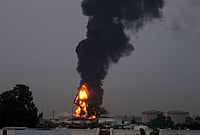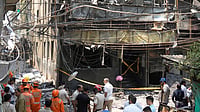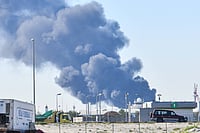

The war in Kargil might have ended. But the larger conflict refuses to die down. Consider these facts:
The signals are clear. Three months since the war began in Kargil, the question being asked is whether the armed forces have reached zero-tolerance level. Even more significantly, have they been stretched to the point that no intrusion, if noticed, would be tolerated and no peace-time allowances given?
In a tense scenario where the gains of diplomacy and the Lahore process seem to be getting diluted, both India and Pakistan look like veering towards a larger conflict spread over a bigger area. The Kargil intrusions didn't stop there; infiltrations into the Kashmir valley were stepped up. First came the daredevil raid on the bsf residential complex at Bandipora; later came attacks on army camps and a brigade headquarters in Kupwara.
Around the same time, important isi operatives,including a Harkat-ul-Mujahideen leader,were picked up by an intelligence agent in faraway Guwahati; blasts on railway tracks have led to cancellation of trains to the Northeast; there is heavy security deployment on the Gujarat coast, in addition to regulation intelligence inputs which have warned of isi-sponsored trouble as a 'retaliation',all of which set alarm bells off in the country's security apparatus.



But the incident which brought into sharp focus the fragile Indo-Pak relations was the shooting down of the Atlantique, a surveillance aircraft on a spying mission inside Indian territory in Gujarat's Rann of Kutch. The aircraft, says air chief M.Y. Tipnis, came once and kissed the LoC, then came again and touched the border before returning a third time and crossing into Indian territory. According to Tipnis, two MiGs scrambled from the nearby Naliya airbase challenged the aircraft, asking it to land. The Atlantique, instead, headed towards its own border. Approximately 5 km from the LoC, one of the MiGs fired a missile, but the aircraft and what was left of it, managed to cross the border. Some debris was recovered in India but most of the aircraft and bodies fell inside Pakistan.
The shooting down raised questions. Defence minister George Fernandes said this intrusion was one of the many that had occured in this sector. So what was the Indian Air Force (iaf) and allied intelligence doing? Was this another Kargil in the making? Well-placed defence officials say that in normal times, such intrusions or surveillance is accepted,after all, spying is a fact of life between hostile neighbours and even friendly ones. But these are not normal times. The aircraft came in thinking this would be another routine sortie. This time around, however, the air force, still smarting after their choppers were shot down in Kargil, decided to go after the Pakistanis, says an iaf official, adding that there was no question of approval from the higher-ups as every second is vital in a combat.
According to the official, there was no doubt that the aircraft was on a surveillance mission. Look at its range, says an official. It is fitted with torpedoes of different makes, it has missiles, anti-shipping missiles, 15 bombs of 250 mm diameter. In its stores, it has sonar buoys for submarine detection, explosive charges (bomblettes), marine markers and flame floats, lepus flares, Exocet AM-39 missiles, primary radars, radar detectors and a range of surveillance equipment. To say that it was on a training mission, and that too on the border, is ludicrous. Their take: the aircraft, in true traditions of electronic intelligence, was on a mission to 'fingerprint' iaf and army radars, sensors and communication systems.
What of Pakistani claims that the aircraft was shot down in their territory? According to the iaf, the entire sequence of the aircraft entering Indian territory and its earlier sorties on the same path is recorded on their radar, which is irrefutable evidence, should it be required. Could the plane have been forced to land? There's no way we can do it as there was no radio contact with the Pakistani aircraft. After we identified the enemy, we gave them the signals, which were ignored. We had no option, says an iaf official.
With Pakistan saying it reserves the right to retaliate,after a public funeral for all those killed,the stridency on both sides of the border is getting sharper. Diplomatically, the Atlantique episode has put India somewhat on the backfoot. After earning kudos from the world during the Kargil conflict, India seems to have lost some sheen by this one action. The Americans waited for two days and slapped Delhi on its wrist for shooting down the aircraft in a highly disputed area. It recognised that the Pakistanis violated the '91 agreement which forbids flights within 10 km of the LoC, but considered the Indian action much more serious in not respecting the agreement by shooting down the aircraft. Clearly, the tinderbox syndrome appeared to be slowly but steadily building up.