Activists and journalists argue that despite Lalu Prasad Yadav’s rhetoric of social justice, political succession within his family reflects entrenched patriarchy, with sons Tejashwi and Tej Pratap promoted as heirs while better-qualified daughters like Misa Bharti and Rohini Acharya were sidelined.
Rohini Acharya’s public rebellion after the RJD’s electoral defeat brought long-suppressed gender discrimination into the open, highlighting how daughters were denied executive authority despite their loyalty, sacrifices, and political capability.
The episode has reignited a broader debate on male-dominated succession across Indian political parties, revealing how women mobilise voters and movements, yet decision-making power and leadership inheritance continue to remain largely in men’s hands.
When Rashtriya Janata Dal leader Lalu Prasad Yadav built his political legacy on the promise of social justice and empowerment of the marginalised, few questioned whether that vision extended to gender equality within his own family. But the recent rebellion by his daughter Rohini Acharya has forced an uncomfortable reckoning, one that goes beyond family discord to expose the deeply entrenched patriarchy shaping political succession in India. As questions resurface over why daughters like Misa Bharti were sidelined while sons were groomed as heirs, the turmoil within the Lalu household has become a prism through which the male-dominated culture of power, inheritance, and leadership across Indian politics is now being scrutinised.

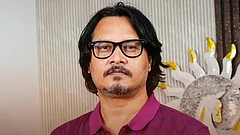


“Patriarchy runs so deep in Indian politics that women are rarely seen as natural heirs to power. The same is evident in Lalu Prasad Yadav’s family. Despite having the option to project Misa Bharti as a successor, he chose to keep her politically limited, while grooming his sons for leadership. This preference was not exceptional, leaders like Lalu or Mulayam Singh Yadav are part of a wider political culture that continues to safeguard male dominance across parties.”
These remarks by activist Nivedita Jha point toward the internal rupture within the Lalu family that surfaced after Rohini Acharya’s rebellion. This episode simultaneously raises uncomfortable questions about the patriarchal order embedded in society. It also reflects the imbued rule/custom within the society - No matter how capable a daughter may be, the heir is almost always presumed to be the son.
The story of political succession in Lalu Prasad Yadav’s family is not merely about merit or mass appeal, but it is also about the patriarchal structure hidden within it, a reality often ignored. At one point, Misa Bharti, who is the eldest among the siblings, was seen as a natural claimant to the political legacy. Gradually, however, her role was reduced.
Some critics argue that while Lalu’s politics consistently talked about social justice, but he could never actually escape the patriarchal mindset within his own home, where sons were viewed as the “natural” inheritors of power.
In the RJD family, the daughters were better qualified than the sons and stood firmly by their father during any problem. However, as soon as Tej Pratap Yadav and Tejashwi Yadav won their first Assembly elections, they were immediately made ministers. In contrast, the daughters were never given comparable executive authority. In this way, leadership succession within the Rashtriya Janata Dal emerged not merely as a political strategy but as a reflection of deeply ingrained male preference within family and power structures. This pushed leaders like Misa Bharti to the margins while carefully making Tejashwi as the “natural heir.”
Senior journalist Manikant Thakur, who has closely observed Lalu Prasad Yadav’s politics, believes that Lalu’s daughters were not only older but also academically more qualified than his sons, yet he still chose to promote the sons.
According to Thakur, “Lalu waited deliberately rather than advancing a daughter as successor. He kept them confined within a limited sphere. While not all daughters were interested in politics, Misa showed political inclination from the very beginning. Rohini entered politics only after Lalu had already declared his son as successor. At that time, Rohini neither protested nor demanded political space; instead, she continued to support Tejashwi and strengthen his position. Her assertiveness and the family’s internal discord came into public view only after the RJD suffered an electoral defeat in Bihar.”
After that defeat, Rohini Acharya’s rebellion was not just an expression of political anger, but it became a manifestation of discrimination deeply rooted in family structures and society at large. Soon after the loss, she publicly accused the RJD leadership and Tejashwi Yadav’s team, alleging bias, pressure, and humiliation, particularly by those close to Tejashwi, over issues of accountability, strategy, and ticket distribution. She chose to distance herself from the family, sharing this decision openly on social media.
Her sacrifice of donating a kidney to her father also became a subject of political debate. Some Critics questioned the intent and credibility of this act, turning it into yet another political controversy.
Prioritising sons in political succession is not merely a party strategy, but it reflects entrenched familial and social values. Because Rohini comes from a prominent political family, her rebellion has brought this debate to the centre of public discourse.
Nivedita Jha views Rohini’s case through social, economic, political, and gendered lenses. She argues that patriarchy runs deep in Indian politics, where men dominate power. However, she believes Bihar’s women’s participation as voters in the recent election signals a shift, where women will increasingly assert their rights.
Nivedita Jha further says, “Leaders haven’t changed their views, but women have changed themselves. Women compelled leaders to make schemes for them and to give them tickets in elections. This change has pushed women forward. They now understand politics and power structures, and they are actively engaging with them. You can look at Misa and Rohini in the RJD. Misa entered politics much earlier, yet she never displayed the kind of assertiveness Rohini has shown, despite Rohini being in politics for barely two years. This is a result of her understanding of power structures. Her brother feels threatened by her.”
Lalu Prasad Yadav has nine children, including seven daughters and two sons. Misa Bharti is the eldest, followed by Rohini Acharya. Tej Pratap Yadav, the elder son, is fourth in the birth order, while Tejashwi Yadav, the younger son, is fifth.
It is important to note that when Rohini publicly expressed resentment toward her family, especially Tejashwi, none of her sisters openly supported her, nor did Lalu or Rabri Devi. Though one section criticised Rohini for rebellion, while another appreciated her as the bravest among the daughters. In fact, her courage was evident not only in donating her kidney but also in raising her voice against her brother and party leadership when it came to her rights.
This male-dominated culture of succession is not limited to family-centric regional parties, but it also exists in other parties as well, like the Trinamool Congress, Bahujan Samaj Party, Nationalist Congress Party, or the Dravida Munnetra Kazhagam (DMK). It runs just as deep within Left politics and national parties. Despite the central importance of the general secretary’s post in Left parties, none of the Communist Party of India, Communist Party of India (Marxist), or Communist Party of India (ML) has ever had a woman general secretary.
In the Indian National Congress, it has long been believed that Priyanka Gandhi has greater political maturity, communication style and echoes of Indira Gandhi. Yet, leadership and succession have always revolved around Rahul Gandhi. Similarly, the Bharatiya Janata Party, has never appointed a woman as national president, even with leaders like Sushma Swaraj, Nirmala Sitharaman, Vasundhara Raje, and Uma Bharti.
Thus, whether it is Mamata Banerjee, Mayawati, or national parties like Congress and BJP, regardless of the public face, be it male or female, but decisive power and succession remain mostly with men. Though women mobilise movements, collect votes, and develop narratives, but the final power remains in male hands.
Mamata Banerjee promotes her nephew Abhishek Banerjee, Mayawati promotes Akash Anand, and Sharad Pawar prioritises his nephew Ajit Pawar over his daughter Supriya Sule. In the DMK, M. Karunanidhi’s decision to elevate M. K. Stalin while sidelining M. K. Azhagiri triggered family conflict, even as Kanimozhi remained outside the succession frame.
Ultimately, patriarchy’s victims are not just Rohini Acharya or Misa Bharti, but they are women across India’s regional and national parties.
Manikant Thakur argues that these roots are very deeply ingrained. He believes Rohini’s outspokenness will not shift the RJD’s vote base or make supporters accept a daughter over Tejashwi. He also feels Lalu and Rabri, even if they wished otherwise, cannot reject Tejashwi’s leadership.
The chaos within Lalu Prasad Yadav’s family has also been used by political opponents, who continue to target Lalu and Tejashwi over corruption and dynastic politics. However, Lalu now faces accusations of being anti-daughter.
Recently, when Lalu underwent eye surgery in Delhi, Misa Bharti accompanied him. BJP spokesperson Neeraj Kumar mocked the situation on X (formerly Twitter), writing: when Lalu needed a kidney, daughter Rohini donated one; when he needed eye surgery, daughter Misa was by his side. But when it comes to inheritance, be it property or party, only Tejashwi is remembered. Is this not anti-daughter, anti-woman thinking? A stark gap between Lalu’s words and actions.