The Supreme Court decided not to ask the Election Commission to respond to a newspaper report that claimed centrally generated deletion notices were issued during Bihar’s Special Intensive Revision, saying there are procedural limits.
The petitioners argued that the report suggested violations of the Representation of the People Act, which gives only local Electoral Registration Officers the authority to issue deletion notices.
The top court reiterated that serious claims of electoral integrity must be formally submitted in affidavits before the judiciary can act.
The Supreme Court on Tuesday, December 16, 2025, refused to ask the Election Commission of India (ECI) to respond to a newspaper report that claimed there were large-scale notices for deleting voter names during Bihar’s Special Intensive Revision (SIR). The Court explained that it cannot act on media reports unless the parties formally submit the allegations through affidavits.
A Bench led by Chief Justice of India Surya Kant was hearing a batch of petitions challenging the SIR when Advocate Prashant Bhushan, representing the Association for Democratic Reforms (ADR), pointed out a report in The Indian Express. The report said that hundreds of thousands of pre-filled notices to delete voter names were sent through the Election Commission’s central portal, even though the Representation of the People Act, 1950 says only local Electoral Registration Officers (EROs) can issue these notices.
Bhushan called the allegation “very serious” and argued that it suggested central interference in a process that should stay local. He referred to Section 23 of the Act and said that if deletion notices were sent out centrally, it would break the legal rules meant to protect electoral rolls.



“These notices were sent to over 10 lakh people,” Bhushan said, adding that the report also mentioned the ECI had not answered the reporter’s questions. “If lakhs of notices are being sent from a central place, even though the law says only the ERO can do this, it shows something is happening at the central Election Commission.”
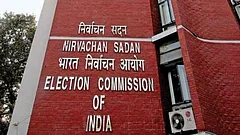
The Election Commission objected to using media reports as evidence. Senior Advocate Rakesh Dwivedi, representing the ECI, said the Commission did not have to respond to newspaper articles and insisted the claim was not true. He said that District Election Officers had issued all the notices.
“If Mr Bhushan wants to continue with this allegation, he must submit evidence through an affidavit,” Dwivedi told the court. He added that arguments based on unverified reports were making the case take longer than needed.
“Unfortunately, this case began with newspaper reports, and every argument brings more reports,” added Solicitor General Tushar Mehta.
The Bench agreed. When Bhushan asked the Court to make the ECI explain the report, Chief Justice Kant said that the law requires allegations to be formally submitted to the Court. He acknowledged the newspaper and its reporters are credible, but warned that courts should not be influenced by reports based on unnamed sources.
“According to procedure, we can only ask for a reply if something is officially submitted to us through an affidavit,” the CJI said. “We know the reporters are credible and respected, but a report uses phrases like ‘it is learnt’. Reporters depend on sources, and sometimes those sources are right, sometimes only partly right.”
Dwivedi added that the report did not say how or where the information came from.
Bhushan replied that the information was not new and that he had been warned earlier by what he called a “very responsible political leader” from Bihar. Solicitor General Tushar Mehta then said that people who care about the public should advise political leaders to go directly to the Court instead of using intermediaries.
“When a top political leader approaches a pub“When a top political leader contacts a public-spirited person, the advice should be to file a petition directly,” Mehta said. The CJI added that the person involved would “certainly come forward” to do so.d to issue any direction to the Election Commission based solely on the media report, emphasising that allegations of this nature must be supported by affidavits or documentary material before judicial notice can be taken.
The Indian Express report said that during the last phase of the SIR in Bihar, hundreds of thousands of pre-filled voter verification notices showed up on local EROs’ dashboards, even though they had not created them. The report clarified that these notices did not cause mass deletions—most were due to deaths, migration, or duplication—but raised concerns about the centralised way the notices were issued and completed, which could blur the lines of legal authority in the election process.