Venezuela’s latest crisis has triggered a classic risk-off response across global markets, with equities slipping and safe-haven assets gaining, even as oil prices remain subdued due to the country’s limited current contribution to global supply.
While Venezuela produces less than 1% of global oil, its vast reserves, the largest in the world, make it strategically critical, raising concerns about a growing geopolitical risk premium and long-term disruptions to heavy crude markets.
India and other importers face minimal short-term fallout, but shifts in political control, sanctions or great-power influence could unsettle energy markets and financial systems, making Venezuela a key geopolitical fault line to watch.
Venezuela is back in the headlines and the ripple effects are being felt far beyond Latin America. The country’s latest crisis has once again unsettled global markets, stirring old fears of oil supply shocks, rising geopolitical risk and financial contagion across economies already on edge.
As trading opened after the weekend’s developments, investors slipped instinctively into risk-averse mode. Equity markets faltered, bond yields climbed, the rupee weakened, and money flowed into traditional safe havens such as gold and silver. The moves were familiar, almost reflexive, underscoring how quickly Venezuela’s long-simmering instability can reawaken global anxieties, specially when energy markets are involved.


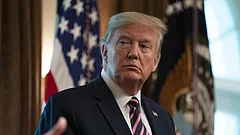

Economists say the initial reaction reflects a market still grappling with the scale and direction of the Venezuela crisis.
Why Oil Hasn’t Jumped, Yet
Venezuela’s current contribution to global oil supply is marginal. The country produces less than 1 million barrels per day out of a global total of about 105 million barrels, accounting for under 1% of supply. Sanctions have already crippled exports, with limited volumes being rerouted mainly to China.
“This explains why the immediate reaction in oil prices has been subdued,” said Madan Sabnavis, Chief Economist at Bank of Baroda. “From a supply standpoint, Venezuela is not critical today.”
Yet, Sabnavis cautioned against dismissing the situation entirely. Venezuela holds the largest proven oil reserves in the world, about 303 billion barrels, more than Saudi Arabia. Control over these reserves, rather than current output, is what makes the country strategically significant.
Geopolitical Risk Premium Creeps In
Market participants warn that the crisis could still inject a fresh geopolitical risk premium into energy markets. Aamir Makda, Commodity and Currency Analyst at Choice Broking, said that while near-term supply disruptions are limited, the longer-term implications could be far more consequential.
“Any change in control over Venezuela’s vast reserves has implications for heavy crude pricing, refinery economics and long-term supply forecasts,” Makda said. “Markets may not be pricing this in fully yet.”
Venezuela’s oil is predominantly heavy crude, which plays a crucial role for specific refineries, particularly in the US and parts of Asia. Disruptions or shifts in access could force refiners to reconfigure sourcing strategies, pushing up costs and volatility over time.
Implications For India
For India, the immediate impact is expected to be limited. Venezuela is a minor supplier, accounting for less than 1% of India’s crude imports in FY25. However, it has historically been one of the cheapest sources of oil, with imports priced at about $496 per tonne in FY25, compared to an average import cost of $586 per tonne.
“Even that advantage has faded as imports from Venezuela have dwindled further,” Sabnavis noted. “India sources oil from a diversified basket, so the overall import bill should not see a material change.”
If the US intervention ultimately leads to higher production or easing of sanctions under a new political arrangement, global supply could actually rise marginally, putting downward pressure on prices rather than driving them up.
Financial Markets On Alert
Beyond oil, the Venezuela crisis has unsettled global financial markets. Emerging market currencies and equities were the first to feel the impact, reflecting concerns that geopolitical tensions could spill over into trade, shipping routes and capital flows.
There is also growing chatter among strategists about the broader geopolitical precedent. “If the US can intervene decisively in Venezuela, it raises questions about whether China might seek to expand its political influence in neighbouring regions,” Sabnavis said. Such moves could heighten global uncertainty and reshape investment risk assessments.
For now, the shipping industry appears insulated, but analysts say it remains a sector to watch closely if tensions escalate.
Calm Before The Storm?
Most economists expect the current market reaction to be short-lived. “The moves we are seeing now are largely knee-jerk,” Sabnavis said. “Markets should stabilise in a day or two, assuming there are no further escalations.”
Still, investors remain wary. Venezuela’s long economic collapse, from producing over 3 million barrels a day in the early 2000s to under 1 million today, was accelerated by US sanctions imposed in 2019, which severed oil-for-debt arrangements and starved the state of revenue.
Any attempt to redraw the country’s political or economic future could reopen old fault lines in global energy markets.
For now, oil prices may appear calm. But beneath the surface, traders and policymakers alike are watching Venezuela closely, aware that in a world already grappling with multiple geopolitical flashpoints, it may not take much for volatility to return with force.