






PM Modi’s five-nation European tour arrived in Norway with a heavy agenda, culminating in a critical huddle with Nordic leaders.
India and Norway formally upgraded their ties to a "Green Strategic Partnership"—pledging alignment on climate action and blue economy.
Beneath the grand declarations of a "rules-based order," the human complexities of the summit quickly spilled into the open.
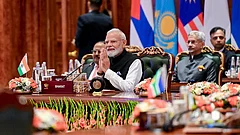
There is a distinct, chilly sharpness to the air in Oslo this May, but inside the Radisson Blu Plaza Hotel, the atmosphere is intensely warm, thick with the quiet friction of high-stakes diplomacy. Prime Minister Narendra Modi’s five-nation European tour arrived in Norway with a heavy agenda, culminating in a critical huddle with Nordic leaders. Behind the polished photo-ops and tight handshakes lies a deeper story of two distinct worlds trying to find a shared vocabulary. While India and Norway formally upgraded their ties to a "Green Strategic Partnership"—pledging alignment on climate action, blue economy, and resilient supply chains—the underlying currents revealed that modern diplomacy is rarely a smooth, linear narrative.
Beneath the grand declarations of a "rules-based order," the human complexities of the summit quickly spilled into the open. Norwegian Prime Minister Jonas Gahr Støre did not mince words, pointedly noting that while India and Norway have their share of differences, they must stand united against nations that "weaponize" diplomacy, trade, and technology. Yet, the most telling human moment of the tour didn't happen during a closed-door bilateral meeting. It unfolded in front of the cameras when a local Norwegian journalist, operating in a culture where unscripted access is an absolute norm, stood up and challenged Prime Minister Modi directly on his decision not to hold a traditional press conference.


The resulting friction forced the Ministry of External Affairs into a defensive crouch. When later pressed on India's democratic and human rights record, a senior MEA official offered a deeply philosophical, if evasive, shield: India, he reminded the room, is a "civilizational country." It was a classic geopolitical standoff—Western journalistic expectations crashing headfirst into New Delhi’s highly controlled communication strategy, a pattern that had already caused a stir during the previous leg of the tour in the Netherlands.
Meanwhile, the relentless machinery of international business moved in parallel. At the India-Norway Business and Research Summit, corporate leaders bypassed the lofty rhetoric to deliver a dose of grounded reality, candidly urging the Indian Prime Minister to streamline messy regulatory frameworks and tackle "ground-level challenges" to genuinely improve the ease of doing business. As Tuesday progressed, the focus shifted toward the broader Nordic-India Summit, where leaders from Denmark, Sweden, and Finland—including Finnish Prime Minister Petteri Orpo—gathered to unpack the stalled India-EU free trade agreement. With European Commission President Ursula von der Leyen calling a missing investment pact the "missing piece of the puzzle," the Oslo summit proved that beyond the green treaties and strategic handshakes, international relations remain a deeply human tug-of-war between economic desperation, political caution, and clashing cultural values.
















