ISRO’s LVM3-M6 rocket successfully placed the BlueBird Block-2 satellite into a 518 km low Earth orbit on Wednesday.
The 6,100-kg satellite is the heaviest payload deployed in LEO by LVM3 from Indian soil and will enable direct-to-mobile 4G and 5G connectivity.
The mission marks ISRO’s third dedicated commercial launch for AST SpaceMobile and continues LVM3’s streak of consecutive successful flights.
ISRO's heaviest rocket, LVM3-M6, successfully placed a US communication satellite into orbit on Wednesday in a historic Christmas Eve mission.
The BlueBird Block-2 satellite has been successfully launched into its designated orbit by the LVM3-M6, according to the Bengaluru-based space agency.
A global LEO (Low Earth Orbit) constellation that uses satellites to deliver direct-to-mobile connectivity includes the Bluebird Block-2 program. Everyone, everywhere, at all times, would be able to access 4G and 5G voice and video calls, texts, streaming, and data thanks to this constellation.

LVM3-M6 carried the communication satellite, also referred to as "Bahubali," as part of a business agreement between US-based AST SpaceMobile (AST and Science, LLC) and NewSpace India Ltd. (NSIL).
The ISRO's commercial division is called NewSpace India.
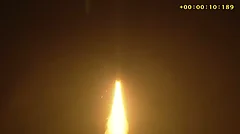
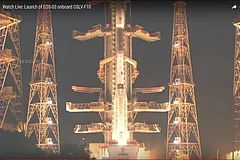
At 8:55 a.m., the 43.5-meter-tall rocket rose magnificently from its second launch site.
The spacecraft Bluebird Block-2 successfully entered orbit after separating from the vehicle after a flight of roughly fifteen minutes.
On the successful launch, ISRO Chairman V Narayanan said, "I am extremely happy to say that the LVM3M6 'Bahubali' rocket has successfully placed the Bluebird-Block 2 satellite into the intended orbit. Let me congratulate NewSpace India and AST Space Mobile on the outstanding achievement." The satellite was placed in a 518 km circular orbit against the planned 520 km altitude, he said, describing it as a "textbook launch".

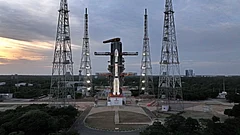
LVM3-M6 carried the communication satellite, also referred to as "Bahubali," as part of a business agreement between US-based AST SpaceMobile (AST and Science, LLC) and NewSpace India Ltd. (NSIL).
The ISRO's commercial division is called NewSpace India.
At 8:55 a.m., the 43.5-meter-tall rocket rose magnificently from its second launch site.
The spacecraft Bluebird Block-2 successfully entered orbit after separating from the vehicle after a flight of roughly fifteen minutes.
"The reward for hard work is more work, and we have a lot of programmes on hand," he remarked.
The ISRO chairman hailed the successful launch of the Bluebird Block-2 satellite as a "New Year and Christmas gift to Bharat." He reflected on a year of achievements, driven by high-stakes missions such as the NISAR mission, CMS-03 and the Bluebird Block-2 mission.
On the ambitious Gaganyaan mission, he said, "We have to accomplish uncrewed missions, and we are getting towards that." With the industrial consortium fully prepared, Narayanan, who is also the Secretary of the Department of Space, said another launch from an Indian startup is scheduled in just a few weeks.
Already, the developmental phase of small satellite launch vehicles (SSLVs) is completed, and we are going to start the operational phase of SSLVs, he said.
One of the important commitments made by the central government is the commissioning of navigation satellites.
"That satellite series we are going to continue, and we are going to start placing them in the intended orbit," he said
Weighing 6,100 kg, the communication satellite would be the heaviest payload to be placed into the Low Earth Orbit (LEO) in LVM3 launch history from Indian soil, the space agency said.
The previous heaviest was the LVM3-M5 Communication Satellite 03, weighing about 4,400 kg, which was successfully launched by ISRO on November 2 in the Geosynchronous Transfer Orbit (GTO).
The mission is aimed at deploying the next-generation communication satellite designed to provide high-speed cellular broadband directly to smartphones.
AST SpaceMobile is building the first and only space-based cellular broadband network, which is accessible directly by smartphones and designed for both commercial and government applications.
ISRO's Liquid Propulsion Systems Centre conceived and constructed the LVM3-M6, also called the Geosynchronous Satellite Launch Vehicle (GSLV-MkIII), a three-stage rocket with a cryogenic engine.
The enormous amount of thrust needed for liftoff is provided by two S200 solid rocket boosters. The Vikram Sarabhai Space Centre in Thiruvananthapuram is responsible for developing the booster.
Five satellites, Bluebird 1-5, were launched in September 2024, according to AST SpaceMobile, and they offer continuous service throughout the United States and a few other countries.
The company has worked with more than 50 mobile operators worldwide and intends to launch similar satellites to enhance its network support.
The LVM3-M6 is the sixth operational flight of LVM3 and the third dedicated commercial mission to launch the Bluebird Block-2 spacecraft.
The LVM3 has a spectacular pedigree of completing eight consecutive successful launches, including the ambitious Chandrayaan-2, Chandrayaan-3 missions, ISRO said.