



The Haryana Human Rights Commission (HHRC) has taken serious note of alarming conditions of government primary schools in Nuh district and has initiated suo motu proceedings in the matter
The HHRC observed that the conditions described in the news reports are extremely grave and amount to serious violation of children's right to education
It is observed that several government primary schools in Ferozepur Jhirka area of Nuh are functioning without proper buildings
The Haryana Human Rights Commission (HHRC) has taken serious note of the poor condition of several government primary schools in Nuh district and initiated suo motu proceedings over the issue.
Acting on reports published on May 6, the commission sought detailed reports from the concerned authorities and observed that the conditions described amounted to a serious violation of children’s rights to education, health and right to live with dignity.
According to the commission, several government primary schools in the Ferozepur Jhirka area are functioning without proper buildings. Government Primary School in Kubda Bas village is reportedly operating from a cattle shed where nearly 62 students, comprising 29 boys and 33 girls from ‘Balvatika’ to Class 3 are studying.



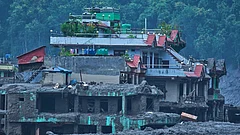

The commission noted that cows and buffaloes are tied in the same premises after school hours and cattle fodder is also stored there. Despite regular cleaning, foul smell reportedly continues to affect the health and learning environment of children.
The school is functioning on temporary permission granted by a private landowner, highlighting the lack of permanent infrastructure. The commission said at least 19 schools in the district are operating without buildings.
In another case, the Government Primary School in Kalu Bas village is functioning in an open field where around 95 students are taught using blackboards tied to trees. During monsoon, the field reportedly turns muddy, while winters expose children to extreme cold conditions which makes it highly unsafe environment for children.
The commission observed that such conditions compromise the safety and dignity of children and violate provisions of the Right of Children to Free and Compulsory Education Act, 2009.
The commission also expressed concern over the shortage of teachers in the district. It noted that contractual teachers appointed through Haryana Kaushal Rozgar Nigam from distant districts such as Bahadurgarh, Rewari and Mahendergarh were facing difficulties in maintaining regular attendance and continuity in teaching.
The panel suggested that teachers should, as far as possible, be appointed from nearby areas to ensure better attendance and coordination with local communities and effective delivery of education. The RTE Act mandates that primary schools must be located within 1 km of habitation.

The inappropriate conditions and learning environment violates the India's international obligations under the United Nations Convention on the Rights of the Child, which guarantees to children the right to education and health in a safe and dignified environment.
The commission stated that providing safe and hygienic educational infrastructure is not just administrative but a fundamental responsibility.
(With Inputs from PTI)















