Kanthapuram leads an influential Sunni group in Kerala
His meeting with the Prime Minister triggered controversy, particularly as his organisation has traditionally been seen as aligned with the Left.
The organisation said Kanthapuram raised issues faced by the Muslim minority during his meeting with the Prime Minister.
“There should be peace and tranquillity in India. There is no obstacle or problem for Muslims in this country as everyone is safe.”
This statement by Kanthapuram A. P. Aboobacker Musliyar, also known as Sheikh Abubakr Ahmad, a religious scholar and the General Secretary of the Samasta Kerala Jamiyyathul Ulama, considered the Grand Mufti,( a religious title) has stirred unease across sections of society and sparked controversy in poll-bound Kerala. The remarks came after his meeting with Prime Minister Narendra Modi.
While some critics view Kanthapuram’s move as an attempt to safeguard his business interests, others see it as part of a broader Muslim outreach strategy orchestrated by the BJP.
After the meeting, Prime Minister Narendra Modi lauded Kanthapuram’s efforts to promote social harmony. “Had a very good interaction with Sheikh Abubakr Ahmad Sahab, Grand Mufti of India. We exchanged views on a wide range of issues. His efforts to further social harmony, brotherhood and improve education are noteworthy,” Modi wrote on X, sharing details of the interaction.
Kanthapuram said he briefed the Prime Minister about the memorandums he received from the public during his recent Kerala Yatra, which covered various social and community concerns. He maintained that his engagement with the Prime Minister was aimed at conveying these issues directly to the Centre.


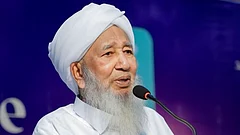
However, his assertion that Indian Muslims do not face any problems in the country has triggered sharp criticism from several Muslim organisations in Kerala. The Kerala Muslim Youth Federation described the statement as “shocking,” arguing that it ignores growing concerns expressed by civil society groups and international agencies about the security and rights of Muslims in India.
In a strongly worded statement, the organisation alleged that Muslims are facing cultural and physical targeting with tacit state support. It also pointed to remarks made by Yogi Adityanath and Himanta Biswa Sarma, claiming that such rhetoric fosters division and hostility.
“Only the Sangh Parivar maintains that Muslims are completely safe in the country. Kanthapuram’s statement lends credibility to the arguments of the RSS,” the youth organisation said, reflecting the wider unease within sections of the Muslim community over the cleric’s remarks.
The BJP cashes in
The BJP circulated Kanthapuram’s statement widely, projecting it as an endorsement of its governance and minority policies. The meeting — and the cleric’s remarks seen as giving the government a clean chit — quickly assumed political significance in Kerala’s charged electoral climate.
The BJP has long struggled to make inroads into Kerala’s Muslim community, which constitutes over 26 per cent of the state’s population, while Christians account for about 18 per cent. In recent years, the party has managed to gain some traction among sections of the Christian community. However, Muslim voters have largely remained outside its electoral reach. Against this backdrop, some observers see clear political undertones in Kanthapuram’s statement.
Kanthapuram’s organisation, often referred to as the AP faction of the Samastha Kerala Jamiyyathul Ulama, has traditionally been viewed as politically closer to the Left, particularly the CPIM The rival Sunni faction is considered aligned with the Indian Union Muslim League.
Senior journalist and columnist P. T. Nasar, however, cautions against reading too much into the episode. “By saying that Muslims in India are safe, Kanthapuram might have meant that there are no obstacles in running madrassas and mosques,” he says. “Attributing a larger political motive may be stretching it. The AP faction, despite its known inclination towards the Left, often maintains working relations with the party in power or the one expected to win. The organisation is highly cohesive and functions almost like a cadre-based outfit. But I don’t see any major political impact arising from either the meeting or the statement,” he adds.
Though several Muslim organisations strongly criticised Kanthapuram, the political response has largely been measured. Observers attribute this restraint to the cleric’s long-standing proximity to major political formations in the State. “None of the parties want to antagonise Kanthapuram” said one observer
Measured reactions
Leader of the Opposition V. D. Satheesan struck a guarded tone, stating that he did not share Kanthapuram’s assessment of the condition of Muslims in India, but stopped short of launching a direct attack on the influential Sunni leader.
Kanthapuram has previously drawn national and international attention for his intervention in the case of Malayali nurse Nimisha Priya, who was sentenced to death in Yemen. He reportedly leveraged his connections with religious leaders there to help secure a suspension of the sentence. His role in the episode gained prominence, particularly given India’s limited diplomatic engagement with Yemen at the time.
“We can’t be certain whether there is any personal or business motive behind Kanthapuram’s visit to the Prime Minister and his statement that appears to support the government’s narrative on minority issues. But he has consistently adopted a conversational rather than confrontational approach on matters of importance.
“He has met Narendra Modi earlier as well. In fact, he had also met Manmohan Singh when the latter was in office. During his first meeting with Modi, he said he raised concerns about the Citizenship Amendment Act,” says M.P. Basheer, senior journalist.
“There has always been a section within Muslim leadership that prefers engagement even with rulers perceived as unsympathetic. Even during the freedom struggle, while many Muslims fought the colonial state, some leaders believed that a non-confrontational approach would better safeguard community interests. Kanthapuram appears to belong to that tradition,” he adds.
When contacted, Dr Muhammad Abdul Hakkim Ansari, son of Kanthapuram A. P. Aboobacker Musliyar and State president of the organisation’s youth wing, told Outlook that, in a country governed by a Constitution, minorities should not lose faith but work to strengthen the quality of democracy.
He said they had raised concerns relating to the Muslim minority during his meeting with Prime Minister Narendra Modi, while also emphasising the need to instil confidence and hope among minorities. Hakkim Ansari was part of the delegation that met the Prime Minister.
In a State where the political positioning of Muslim organisations is closely watched, the Kanthapuram–Modi meeting has inevitably fuelled speculation. While many have contested his assessment of the status of Muslims in India, few believe that the episode signals any significant shift in the organisation’s electoral stance or voting preferences.