Opposition Leader V.D. Satheeshan has emerged as the primary target of caste-based organisations such as the SNDP and the NSS.
Congress leaders have been cautious in their response to the charges levelled against the Opposition Leader.
The CPM continues to maintain close ties with SNDP general secretary Vellappally Natesan, despite his controversial and Islamophobic remarks.
As the Kerala assembly elections draw closer, the Congress finds itself fighting more than one battle. Buoyed by its performance in the local body elections, the party enters the fray with renewed confidence. Yet, this optimism is tempered by growing unease over the stance of powerful caste organisations such as the Nair Service Society (NSS) and the Sri Narayana Dharmaparipala Yogam (SNDP). The sharp attacks launched by these bodies against the Leader of the Opposition, V D Satheeshan, have pushed the Congress into a precarious position.
At the same time, the episode has laid bare the deepening fault lines within the party’s leadership, exposing internal rivalries at a critical political juncture. Both the NSS and the SNDP wield considerable influence, particularly in the southern districts of Kerala.
The NSS claims to maintain what it calls an “equidistant” approach towards both the Left Democratic Front (LDF) and the United Democratic Front (UDF). In practice, however, it has shown a keen interest in shaping internal decisions within the Congress, often deploying its organisational clout to do so. The current Leader of the Opposition, V D Satheeshan, has not been in the good books of either the NSS or the SNDP leadership.

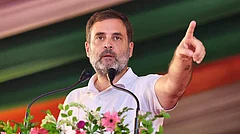

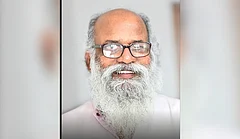

The two organisations, historically at loggerheads over issues such as reservation and the caste census, have now chosen to join hands—ostensibly to “protect Hindus”. In a rare show of unity, NSS general secretary G Sukumaran Nair and SNDP general secretary Vellappally Natesan have jointly unleashed a sharp diatribe against Satheeshan, accusing him of what they describe as an “obstinate” and minority appeasing political position.
In recent months, Vellappally Natesan has repeatedly made aspersions against Muslims, alleging that if the Congress-led UDF were to come to power, the Indian Union Muslim League would effectively call the shots. Despite this series of Islamophobic remarks, Chief Minister Pinarayi Vijayan and the CPI(M) have continued to endorse and engage with him, prompting Satheeshan to respond publicly. His criticism of both the Islamophobic statements and what he termed the CPI(M)’s soft-Hindutva approach appears to have acted as the immediate trigger for the NSS and the SNDP to bury the hatchet—at least temporarily—and rally against the Opposition leader.
Even as the attacks mounted, the response from the Congress leadership has remained notably muted. “We are not against caste organisations or their leaders” has emerged as the party’s common refrain, reflecting both its political caution and the larger unease within the Congress as it navigates the growing assertiveness of influential caste and community bodies ahead of the assembly elections.
“The coming together of the NSS and the SNDP is unlikely to have any significant political impact in Kerala. The state has travelled a long way from the days of the ‘Liberation’ Struggle, when the Congress and various caste and religious organisations came together against the first Communist government in 1959,” says senior journalist and political observer C. Gouridasan Nair. He adds that any attempt by the Left to connive with the SNDP—an organisation now that routinely spews venom against Muslims—could seriously undermine the CPI(M) in the state.

Buoyed by its victory in the local body elections, the Congress and the UDF it leads are in an upbeat mood. Yet the win has also brought with it a fresh set of anxieties. Within the Kerala Congress, multiple aspirants are vying for the chief minister’s post in the event of a UDF victory, intensifying internal competition. Party insiders suggest that the muted response of senior leaders to Vellappally Natesan’s sustained attacks on V D Satheeshan reflects this underlying power struggle.
The party has always tried to keep caste organisations like the NSS and the SNDP in good humour. But the current silence—or reticence—in responding to criticism of the Opposition leader stems from clear political calculations. None of those vying for the coveted chair wants to antagonise these leaders, fearing it could hurt their prospects in the race,” said a Congress leader, requesting anonymity.
However, some Congress leaders have openly come to Satheeshan's defence, strongly criticising the stance taken by certain community leaders. “Any attempt by Vellappally Natesan to attack Leader of the Opposition V D Satheeshan will be firmly resisted,” says Abin Varkey, national secretary of the Youth Congress. “Satheeshan articulates the position of the Congress and the UDF. Efforts to isolate him or paint him with communal colours are unacceptable and will be fought tooth and nail,” he adds.
At the same time, a section of observers believes that the sustained attacks on V D Satheeshan have, paradoxically, enhanced his stature among civil society activists and the broader secular public. “The current controversy involving community leaders has—albeit inadvertently—contributed to elevating Satheeshan’s image as a politician who has shown the courage to take on powerful and entrenched social structures,” says columnist P T Nasar.

Ramesh Chennithala, former KPCC president and a former Leader of the Opposition, is another major contender for the chief minister’s post in the event of a UDF victory. Senior to Satheeshan, Chennithala served as home minister in the last UDF government led by the late Oommen Chandy. However, the Congress’s consecutive electoral defeats in 2016 and 2021 proved costly for him. In 2021, he was bypassed in favour of Satheeshan as Leader of the Opposition, marking the emergence of a new power centre within the party.
Chennithala, known for his less combative political style, maintains close ties with caste organisations, particularly the NSS. NSS general secretary G Sukumaran Nair made little effort to conceal his preference recently, publicly describing Chennithala as “the most capable man” in the Congress—an endorsement that has only added another layer of complexity to the Congress’s internal power struggle as the assembly elections approach.
Another leader closely watched by the media and political observers is K C Venugopal, the AICC’s organisational general secretary. Although he has publicly ruled himself out of the chief minister’s race, few in political circles take this at face value. The presence of three potential power centres—Satheeshan, Ramesh Chennithala and Venugopal—has further complicated the Congress’s internal equations as the election approaches.
As Dr Azeez Tharuvana, professor and social observer, points out, the larger concern goes beyond Congress’s factionalism. “More than the internal bickering within the Congress, the purported move by the SNDP and the NSS to unite all communities except Muslims poses a serious threat to Kerala’s social fabric,” he says. “The Left’s tacit support for such a move, which effectively alienates Muslims, is bound to have far-reaching repercussions for how Left politics itself is understood. In Kerala, those who believe that the wall separating the red and the saffron is collapsing cannot be faulted.”
Over the past several months, communal issues have increasingly taken centre stage in Kerala politics, reshaping the tone and content of public discourse. While the CPI(M) appears determined to accommodate the SNDP despite its leadership openly circulating Islamophobic messages, the Congress—despite its Leader of the Opposition being subjected to sustained attacks—has responded with caution and restraint. There is palpable apprehension within the party, both among leaders and cadres, about the political fallout of antagonising powerful organisations like the SNDP and the NSS. At the same time, the personal political calculations of aspirants within the Congress may also explain the party’s subdued response.
This brand of pragmatic politicking, however, has come at a cost. It has allowed communal and parochial concerns to dominate the political discourse—a trend that, observers warn, could deepen further in the days ahead as electoral contestation intensifies.