The election assumes significance for the Left, as its outcome will shape the party’s role in parliamentary politics.
Accusations of financial misdeeds against party leaders have placed the CPI(M) in a defensive position.
Observers are divided on the party’s prospects. While some argue that compromising on its stated policies could prove costly, others believe that a decade in power may still keep the Left’s electoral stakes high.
The stakes of an election victory have rarely weighed as heavily on the CPI(M) as they do now. The forthcoming Kerala Assembly election has effectively turned into a do-or-die battle—not just for the Left in the state, but for the survival and credibility of the mainstream Left across the country. A series of recent political developments has only intensified the pressure, complicating the party’s electoral calculus at a critical juncture.
This comes at a moment when the party was carefully crafting strategies to secure an unprecedented third consecutive Left Democratic Front government.
The party’s unexpected setback in the local body elections has altered the political optics—if only marginally—denting its image of electoral invincibility under Chief Minister Pinarayi Vijayan. Subsequent developments have added to the unease within the party, triggering confusion among cadres and fellow travellers alike.
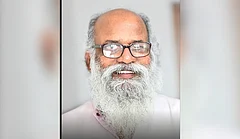
Sabarimala, meanwhile, continues to cast a long shadow over the CPI(M), this time through the temple gold theft case. The arrest of CPI(M) leaders by the Special Investigation Team in connection with the case has compounded the party’s troubles. One of those arrested in the theft case was CPIM district secretariat member A Padmakumar, who was the Dewasom board president at the time.


The leadership’s reluctance to take swift punitive action against those involved has provided fresh ammunition to opposition parties, who have seized upon the issue to target the CPIM.
Two former MLAs quit the party in the aftermath of the local body election results. While their exit did not significantly dent the CPI(M)’s support base, it nonetheless proved to be a setback, offering fresh ammunition to the opposition. The party, which has often accused the Congress of acting as a conduit for leaders and cadres moving to the BJP, was compelled to confront an uncomfortable reality when S. Rajendran, a former MLA from Idukki district, left the CPI(M) to join the BJP. Although Rajendran had been distancing himself from the party for the past few years, the defection still caused reputational damage.
Another former MLA, Isha Potty, a three-time legislator, joined the Congress, alleging that she had been sidelined within the party.
Commenting on the developments, a CPI(M) functionary, who requested anonymity, said that the defections were largely an issue of optics and fuelled television debates for a few days without affecting the party’s organisational and ideological core. However, he added that the leadership’s reluctance—or inability—to act decisively in the Sabarimala temple gold theft case was a far more serious matter, with the potential to have long-term consequences for the party.
However, the recent revelation by Kunhikrishnan, a member of the CPI(M)’s Kannur district committee, that funds collected from the public to support the family of a martyr were allegedly embezzled by party leaders has dealt a significant blow to the party’s carefully projected image of transparency and probity. Coming as it did just on the eve of the election, it added to the party's woes. The CPIM swiftly expelled the leader who made the allegations against the party, but this has not gone down well with the sympathisers.
The Left Democratic Front has launched a statewide yatra to mark the beginning of its election campaign. In north Kerala, the yatra is being led by CPI(M) State Secretary M. V. Govindan. During the outreach, leaders have repeatedly been confronted with questions on Sabarimala and allegations of financial impropriety involving some party leaders.
The response from the leadership has been largely uniform. “We have nothing to hide. The party has an internal mechanism that ensures probity in financial matters. Allegations against certain leaders were examined and no wrongdoing was found. The former leader is now acting at the behest of the UDF,” has been the common refrain when questioned about the controversies.

Offering a more critical assessment, senior journalist and political commentator M. P. Basheer said the CPI(M) was approaching the election with a sense of existential urgency. “The CPI(M) in Kerala is determined to win this election at any cost, because it fears that a defeat in Kerala could marginalise it nationally. However, the denial mode the party has adopted is unlikely to help it politically,” he said.
Basheer argued that allegations—whether related to organisational functioning or perceived ideological deviations—were being met primarily with denial. “If the party were to fight the election on its stated political line, while openly engaging with criticism and allegations, it could remain a credible political alternative even in the case of a defeat,” he said. “What we are witnessing instead is political confusion born out of denial—be it financial irregularities or accusations of soft Hindutva, the response has been to blame the media. Knee-jerk politics may yield short-term gains, but it does little for the future of Left politics,” he added.
He draws on a historical anecdote to underline his argument. During the first decade of this century, the CPI(M) polled a higher share of votes when V. S. Achuthanandan led the party’s legislative wing and consistently took firm Left positions on a range of issues. While this approach often irritated the party’s more pragmatic leadership, his ideological clarity and confidence in Left politics helped the CPI(M) retain voter trust
In 2021, the CPI(M)-led Left Democratic Front was voted back to power, marking a first in Kerala’s electoral history. The victory also helped the CPI(M) retain national relevance in parliamentary politics; a defeat would have left the party without power in any state. As another election approaches, a similar risk confronts the party once again. The recent local body elections suggest that, even if a clear anti-incumbency wave is absent, a degree of governance fatigue is setting in among sections of the electorate. This sentiment has been compounded by a series of controversies, including allegations of financial irregularities.
Despite these challenges, some observers argue that the government’s emphasis on development and its record of corruption-free governance at the ministerial level distinguish it in Kerala’s political history. Senior journalist and author K. Balakrishnan says these factors place the incumbent government in a relatively strong position ahead of the polls. “While the Left has suffered setbacks in urban areas, its performance in rural regions in the last local body elections has been relatively strong. At the same time, the role of the media and increasing polarisation along religious lines pose a threat—not just to the CPI(M), but to Kerala’s political culture as a whole,” he said.
What appears to have unsettled the CPI(M) leadership further is the party’s near-decimation in West Bengal. Though leaders in Kerala continue to project confidence in the face of setbacks and allegations, the underlying anxiety is evident. In response, the party has sought to refurbish its image by foregrounding the development trajectory Kerala has witnessed over the past decade of LDF rule.