India-Australia civil nuclear agreement enables Australian uranium exports under IAEA safeguards.
Australian uranium supports India's nuclear energy ambitions and long-term energy security.
Melbourne summit strengthens India-Australia defence, maritime and Indo-Pacific strategic cooperation.
It took twelve years, one administrative stumbling block and two prime ministers to finally make it happen. On July 9 in Melbourne, Prime Minister Narendra Modi and his Australian counterpart Anthony Albanese stood side by side and announced that the long-pending Civil Nuclear Cooperation Agreement, first signed in 2014 and operationalised in 2015, had been fully activated through the finalisation of its administrative arrangement. Australian uranium will now flow to India for civilian use, under International Atomic Energy Agency safeguards.
Why Deal Took Long
India is not a signatory to the Nuclear Non-Proliferation Treaty, and that single fact has historically made uranium-exporting countries deeply cautious. Australia, despite holding the world's largest uranium reserves at around 28% of global resources, spent years withholding exports precisely because of that concern.
The Nuclear Suppliers Group granted India a waiver in 2008 allowing it to purchase uranium from member countries, which opened the door in principle. Australia agreed to allow exports in 2014 subject to IAEA safeguards and a separation of India's civilian and military nuclear programmes, but the administrative arrangement that would have made actual shipments possible kept running into reporting and accounting disagreements.


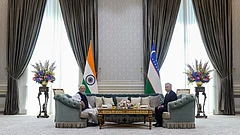

As India's Foreign Secretary Vikram Misri explained during a briefing in Melbourne, the two countries needed a framework that would satisfy both sides on how uranium use is reported and tracked. After two years of what he called "very intense discussions," they found one. Private entities will now begin commercial contracts for uranium supply under those IAEA safeguards, with the first shipments expected to follow. Former Australian Prime Minister Scott Morrison told ANI that uranium exports to India now enjoy bipartisan political support in Australia, saying "it is a bipartisan position now, by both major sides of politics in Australia, to support uranium sales to India."
Why Australian uranium matters
India's nuclear power currently accounts for roughly 3% of India's electricity generation. The government wants to take that to 100 gigawatts of installed nuclear capacity by 2047, alongside a broader target of 500 gigawatts of renewable energy by 2030 and net-zero by 2070.
"Australia's vast uranium reserves align directly with India's nuclear journey," Modi said while speaking at the Australia CEO Forum on Clean Energy and Nuclear Partnerships in Melbourne.
The fuel security gap is real. India operates 24 nuclear reactors and has several more under construction, but domestic uranium production is limited. It has been diversifying its supplier base for years, inking civil nuclear agreements with Russia, the United States, France, Canada and now Australia. The Canada deal, signed in March 2026, preceded the Melbourne announcement by a few months. Australia exports all of its uranium, as Canberra neither operates nuclear power plants nor possesses nuclear weapons. For India, that makes Australia a stable and substantial long-term supplier without the strategic complications that come with buying from geopolitically contested sources.
Australia is also reportedly looking to diversify its trade beyond relying on China, giving both countries a mutual economic incentive beyond the energy dimension.
"Well, we've got a long history of trade and investment between Australia and India. Now there's an opportunity to really strengthen uranium out of Australia into India to meet its huge ambitions," said Tania Constable, Chief Executive of the Minerals Council of Australia, as quoted by ANI.

What ties it all together
The uranium was not alone. The Melbourne summit produced a Joint Declaration on Defence and Security Cooperation that both governments described as a genuine step-change in the bilateral relationship. The Prime Ministers endorsed a Joint Maritime Security Collaboration Roadmap, setting out concrete milestones to deepen cooperation in response to maritime security challenges, covering operational coordination, information sharing and capability development. An MOU between Australia's Maritime Border Command and the Indian Coast Guard was also signed, along with the launch of the Australia-India Partnership on Cyber, Critical Technologies and Supply Chains.
The two leaders agreed to significantly upgrade bilateral defence cooperation, which includes the launch of a dedicated defence innovation corridor to foster collaboration between startups and manufacturing sectors in both nations. An Annual Defence Ministers' Dialogue has been established to keep strategic consultations institutionalised rather than dependent on individual summits.
The underlying logic across all of these announcements is the same. Both countries have a direct interest in a rules-based Indo-Pacific where no single power dominates critical supply chains or sea lanes. For India, Australian uranium is not simply a fuel import. It is one more thread in a web of partnerships that the country is quietly and systematically weaving, threading through Quad commitments, bilateral defence deals and energy diversification, with the Indo-Pacific's open architecture as the connecting idea.