The documents reference global political, business and intellectual figures, while survivors say key abusers remain unnamed despite the scale of the release.
Heavy redactions and disturbing content have fuelled public outrage and renewed questions about transparency and protection of victims.
The files include references to figures such as Bill Gates, Bill Clinton, Donald Trump, Andrew Mountbatten-Windsor, though many have denied wrongdoing.
The newly released files on sex offender Jeffrey Epstein span nearly three million pages, including nearly 2,000 videos and 180,000 images, marking the largest disclosure since the administration of US President Donald Trump passed a law last year mandating the release of the documents.
The disclosures have renewed scrutiny, including on Microsoft founder and philanthropist Bill Gates and Tesla founder Elon Musk seeking an invite to the island.
Deputy Attorney General Todd Blanche said last Friday’s release “marks the end of a very comprehensive document identification and review process”, attributing the delay to the need for redactions to protect the identities of more than 1,000 alleged victims.
However, the survivors of Epstein’s alleged abuse said some of their alleged abusers “remain hidden and protected”.
In a statement signed by 19 survivors they said information about them was still included in the files, “while the men who abused us remain hidden and protected.”



The Epstein Files Transparency Act, signed into law by Trump on November 19, mandated that all Epstein-related documents held by the Justice Department be made public by December 19.

What makes the contents of the Epstein files so disturbing?
The documents name some of the world’s richest and most powerful figures, including politicians and businessmen deeply embedded within the system.
The visual details from Epstein’s island, along with the language used in the emails — particularly in their references to women, underage girls and children — have left viewers shocked and dismayed, fuelling disillusionment over the alleged involvement of those in positions of authority who were meant to protect the public alongside a sex offender.
The new emails openly mention an alleged penchant for “torture videos”, ritual sacrifice and eating children.
“On the yacht he witnessed babies being dismembered, their intestines removed, and individuals eating the feces from the intestines,” one of the emails stated.
An email appearing to be from Maxwell has also seems to confirm the authenticity of a photograph showing Andrew Mountbatten-Windsor with his arm around Virginia Giuffre, who accused him of sexual abuse. The former prince, who was stripped of his royal titles in October, had consistently denied any wrongdoing. Giuffre, one of the most prominent survivors of Epstein's sexual abuse, died by suicide in 2025.
In other photographs, Mountbatten-Windsor was kneeling on all fours over a woman lying on the ground. In two of the images, he is seen touching the unidentified woman, who is fully clothed, on her stomach. Another photograph shows him looking directly at the camera.
No context accompanies the images, and it remains unclear when or where they were taken.
One of the most explosive materials in the release centres on two draft emails that Epstein appears to have written in July 2013. One draft email is framed as a resignation letter from the Bill and Melinda Gates Foundation and complains about having had to procure medication for Bill “to deal with the consequences of sex with Russian girls”, BBC reported. The other, which opens with “dear Bill”, laments the end of a friendship and makes further allegations that Bill Gates attempted to conceal a sexually transmitted infection, including from his then wife, Melinda. Both emails were addressed from Epstein to himself. No email address linked to Gates appears in the records, and neither message is signed.
Photos of former US President Bill Clinton were also released by the Justice Department. One photograph shows him swimming in a pool, while another depicts him lying on his back with his hands behind his head in what appears to be a hot tub.
Clinton was photographed with Epstein on multiple occasions in the 1990s and early 2000s, before Epstein was first arrested.
Some images from the previous batch of documents showed close-up shots of a foot and a neck. In both, passages from the book Lolita appear to have been written on the person’s body in black pen. “She was polly at school,” the sentence read. Lolita is a controversial novel by Vladimir Nabokov about a paedophile.
One image showed former Microsoft chief executive Bill Gates standing beside a woman whose face has been redacted. Another depicts economist Noam Chomsky seated next to Epstein aboard a plane.


Epstein and the US President
In the photographs released by lawmakers last year, Epstein is seen alongside several high-profile figures. Trump appeared in three of the images made public.
One photograph shows him standing next to a woman whose face has been redacted. Another shows Trump beside Epstein while speaking with model Ingrid Seynhaeve at a Victoria’s Secret party in New York in 1997 — an image that had already been publicly available. A third photograph depicts Trump smiling among several women, whose faces have also been redacted, with them standing on either side of him.
Another image shows an illustrated likeness of the president on red packets positioned beside a sign reading “Trump Condom”.
The White House dismissed the release as a “Democrat hoax” targeting Trump, claiming it has been “repeatedly debunked”.
A newly released tranche of U.S Justice Department documents contains tens of thousands of references to Trump, according to a review by The New York Times. Using a proprietary search tool, The New York Times identified more than 5,300 files containing more than 38,000 references to Mr. Trump, his wife, his Mar-a-Lago club in Florida, and other related words and phrases in the latest batch of emails, government files, videos and other records released by the Justice Department.
The Trump administration maintains that federal investigators found no credible evidence warranting the pursuit of sexual misconduct allegations involving the president.
Todd Blanche, the deputy attorney general, on Sunday said that the Justice Department looked into sexual misconduct allegations against President Trump in connection with the sex offender Jeffrey Epstein but did not find credible information to merit further investigation.


What are the Epstein files?
The Epstein files comprise thousands of pages of documents linked to two criminal investigations into sex trafficking involving financier Epstein and his long time associate Ghislaine Maxwell. The material — including travel logs, recordings and emails — has drawn sustained attention since Epstein’s death in 2019.
In November 2025, three emails obtained from the Epstein estate appeared to suggest that Trump had knowledge of Epstein’s sex-trafficking activities, an allegation Trump has repeatedly denied.
On November 18, the House of Representatives voted 427–1 to pass the Epstein Files Transparency Act, which was subsequently approved by the Senate and signed into law by the US president.
Large portions of the thousands of documents released to date remain heavily redacted, drawing sharp criticism. Under the law requiring their publication, redactions are meant to be limited strictly to the identities of Epstein’s victims and to material connected to ongoing criminal investigations.


How did the case come to light?
The public interest in the Epstein filed peaked again during Trump’s 2024 campaign, when he had suggested that he would seek to open more government files on Epstein. Social media was awash with conspiracy theories and claims that Epstein ran an international sex-trafficking network serving wealthy and powerful men.
Police had begun investigating Epstein in 2005 when the family of a 14-year-old girl reported that she had been molested at his mansion in Palm Beach, Florida. Several other underage girls, many of them high school students, later told police that Epstein had paid them to provide sexual massages. In July 2006, Epstein was arrested after a grand jury indicted him on a charge of soliciting prostitution. The FBI subsequently launched its own investigation.
In June 2008, Epstein pleaded guilty to state charges and was sentenced to 18 months in jail. Under a secret agreement, the US attorney’s office agreed not to pursue federal charges. Epstein served most of his sentence under a work-release programme that allowed him to leave jail during the day. Epstein was released from jail in July next year. Over the following decade, his accusers pursued a legal battle to have the federal non-prosecution agreement overturned.
On July 6, 2019, Epstein was arrested on sex-trafficking charges after federal prosecutors in New York determined they are not bound by the earlier non-prosecution agreement. Epstein died by suicide in his New York jail cell on August 10, 2019 before his trial could commence.
Indian figures allegedly referenced in the Epstein documents
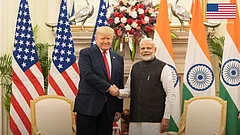
India has dismissed alleged references to Prime Minister Narendra Modi contained in the Epstein files. “We have seen reports of an email message from the so-called Epstein files that has a reference to the Prime Minister and his visit to Israel,” the MEA spokesperson said .
“Beyond the fact of the prime minister’s official visit to Israel in July 2017, the rest of the allusions in the email are little more than trashy ruminations by a convicted criminal, which deserve to be dismissed with the utmost contempt,” External Affairs Ministry spokesperson Randhir Jaiswal said in a statement issued on Saturday.
Another prominent Indian figure who allegedly features in the Epstein files is Union Minister Hardeep Singh Puri, who left the Indian Foreign Service to join the Bharatiya Janata Party in 2014.
The documents include alleged email exchanges between Puri and Epstein beginning in June 2014, in which Epstein wrote to Puri about Reid Hoffman, the co-founder of LinkedIn, and allegedly helped arrange a visit by Hoffman to India. After a series of purported emails, Puri sent Epstein and Hoffman a pitch outlining investment opportunities in India.
The documents also contain alleged conversations between Anil Ambani and Epstein. All these alleged conversations took place in the years following Epstein’s first conviction for sex offences in 2008. The two purportedly emailed each other about assessments of US ambassadors to India and allegedly setting up meetings for Modi with top US officials.