From Epic Fury to Absolute Resolve, the naming of military operations under the Trump administration is deliberately bold and symbolic, reflecting strategy and intent.
U.S. operations like Epic Fury have been carried out alongside allied campaigns such as Israel’s Operation Roaring Lion, following a pattern of escalating military actions in the region.
Compared to previous administrations, operation names vary from casual or symbolic to the unapologetically forceful labels under Trump, highlighting a shift in messaging and perception management.
The recently renamed Department of War posted just three words on X on February 28, adorned with an American flag and written in all capitals: “OPERATION EPIC FURY.”
These three words have very quickly and very undeniably reshaped the geopolitical landscape of West Asia and the world. Soon, loud explosions were reported across the Iranian capital, Tehran.
Later, US President Donald Trump released an eight‑minute address outlining the objectives of the ongoing military campaign, dubbed ‘Operation Epic Fury,’ which is being carried out in coordinated phases with Israel.
In the address, he said the mission’s aim was to defend the American people by eliminating what his administration describes as imminent threats from the Iranian regime, which he labelled “the world’s number one state sponsor of terror.”

Trump, long a self‑proclaimed peacemaker, authorised the offensive against Iran shortly after launching a separate operation in Venezuela earlier this year.


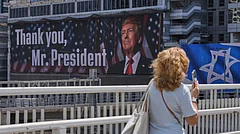
The President, who lends his name to a tower, places great emphasis on branding. His airline: Trump Shuttle, his drink: Trump Vodka, his education institution: Trump University, his website: GoTrump.com. These projects were a failure, but they instill a clear idea of the legacy he seeks in his name.
Similarly, the military operations under his command carry strikingly memorable names, combining a sense of lethality with casual flair, reinforcing the image of US aggression, unforgiveness and resolve. Operation Epic Fury’ is a prime example. This is in stark contrast to names like ‘Operation Acoustic Kitty’, a CIA project, where the authorities experimented with cats, attempting to turn them into spies. In the 1960s, the cat was fitted with a microphone implanted in its ear canal, a radio transmitter beneath its skull, and a wire threaded under its skin, with the initial mission to eavesdrop on two Soviet operatives.
Operation Epic Fury was launched alongside Israel’s ‘Operation Roaring Lion’—under which the IAF struck targets belonging to the “Iranian terror regime in the heart of Tehran”— an obvious next stop from Israel’s 2025 military exercise named ‘Operation Rising Lion.’
The year 2026 started with a different US operation in another country, codenamed ‘Operation Absolute Resolve’. It began around 2 AM local time, and set out to capture
Nicolás Maduro, the Venezuelan President. The Trump administration has labelled him a narco-terrorist.
A covert team of CIA operatives slipped into Caracas and operated undetected for months, piecing together a detailed picture of Maduro’s movements. Using a combination of human sources close to his inner circle and surveillance from stealth drones overhead, the agency was able to map out minute details of his daily routine.
“It was an amazing military feat that took place,” Trump said, calling the attack “brilliant” and “incredible” attack, leaving little room for the critique of overstepping international laws.
The names convey a sense of certainty, even amid a presidency defined by unpredictability—from tariffs to nuclear talks to diplomatic deals.
‘Operation Absolute Resolve’ succeeded the November 13, 2025, ‘Operation Southern Spear’, under which Washington sharply increased its air and naval presence in the region and combated drug trafficking in the Caribbean. The operation has authorised over 20 lethal strikes against suspected drug-smuggling vessels.

Originally coined by the US Navy in January to describe a maritime mission using a hybrid fleet of manned, robotic, and autonomous vessels to enhance presence and situational awareness in key maritime regions, the initiative was later expanded into a full-scale military operation focused on disrupting drug cartels in both the Caribbean and Eastern Pacific.
The latest strikes on the US come almost a year after the previous June 22 coordinated attack on the country by the US and Israel, named ‘Operation Midnight Hammer’, aimed at dismantling Iranian nuclear sites using massive 30,000-pound bombs.
“The world is far safer after President Donald J. Trump’s highly successful, decisive precision strikes against the Iranian regime’s key nuclear facilities,” the White House statement read.
As Iran maintained that the strikes did damage the sites but stopped short of saying they were totally destroyed, the US official statements described the “devastating” US strike on Fordo as having completely “obliterated” the nuclear facility’s critical infrastructure and rendered it inoperable, a claim that remains subject to ongoing debate.
The US attack on Iran’s nuclear sites had followed Israel’s June 13 unprovoked attack on Iran, called ‘Operation Rising Lion’, a name reportedly inspired by a biblical verse symbolising strength and victory for Israel.
Under the new Trump administration, the names of the military operations are designed to evoke a sense of violence, a brutal impact. With every tone intact, the names are unapologetically sharp, masculine, and aggressive, demanding attention.
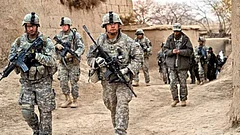
It is in stark contrast from the labels under previous administration. For instance, ‘Operation Neptune Spear’ was a direct reference to the US Navy SEAL Trident insignia, often nicknamed the "Budweiser," which depicts an eagle clutching a trident — the spear of Neptune, the Roman god and mythological deity of the sea. Another mission, ‘Operation Freedom’s Sentinel’ was launched in 2015, under President Barack Obama, succeeding ‘Operation Enduring Freedom.’ At the very least, it signals a hopeful purpose, regardless of the mission’s ultimate outcome.
Contratisingly, in a seemingly more informal style in naming military operations, the Richard Nixon administration opted for labels that were unusually casual for the gravity of the mission.
Its secret 1969 bombing of the Ho Chi Minh Trail in Cambodia was named Operation Menu. Individual strikes were given names like Breakfast, Lunch, Dinner, Supper, and Snack. Nixon later revealed that he had ordered the B-52 bombings in the border region, which unintentionally pushed North Vietnamese forces deeper into Cambodia, destabilising the neutralist government.