Kim Yo Jong warned North Korea would take "corresponding military action" after Japan's first successful Tomahawk cruise missile test
She accused Tokyo of using regional security concerns to justify military expansion and closer defence cooperation with the United States
Japan says the Tomahawk deployment is part of efforts to strengthen deterrence amid growing security challenges in Northeast Asia
North Korea has threatened military action against Japan after Tokyo successfully tested a US-made Tomahawk cruise missile, with senior ruling party official Kim Yo Jong accusing Japan of using regional security concerns as a pretext to strengthen its military capabilities, according to a statement carried by state media KCNA.
Kim, vice department director of the Central Committee of the Workers' Party of Korea, said Japan was becoming "increasingly reckless" in pursuing what she described as military ambitions under the guise of self-defence. She warned that Pyongyang would respond with "corresponding military action" if Japan's actions threatened North Korea's security.
"The military moves of Japan are entering a dangerous phase that can never be overlooked," Kim said. She accused Tokyo of attempting to justify military expansion by portraying North Korea as a threat and criticised its growing cooperation with the United States.




Japan's Tomahawk Test
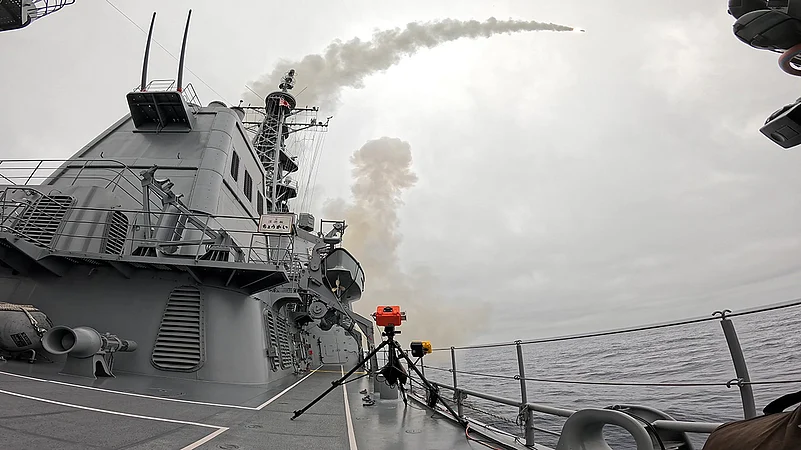
The warning followed Japan's first successful launch test of a U.S.-made Tomahawk Land Attack Missile (TLAM) from the Japan Maritime Self-Defense Force destroyer JS Chōkai on July 29. According to Japan's Ministry of Defense, the test was conducted with support from the U.S. Navy and marked a key milestone in strengthening Japan's stand-off defence capability.
Tokyo has described the Tomahawk deployment as part of efforts to improve its ability to deter and respond to threats in an increasingly challenging regional security environment.
Japan's Defence Build-up
Japan has significantly expanded its defence capabilities in recent years, citing growing security challenges posed by North Korea's missile and nuclear programmes as well as China's increasing military activity in the region.
The acquisition of Tomahawk missiles forms part of Japan's broader strategy to develop stand-off strike capabilities alongside enhanced missile defence systems and closer security cooperation with the United States and other regional partners.