Infantino proposed a $4.2 billion FIFA investment plan linked to World Cup revenues
UEFA, Concacaf and the AFC opposed the plan, while senior FIFA officials publicly criticised it
Facing a growing backlash and boycott threats, Infantino withdrew the proposal within five days
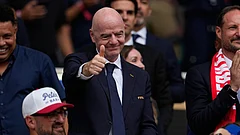
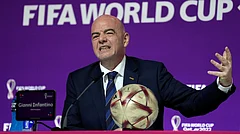
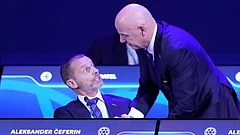
Gianni Infantino has abandoned FIFA’s controversial private investment proposal after an extraordinary five-day revolt from football federations, continental confederations and even senior officials inside FIFA itself.
The plan would have allowed outside investors to buy a minority stake in a new FIFA commercial subsidiary called FIFA Forward Enterprise (FFE). The subsidiary was designed to manage FIFA’s most lucrative operations, including the men’s and women’s World Cups, broadcasting rights, sponsorships, ticketing and hospitality.
FIFA hoped to raise $4.2 billion by selling roughly 20 percent of the new entity, valuing it at about $20 billion. The proposed lead investor was Thrive Eternal, linked to American venture capital firm Thrive Capital, founded by Joshua Kushner, the brother of Jared Kushner.
Infantino argued that the new structure would generate significantly more money for FIFA’s 211 member associations. Federations were offered $20 million initially if they backed the proposal, and FIFA claimed future distributions could rise substantially over the next decade.
Critics, however, believed the proposal would effectively commercialise the future profits of the World Cup and could give private investors indirect influence over football’s global calendar.
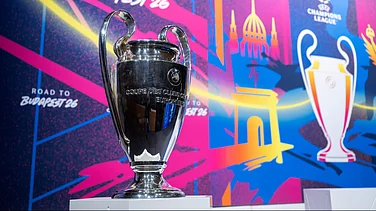
European federations feared investors would demand more matches, bigger tournaments and further competition expansion in order to maximise returns, potentially harming domestic leagues and the UEFA Champions League.
The opposition escalated rapidly. UEFA threatened a boycott of FIFA competitions, Concacaf rejected the proposal outright, and the Asian Football Confederation publicly aligned itself with the critics.
Late on Friday night, Infantino admitted defeat.
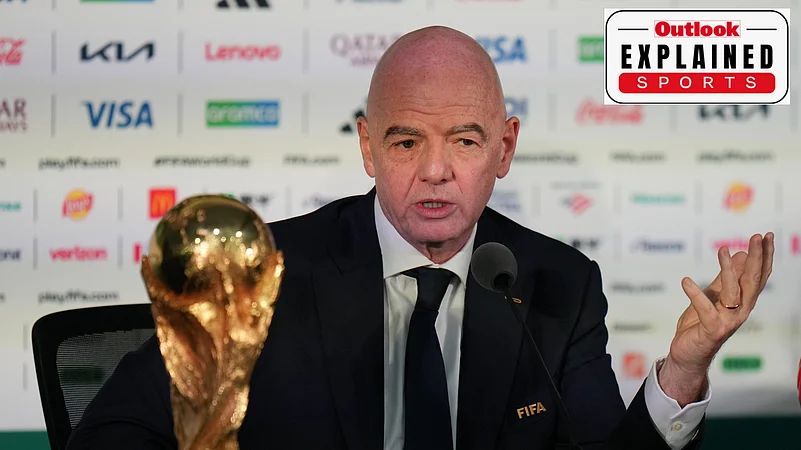
“Having listened carefully to all the views, it has become clear that the project has created divisions of a nature that, regardless of the level of support, are no longer in the interest of the objective set out in the first place,” he said.“Our purpose has always been – and always will be – to unite and improve. As a result, this proposal will not proceed.”
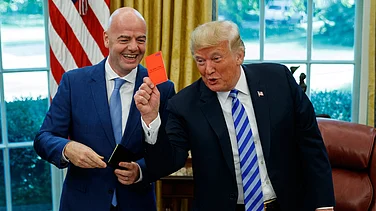
FIFA’s decision to drop the controversial investment plan represented one of the most serious political crises of Infantino’s presidency, coming less than two weeks after he appeared alongside US President Donald Trump at the 2026 FIFA World Cup final, seemingly firmly in control of world football.
What Was Gianni Infantino Trying To Do?
Under the proposed structure, FIFA would have remained a Swiss not-for-profit association, while FFE would have operated as a commercial arm responsible for FIFA’s tournaments and commercial rights. Outside investors would have purchased a minority, non-controlling stake in that business.
FIFA argued that the additional investment would help double the guaranteed payments to member associations from $10 million to $20 million in the next cycle, with further increases planned through 2034 and 2038. For smaller football nations, those sums represented potentially transformative funding.
Wealthier federations in countries such as England, Spain, Germany and France were far less convinced, viewing the long-term commercial implications as a much greater concern than the short-term financial benefit.
Why Did The Plan Collapse So Quickly?
The decisive factor was the sheer scale of the opposition. UEFA’s 55 members, Concacaf’s 35 members and the AFC’s 46 members together represented 136 of FIFA’s 211 voting associations -- comfortably more than the 106 votes required to block the proposal if federations followed their confederations’ positions.
The crisis deepened further when senior FIFA insiders publicly broke ranks. Carlos Cordeiro, Infantino’s senior adviser, resigned and described the proposal as “a bad deal for football” that would “mortgage football’s future”. FIFA chief operating officer Kevin Lamour said the organisation’s own administration had been “deceived” about the project and called it “the project of one person”.
By Friday evening, Infantino was facing criticism not only from rival federations but also from within FIFA’s own leadership structure.
Timeline - How Gianni Infantino’s FIFA Stake-Sale Plan Collapsed
Monday, 27 July
Infantino posted a 15-slide message on Instagram, telling critics to “meditate, pray or watch a football match” instead of “spreading hate and false rumours” about his leadership. The post appeared to be a response to growing criticism surrounding his administration and his increasingly close association with Donald Trump during the World Cup.
Tuesday, 28 July
Reports by The Times and the Financial Times revealed FIFA’s plan to sell stakes in its competitions, including the World Cup, to private investors. The disclosures immediately triggered alarm across European football.
UEFA responded with its first public statement, declaring that “football is not FIFA’s to sell” and accusing FIFA of “crossing a line”. Later that day, FIFA issued its own statement confirming that the investment proposal was genuine and that it intended to pursue the new commercial structure.
Wednesday, 29 July
Infantino wrote directly to all 211 FIFA member associations, offering $40 million to federations that supported the proposal and setting a 19 September deadline to secure an initial $20 million payment.
The move was interpreted by critics as an attempt to secure political backing through financial incentives. UEFA responded sharply, saying:
“FIFA cannot continue to use our sport to enrich themselves and their friends.”
The public confrontation between FIFA and UEFA intensified significantly after this exchange.
Thursday, 30 July
UEFA’s 55 member associations voted to boycott FIFA World Cups and other FIFA competitions if the proposal went ahead. This was the first concrete collective action taken against Infantino’s plan and represented a major escalation in the dispute.
On the same day, Concacaf announced that its member associations had also rejected the proposal. With North America joining Europe in opposition, the prospect of FIFA securing majority support for the project became increasingly remote.
Friday, 31 July
FIFA initially refused to retreat, insisting that “nobody is selling football” and signalling that it intended to continue pursuing the proposal despite the growing backlash.
However, the opposition continued to widen. The Asian Football Confederation announced that it “stands in solidarity” with UEFA and Concacaf, even though it stopped short of formally rejecting the proposal outright.
The internal damage became even more severe when Carlos Cordeiro resigned, calling the proposal “a bad deal for football”. UK Prime Minister Andy Burnham also entered the debate, saying Infantino was “the wrong man” to lead FIFA.
Perhaps the most damaging intervention came from Kevin Lamour, who publicly stated that FIFA staff had been “deceived” about the project. His remarks suggested that even senior executives inside FIFA had not been properly consulted.
Saturday, 1 August
Infantino released a statement confirming that the proposal had been withdrawn and would not proceed. After five days of mounting resistance from federations, confederations and FIFA insiders, the investment plan had effectively collapsed.
What Happens Now?
The immediate threat, the sale of World Cup-related commercial rights to outside investors, has been removed. The political consequences, however, may prove far more significant.
Infantino is expected to seek a fourth and final term as FIFA president at the March 2027 Congress in Rabat, Morocco. Until this week, he had been widely expected to run unopposed.
That assumption is now far less certain. Potential challengers being discussed include Victor Montagliani, the Concacaf president, and Sheikh Salman bin Ebrahim Al Khalifa, the AFC president who narrowly lost the FIFA presidential election to Infantino in 2016.
FIFA’s statutes allow Infantino one more four-year term through 2031, and he reportedly entered this week believing he had support from nearly 200 of FIFA’s 211 member federations.
The collapse of the FFE proposal has not removed him from office, but it has exposed political vulnerabilities that had rarely been visible during his decade in charge.
For a president who appeared untouchable after delivering FIFA’s biggest-ever World Cup and record revenues, the failed investment plan has become a reminder that football’s commercial future still depends on the consent of the federations that govern the game, and that consent can disappear remarkably quickly.