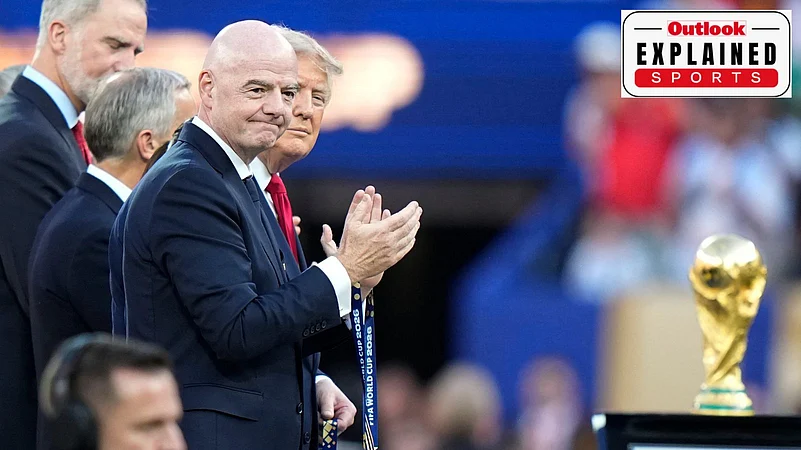
FIFA plans to sell up to 20% of World Cup commercial rights through a new subsidiary, FIFA Forward Enterprise
UEFA strongly opposes the move, warning that private investors could push for more tournaments and hurt European competitions and domestic leagues
Concerns over Gianni Infantino and U.S. investor links have intensified fears that football is becoming too commercialized and politically influenced
The relationship between FIFA and UEFA -- two of football's most powerful bodies -- has long been a delicate balancing act of shared interests and fierce rivalry. But a recent bombshell scoop has drawn battle lines as clearly as they are today.
According to leaked details first published by the Financial Times, world football's governing body is planning to establish a semi-private subsidiary named FIFA Forward Enterprise (FFE). Through this new commercial vehicle, FIFA reportedly aims to sell up to a 20% minority stake in the lucrative commercial operations of the Men's and Women's World Cups to private investors.
FIFA says it would retain control of FFE "and exclusive authority over football governance, competitions, the international match calendar and all regulatory and sporting decisions".
A Furious Backlash Over The 'Beautiful Game'
However, this unprecedented move to monetise international football's crown jewels has triggered an immediate and furious backlash from UEFA and other influential regional bodies, who view it as an existential threat to the 'beautiful game'.
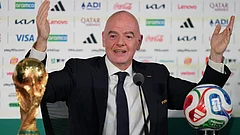
For UEFA and its allies, this corporate shift represents an aggressive attempt to dismantle the traditional financial ecosystem. European football leaders, as reported by many publications, argue that introducing private equity into the World Cup will fundamentally distort the international match calendar and dilute the value of regional competitions.
"This crosses a line that football's governing institutions should never cross," the European football body said. "UEFA takes it extremely seriously. So should every National Football Association. So should every stakeholder who cares about the future of the game.
"The soul and governance of football are not assets to trade - especially with zero transparency as to who gains financially. None of us are the owners of football. It is not FIFA's to sell."
The Threat Of Expanded Formats And More
UEFA has, in fact, built a multi-billion-dollar empire on the back of the Champions League and the European Championship. It's also worth mentioning that UEFA fought tooth and nail when the European Super League, a closed-format breakaway club competition, was launched in April 2021 by 12 clubs.
If private investors buy into FIFA's new venture, their natural incentive will be to maximise financial returns. Meaning, pushing for more frequent global tournaments, expanded formats, and a larger slice of an already crowded broadcasting market. Case in point, the Club World Cup. And there are talks of having more teams in future World Cups.
European administrators fear that this relentless commercialisation will cannibalise the media rights and sponsorship revenues that currently sustain domestic leagues and regional tournaments.
Beyond The Ideological Divide
The clash also exposes a deeper ideological divide regarding governance, heavily amplified by the polarising figure of FIFA President Gianni Infantino.
Critics frequently accuse Infantino of operating FIFA as a regime defined by systemic mismanagement and ruthless power games. Many view this privatisation plan as a mechanism to cement his personal authority.
Rumours suggest that Infantino aims to transition into a highly lucrative, "commissioner" role [big cue: American leagues] of this new entity once his final presidential term concludes in 2031. To bypass traditional democratic oversight, Infantino is perceived to be weaponising FIFA's vast resources by offering massive financial sweeteners.
By dangling a projected 20-million-dollar payout to each of FIFA's 211 member associations, the leadership is accused of effectively buying the votes of smaller federations to steamroll the opposition from football's traditional European powerhouses.
Football's Petty Political Alliances
This deep mistrust is further fueled by the perceived collusion between Infantino and US President Donald Trump during the controversial World Cup in North America.
The tournament was marred by widespread logistical mismanagement, visa-denial controversies involving certain participating nations, and highly criticised security overhauls that many felt compromised the fan experience to align with strict political agendas.
Despite these operational failures, Infantino's leadership consistently shielded the host nation from scrutiny, a move critics view as a quid pro quo to secure American backing for FIFA's broader commercial ambitions.
Fresh off this tournament, Trump has made no secret of his desire to bring another World Cup to American soil as soon as possible, a political ambition that dovetails perfectly with Wall Street's interest in the game.
The Unsavoury American Connection
Indeed, American private equity giant JP Morgan is advising on the privatisation process, while Thrive Eternal -- an investment vehicle led by Joshua Kushner, whose brother Jared is married to Ivanka Trump -- is positioned to lead the investor group.
This tight circle of political and corporate alignment has drawn widespread condemnation, with former FIFA President Sepp Blatter publicly warning that the sport's soul is being traded away.
In response to this American-backed privatisation plan, UEFA has called an immediate, extraordinary emergency meeting of its executive committee to draft a unified strategy later this week.
As European leaders openly debate a total World Cup boycott and mounting legal challenges, the battle lines between FIFA and UEFA are set for a prolonged war that could permanently rupture global football.